

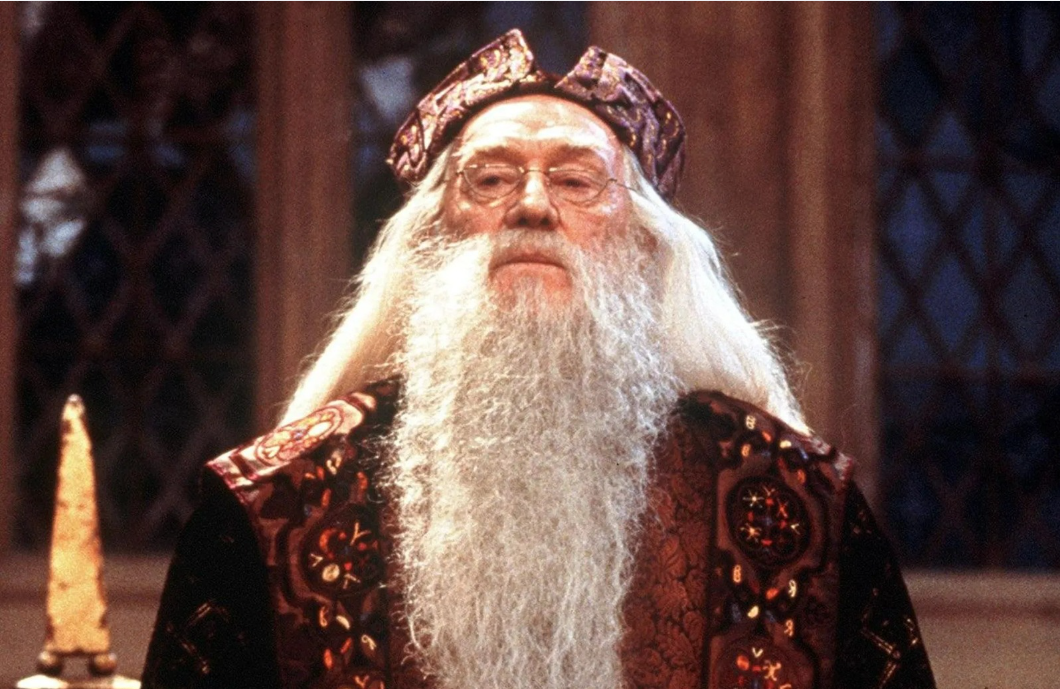
Richard Harris was one of Ireland’s most respected actors, known for a powerful screen presence that carried him from intense dramas and historical epics to action films, westerns, fantasy adventures, and major Hollywood productions. Born in Limerick, Ireland, Harris built his reputation through both stage and screen work before earning international recognition for his acclaimed performance in This Sporting Life (1963). Over the following decades, he appeared in a remarkably varied collection of films, including A Man Called Horse, Camelot, The Wild Geese, Unforgiven, and Gladiator. Late in his career, a new generation discovered him as Professor Albus Dumbledore in the first two Harry Potter films. This complete guide to Richard Harris movies by year follows his released feature-film career chronologically, including less widely known films and his posthumous voice appearance in Kaena: The Prophecy.
1959 — Alive and Kicking
Alive and Kicking marked Richard Harris’s film debut in Cyril Frankel’s British comedy. Harris appears as the Lover in a small supporting role alongside Sybil Thorndike, Kathleen Harrison, Estelle Winwood, and Stanley Holloway. The story follows three elderly women who escape from a retirement home and establish an unexpected new life away from their former surroundings. Although Harris’s part was brief, the film is important in the history of Richard Harris movies by year because it introduced him to cinema audiences.
1959 — Shake Hands with the Devil
Directed by Michael Anderson, Shake Hands with the Devil is a historical drama set during the Irish War of Independence. Harris plays Terence O’Brien, an IRA volunteer, appearing alongside James Cagney, Don Murray, and Dana Wynter. The film gave the young actor an opportunity to work in a politically charged story connected to Irish history. It was one of Harris’s first substantial screen appearances and helped establish his early association with serious dramatic material.
1959 — The Wreck of the Mary Deare
Michael Anderson also directed The Wreck of the Mary Deare, a maritime mystery thriller starring Gary Cooper and Charlton Heston. Harris plays Higgins, a crew member connected to the mysterious wreck at the center of the story. The film follows a salvage expert who discovers that the apparently abandoned ship has a troubling history. Harris’s role was relatively small, but the production gave him early experience in a major international film.
1960 — A Terrible Beauty
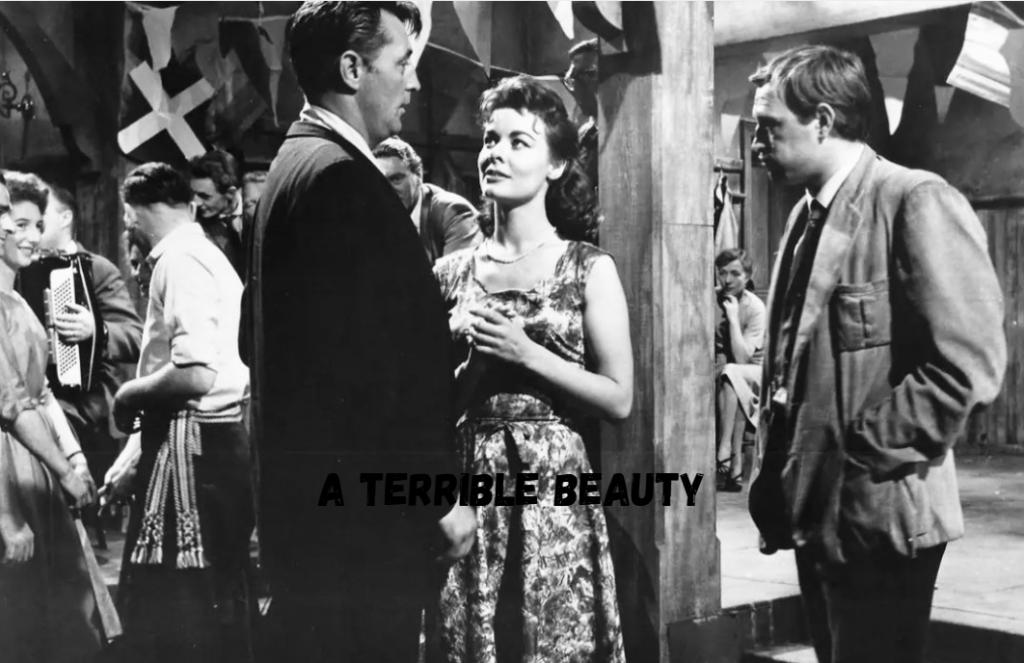
Released in the United States as The Night Fighters, A Terrible Beauty is a war drama directed by Tay Garnett. Harris plays Sean Reilly, an Irishman drawn back into the struggle against British forces during the Irish War of Independence. The film also features Robert Mitchum and Anne Heywood, giving Harris the opportunity to work with established international stars. Its historical setting continued the Irish-themed dramatic work that characterized several of his earliest films.
1961 — The Guns of Navarone
J. Lee Thompson’s The Guns of Navarone is a large-scale World War II adventure featuring Gregory Peck, David Niven, Anthony Quinn, and Stanley Baker. Harris plays Squadron Leader Barnsby, an Australian pilot whose encounter with the Allied commandos contributes to the mission’s development. The film combines military action, adventure, and suspense around an Allied attempt to destroy enormous German guns on a strategically important Greek island. Its commercial and critical success helped move Harris into more prominent international productions.
1961 — The Long and the Short and the Tall
Directed by Leslie Norman, The Long and the Short and the Tall is a World War II drama adapted from Willis Hall’s stage play. Harris portrays Corporal Edward “Johnno” Johnstone, one of a small group of British soldiers trapped behind Japanese lines in Malaya. The film focuses heavily on tension between the soldiers as fear, exhaustion, and conflicting personalities begin to dominate their situation. Harris’s performance demonstrated his ability to bring intensity to psychologically demanding ensemble dramas.
1962 — Mutiny on the Bounty
Lewis Milestone directed this lavish historical adventure starring Marlon Brando, Trevor Howard, and Richard Harris. Harris plays John Mills, a seaman aboard HMS Bounty during the famous voyage associated with Captain William Bligh and the eventual mutiny. The production was one of the major Hollywood spectacles of its era, recreating the maritime world of the late eighteenth century on a large scale. Harris’s appearance added another substantial international production to his rapidly expanding film career.
1963 — This Sporting Life
This Sporting Life, directed by Lindsay Anderson, became one of the defining films of Richard Harris’s career. He plays Frank Machin, a fiercely ambitious rugby league player whose determination and emotional frustration affect both his professional life and his relationship with Margaret, played by Rachel Roberts. The British drama explores working-class life, ambition, loneliness, and complicated relationships with an unusually raw realism. Harris won the Best Actor award at Cannes and received an Academy Award nomination for his performance, making the film a major turning point in his career.
1964 — Red Desert
Michelangelo Antonioni’s Red Desert is an Italian art-house drama starring Monica Vitti and Richard Harris. Harris plays Corrado Zeller, an industrialist whose relationship with Giuliana becomes part of the film’s exploration of alienation and modern industrial society. The movie is celebrated for Antonioni’s striking use of color, industrial landscapes, and psychological atmosphere. Harris’s participation also showed the international range of his career during the 1960s.
1965 — The Heroes of Telemark
Directed by Anthony Mann, The Heroes of Telemark is a World War II adventure based on the Norwegian resistance campaign against Nazi Germany’s nuclear research program. Harris plays Knut Straud, a Norwegian resistance fighter working with Kirk Douglas’s character. The film combines historical events with action and espionage elements and features a major international cast. Harris’s role allowed him to return to the wartime genre in a much larger-scale production.
1965 — Major Dundee
Sam Peckinpah directed Major Dundee, a western starring Charlton Heston, Richard Harris, and Jim Hutton. Harris plays Captain Benjamin Tyreen, a former Confederate officer whose relationship with Heston’s Union officer becomes increasingly complicated during an expedition against Apache forces. The film is notable for its ambitious production, difficult behind-the-scenes history, and Peckinpah’s distinctive approach to violence and character conflict. Harris brought considerable dramatic force to the rivalry between Tyreen and Major Dundee.
1966 — The Bible: In the Beginning…
John Huston’s The Bible: In the Beginning… is an epic biblical drama covering stories from Genesis. Harris portrays Cain, appearing opposite Michael Parks as Adam, Ulla Bergryd as Eve, and John Huston himself as Noah. The film uses large-scale sets and a serious historical-biblical style to depict some of the best-known stories from the Old Testament. Harris’s portrayal of Cain gave him another opportunity to play a famous historical or religious figure.
1966 — Hawaii
George Roy Hill directed Hawaii, an epic drama adapted from James A. Michener’s novel. Harris plays Rafer Hoxworth, a powerful landowner whose beliefs and ambitions create conflict within the story’s changing Hawaiian society. The film features Julie Andrews, Max von Sydow, Richard Harris, and other major performers in a sweeping historical narrative. Harris’s performance was part of a period when he was increasingly being cast as forceful, complicated leading characters.
1967 — Caprice
Caprice is a romantic spy comedy directed by Frank Tashlin and starring Doris Day and Richard Harris. Harris plays Christopher White, a character caught up in the film’s mixture of international intrigue, cosmetics-industry rivalry, and comedy. The movie was lighter in tone than many of Harris’s earlier dramatic projects and allowed him to work in a more playful genre. His participation illustrates the diversity of roles appearing throughout his 1960s film career.
1967 — Camelot
Joshua Logan directed the musical Camelot, adapted from the stage production by Alan Jay Lerner and Frederick Loewe. Harris stars as King Arthur, with Vanessa Redgrave as Guinevere and Franco Nero as Lancelot. The film portrays Arthur’s idealistic vision of a united kingdom and the personal conflicts that ultimately threaten Camelot. Harris’s performance became closely associated with the role, which he also played on stage and returned to in later years.
1970 — The Molly Maguires
Martin Ritt directed The Molly Maguires, a historical drama set among Irish immigrant miners in nineteenth-century Pennsylvania. Harris plays Detective James McParlan, an undercover investigator sent into the mining community to infiltrate the secretive Molly Maguires. Sean Connery stars as Jack Kehoe, placing Harris and Connery at the center of a tense story about labor conflict, loyalty, and political violence. The film gave Harris another demanding dramatic role built around divided loyalties.
1970 — A Man Called Horse
Elliott Silverstein directed A Man Called Horse, a western adventure starring Harris as John Morgan, an English aristocrat captured by Sioux warriors in the American frontier. Morgan gradually adapts to the tribe’s culture and eventually becomes deeply involved in its community and traditions. The film became a cult favorite and produced two sequels featuring Harris’s character. It was one of the most recognizable roles of his 1970s career.
1970 — Cromwell
Cromwell, directed by Ken Hughes, is a historical drama about the English Civil War. Harris portrays Oliver Cromwell, while Alec Guinness plays King Charles I. The film dramatizes Cromwell’s political and military rise and the struggle between Parliament and the monarchy. Harris’s commanding performance suited the larger-than-life historical figure and continued his association with major period productions.
1971 — Bloomfield
Originally titled Bloomfield and released in some markets as The Hero, this British-Israeli drama was directed by Richard Harris and Uri Zohar. Harris plays Eitan, an aging football star confronting the end of his playing career while facing personal and professional uncertainty. The film is notable because Harris not only starred in it but also co-directed it, making it an unusual entry in Richard Harris movies by year. Its football setting also gave him an opportunity to explore themes of aging, identity, and the loss of professional purpose.
1971 — Man in the Wilderness

Richard C. Sarafian directed Man in the Wilderness, a survival western inspired partly by the Hugh Glass story. Harris plays Zachary Bass, a frontiersman left for dead by members of his expedition after suffering a severe bear attack. The film follows Bass’s extraordinary struggle to survive and seek revenge while confronting the harsh American wilderness. Harris’s physically demanding performance is one of the more unusual western roles in his filmography.
1973 — The Deadly Trackers
Barry Shear’s The Deadly Trackers is a western featuring Harris as Sheriff Sean Kilpatrick. After a violent attack destroys his family, Kilpatrick becomes consumed by a quest for revenge against the criminals responsible. The movie combines frontier action with a darker revenge narrative and was based on a project originally associated with director Sam Fuller. Harris plays the central lawman as a deeply wounded man driven beyond the boundaries of conventional justice.
1974 — Juggernaut
Richard Lester directed Juggernaut, a suspense thriller set aboard a luxury ocean liner threatened by a series of bombs. Harris plays Lieutenant Commander Anthony Fallon, the officer brought in to deal with the crisis while passengers remain unaware of the full danger. The film features an ensemble cast including Omar Sharif, Anthony Hopkins, Shirley Knight, and Ian Holm. Its combination of disaster-film spectacle and bomb-disposal suspense made it one of Harris’s notable 1970s thrillers.
1974 — 99 and 44/100% Dead!
John Frankenheimer directed the crime comedy 99 and 44/100% Dead!, with Harris playing Harry Crown, a sophisticated gangster caught in a bizarre conflict between rival criminal organizations. The film blends crime, action, satire, and dark comedy rather than following the conventions of a straightforward gangster movie. Harris plays the lead with a deliberately flamboyant style that contrasts with the darker dramas for which he was often known. The unusual title and eccentric tone have helped the film retain a cult following.
1976 — Echoes of a Summer
Echoes of a Summer, directed by Don Taylor, is a family drama centered on a young girl suffering from a terminal illness. Harris plays Eugene “Gene” Striden, the girl’s father, alongside Joanne Woodward and James Mason. The film focuses on family relationships, grief, and the emotional difficulty of accepting a child’s illness. Harris also served as an executive producer, making the project significant beyond his acting contribution.
1976 — Robin and Marian
Richard Lester directed Robin and Marian, a mature reimagining of the Robin Hood legend starring Sean Connery and Audrey Hepburn. Harris makes a memorable appearance as King Richard the Lionheart, returning to England after years abroad. The film takes a more reflective approach to legendary characters, portraying Robin and Marian as older people confronting the consequences of their past lives. Harris’s appearance is relatively brief but adds historical weight to the opening of the story.
1976 — The Return of a Man Called Horse
The Return of a Man Called Horse reunites Harris with the character of John Morgan from A Man Called Horse. Directed by Irvin Kershner, the western adventure follows Morgan as he returns to the Sioux community he previously joined. The film explores cultural identity, political conflict, and Morgan’s continuing relationship with the people who transformed his life. Harris also served as an executive producer, making this a particularly significant continuation of one of his best-known roles.
1976 — The Cassandra Crossing
George P. Cosmatos directed The Cassandra Crossing, an international disaster thriller set largely aboard a passenger train crossing Europe. Harris plays Dr. Jonathan Chamberlain, one of the passengers caught in a crisis involving a deadly infection and an increasingly desperate government response. The ensemble includes Sophia Loren, Burt Lancaster, Ava Gardner, Martin Sheen, and O. J. Simpson. Harris’s role places him among a group of characters forced to confront a dangerous combination of disease, political secrecy, and survival.
1977 — Gulliver’s Travels
Peter Hunt directed this feature adaptation of Jonathan Swift’s Gulliver’s Travels, with Harris playing the title character. The film mixes live action with fantasy elements as Gulliver encounters strange societies and extraordinary creatures during his travels. Harris brings a grounded dramatic presence to a story that moves between adventure, satire, and family-oriented fantasy. The role was a departure from his more serious historical and dramatic performances.
1977 — Orca
Michael Anderson directed Orca, a maritime thriller often associated with the wave of animal-focused films that followed Jaws. Harris plays Captain Nolan, an Irish-Canadian fisherman who becomes obsessed with hunting a killer orca after a tragic encounter. Charlotte Rampling, Will Sampson, and Bo Derek also appear in the film. Harris’s performance gives the story a tragic dimension as Nolan gradually realizes that the animal is pursuing him for revenge.
1977 — Golden Rendezvous
Golden Rendezvous, directed by Ashley Lazarus, is an action adventure based on an Alistair MacLean novel. Harris plays John Carter, a former military man caught up in a dangerous plot aboard a luxury ship. The film combines espionage, robbery, adventure, and maritime action and features a large international cast. Although less celebrated than some of Harris’s major productions, it remains an important entry in his extensive 1970s filmography.
1978 — The Wild Geese
Andrew V. McLaglen directed The Wild Geese, one of Harris’s most recognizable action films of the decade. He plays Captain Rafer Janders, one of a group of mercenaries recruited for a dangerous rescue mission in Africa. Richard Burton, Roger Moore, Hardy Krüger, and Harris form the central ensemble of the military adventure. The film became an international success and is particularly remembered for its combination of veteran stars, action, and mercenary drama.
1979 — Ravagers
Ravagers, directed by Richard Compton, is a post-apocalyptic action film set in a devastated future America. Harris plays Falk, a hardened survivor navigating a world in which civilization has collapsed and violent groups compete for resources. The film combines survival adventure with science-fiction and dystopian elements. It represents one of Harris’s more unusual genre performances during a period when he was frequently moving between action and dramatic projects.
1979 — A Game for Vultures
Roy Ward Baker’s A Game for Vultures is an action drama set against the political conflict of Rhodesia. Harris plays David Swansey, a businessman drawn into a dangerous world of smuggling, military operations, and political instability. The film reflects the complicated political atmosphere surrounding southern Africa during the period. Harris’s performance is central to a story that mixes commercial interests with armed conflict.
1979 — The Last Word
Directed by Roy Boulting, The Last Word is a comedy-drama starring Harris as Danny Travis, a frustrated inventor whose circumstances push him toward an extreme act. Karen Black and Martin Landau are among the principal supporting performers. Travis becomes involved in a hostage situation after learning that his home is going to be condemned, turning his personal crisis into a public spectacle. The film was made in 1979 but experienced a complicated release history, eventually reaching U.S. audiences after delays.
1981 — Tarzan, the Ape Man
John Derek directed Tarzan, the Ape Man, a controversial reworking of the Tarzan story starring Miles O’Keeffe and Bo Derek. Harris plays James Parker, Jane’s father and an explorer involved in the expedition into Africa. The film emphasizes adventure and spectacle while taking a notably different approach to the traditional Tarzan story. Harris’s participation places a veteran dramatic actor within one of the more unusual productions of his later career.
1981 — Your Ticket Is No Longer Valid
Your Ticket Is No Longer Valid, directed by George Kaczender, is a Canadian drama centered on an older businessman confronting a deeply personal crisis. Harris plays Jason, a wealthy man whose confidence is shaken by impotence and the resulting strain on his relationship. The film is more intimate and psychologically focused than many of Harris’s action roles from the previous decade. It stands out for tackling a subject rarely treated so directly in mainstream cinema of its period.
1982 — Highpoint
Peter Carter directed Highpoint, a Canadian action comedy-thriller starring Harris, Christopher Plummer, and Beverly D’Angelo. Harris plays Lewis Kinney, a chauffeur who becomes entangled in a complicated plot involving the CIA, organized crime, and stolen money. The film mixes comedy, espionage, romance, and action, with a notable climax involving Toronto’s CN Tower. Its troubled release history makes it one of the more obscure but still officially released entries in Harris’s filmography.
1985 — Martin’s Day
Alan Gibson directed Martin’s Day, an adventure drama starring Harris as Martin Steckert, an escaped convict who kidnaps a young boy. Justin Henry plays the child, while Lindsay Wagner portrays a psychologist and James Coburn appears as a police officer. The relationship between the escaped convict and the boy gradually develops into the emotional center of the story. Harris’s performance gives the character a mixture of menace, vulnerability, and humanity.
1988 — Strike Commando 2
Bruno Mattei directed Strike Commando 2, an Italian-produced Vietnam-era action film. Harris plays Major Vic Jenkins, a former military officer whose abduction becomes the reason for another dangerous rescue mission. Brent Huff and Mary Stavin lead the film, which is built around combat, mercenaries, weapons, and jungle action. Harris’s role is supporting rather than central, but the film is notable as one of his more unexpected late-1980s appearances.
1989 — King of the Wind

Peter Duffell directed King of the Wind, an adventure film based on Marguerite Henry’s novel about the famous Arabian horse Sham. Harris plays King George II, appearing alongside Glenda Jackson and Frank Finlay. The story follows the horse’s extraordinary journey from Arabia to Britain and his eventual connection with the Godolphin Arabian bloodline. The film offered Harris a comparatively restrained historical role in a family-oriented adventure.
1990 — Mack the Knife
Mack the Knife is Menahem Golan’s musical adaptation of Bertolt Brecht and Kurt Weill’s The Threepenny Opera. Harris plays Mr. J. J. Peachum, the businessman who controls London’s beggar network, with Raúl Juliá starring as Macheath and Julia Migenes as Jenny. The production combines musical theatre, crime, comedy, and period drama. Although the film premiered at the Chicago International Film Festival in 1989, its principal U.S. theatrical release came in 1990.
1990 — The Field
Jim Sheridan directed The Field, one of the most acclaimed dramatic films of Harris’s later career. Harris plays “Bull” McCabe, an Irish farmer fiercely determined to retain control of a piece of land his family has worked for generations. The film explores land ownership, obsession, community, and the destructive consequences of pride. Harris’s performance earned him an Academy Award nomination for Best Actor and remains one of the defining roles of his career.
1992 — Patriot Games
Phillip Noyce directed Patriot Games, a political action thriller adapted from Tom Clancy’s novel. Harris plays Paddy O’Neil, an IRA figure whose involvement connects directly to the violent events surrounding Harrison Ford’s Jack Ryan. The film also stars Anne Archer, Sean Bean, and Samuel L. Jackson. Harris’s role is supporting but important to the story’s examination of terrorism, revenge, and political conflict.
1992 — Unforgiven
Clint Eastwood’s Unforgiven is a revisionist western starring Eastwood, Gene Hackman, Morgan Freeman, and Richard Harris. Harris plays English Bob, a flamboyant British gunfighter whose reputation is challenged when he arrives in Wyoming. The character’s brief appearance provides one of the film’s most memorable contrasts between legendary reputation and reality. The film won the Academy Award for Best Picture, while Harris’s performance as English Bob became one of his most recognizable late-career roles.
1993 — Wrestling Ernest Hemingway
Randa Haines directed Wrestling Ernest Hemingway, a character drama centered on an unlikely friendship between two older men. Harris plays Frank, an Irish-born former sailor who develops a friendship with Walter, portrayed by Robert Duvall. The film explores loneliness, aging, companionship, pride, and the difficulty of forming new relationships later in life. Harris gives Frank a warm but vulnerable quality that contrasts with some of his more aggressive screen characters.
1994 — Silent Tongue
Silent Tongue, directed by Sam Shepard, is a western drama featuring Harris as Prescott Roe. The story revolves around a grieving father, complicated family relationships, and tensions involving Native American characters and the American frontier. The film also features River Phoenix, Jeri Arredondo, and Alan Bates in an ensemble that emphasizes character and atmosphere over conventional western action. Harris’s performance contributes to the film’s somber and emotionally unsettled tone.
1995 — Cry, the Beloved Country
Darrell Roodt directed Cry, the Beloved Country, an adaptation of Alan Paton’s influential novel about South Africa. Harris plays James Jarvis, a white farmer whose life becomes connected to that of Stephen Kumalo, played by James Earl Jones, after a devastating tragedy. The film examines racial division, grief, injustice, forgiveness, and the possibility of reconciliation. Harris’s restrained performance was particularly important to the film’s emotional impact and marked another major dramatic role late in his career.
1995 — Savage Hearts
Mark Ezra directed Savage Hearts, a British comedy-drama featuring Harris as Sir Roger Foxley. The film combines eccentric characters, crime, and dark humor in a story involving an unusual family and its dangerous circumstances. Harris appears alongside Maryam d’Abo and Myriam Cyr in a smaller production that received considerably less attention than his major Hollywood projects. Its inclusion is important for a complete record of Richard Harris movies by year, since Harris continued taking roles in smaller films during the 1990s.
1996 — Trojan Eddie
Trojan Eddie, directed by Gillies MacKinnon, is a British-Irish drama centered on a traveling dealer operating within an unconventional criminal community. Harris plays John Power, a powerful local figure whose influence affects the people around him. The film blends crime, drama, and dark humor while exploring loyalty, manipulation, and personal ambition. Harris’s supporting performance adds veteran authority to the ensemble.
1997 — Smilla’s Sense of Snow
Bille August directed Smilla’s Sense of Snow, a mystery thriller adapted from Peter Høeg’s novel. Harris plays Dr. Andreas Tork, a scientist connected to the investigation into the suspicious death of a young boy. Julia Ormond stars as Smilla Jaspersen, who uses her knowledge of snow and science to uncover a much larger conspiracy. The film combines mystery, crime, adventure, and Arctic survival elements.
1997 — Savage Hearts
The title Savage Hearts is associated with the 1995 British film in which Harris played Sir Roger Foxley, and it should not be counted as a separate 1997 movie appearance. Some film databases place different release dates against Harris’s entry because of festival, regional, or distribution histories. For a chronological filmography, the officially recognized film release is 1995, so it is listed above only once.
1997 — This Is the Sea
Mary McGuckian directed This Is the Sea, a British-Irish drama set in Northern Ireland after the 1994 ceasefire. Harris plays Old Man Jacobs, a neighbor who becomes connected to the young romance between Samantha Morton’s Protestant character and Ross McDade’s Catholic character. Gabriel Byrne and John Lynch are also part of the cast. Harris’s role is supporting, but his presence gives the film additional dramatic weight in a story concerned with sectarian division, family pressure, and reconciliation.
1998 — The Barber of Siberia
Nikita Mikhalkov directed The Barber of Siberia, an expansive historical drama and romance set partly in late nineteenth-century Russia. Harris plays Douglas McCracken, an ambitious engineer seeking support for an enormous machine designed to harvest Siberian forests. Julia Ormond and Oleg Menshikov lead the central romantic story, while Harris’s character provides the project around which much of the plot develops. The three-hour production is notable for its scale, international cast, and lavish recreation of Imperial Russia.
1999 — To Walk with Lions
Carl Schultz directed To Walk with Lions, a fact-based drama about conservationist George Adamson. Harris plays George Adamson, the real-life wildlife advocate who worked to protect lions at Kenya’s Kora National Reserve. John Michie, Ian Bannen, Kerry Fox, and Honor Blackman also appear in the film. Harris’s performance is particularly significant because it was one of the final substantial dramatic roles of his career and allowed him to portray a real person whose life was closely connected to wildlife conservation.
1999 — Grizzly Falls
Grizzly Falls, directed by Stewart Raffill, is an adventure film centered on a father, his son, and a dangerous encounter with a grizzly bear. Harris plays Old Harry, an experienced wilderness figure who becomes involved in the story. The film combines family adventure with survival elements and features Bryan Brown and Daniel Clark among the principal cast. Harris’s role adds the authority of an older outdoorsman to the wilderness narrative.
2000 — Gladiator
Ridley Scott’s Gladiator gave Harris one of his most famous late-career performances. He plays Marcus Aurelius, the Roman emperor who sees potential in General Maximus, played by Russell Crowe, but whose death sets the central political conflict in motion. The historical epic combines action, drama, and spectacle and also stars Joaquin Phoenix, Connie Nielsen, and Oliver Reed. Gladiator became a major international success and won the Academy Award for Best Picture, further cementing Harris’s legacy with a new generation of movie audiences.
2001 — The Pearl
The Pearl, directed by Alfredo Zacarías, is a drama adapted from John Steinbeck’s famous story about a poor Mexican diver who discovers a valuable pearl. Harris plays Dr. Karl, a physician connected to the story’s events, while Lukas Haas plays Kino and Tere López-Tarín portrays Juana. The film explores poverty, greed, family, and the destructive consequences of sudden wealth. Harris’s role is supporting but significant within the adaptation’s broader moral drama.
2001 — My Kingdom
Don Boyd directed My Kingdom, a British crime drama inspired by Shakespeare’s King Lear. Harris plays Sandeman, a powerful Liverpool crime boss whose family and criminal empire begin to collapse around him. Lynn Redgrave and Reece Noi are among the principal supporting actors. The film is notable as one of Harris’s final completed dramatic performances and for bringing the Shakespearean family-conflict structure into a contemporary criminal setting.
2001 — Harry Potter and the Philosopher’s Stone
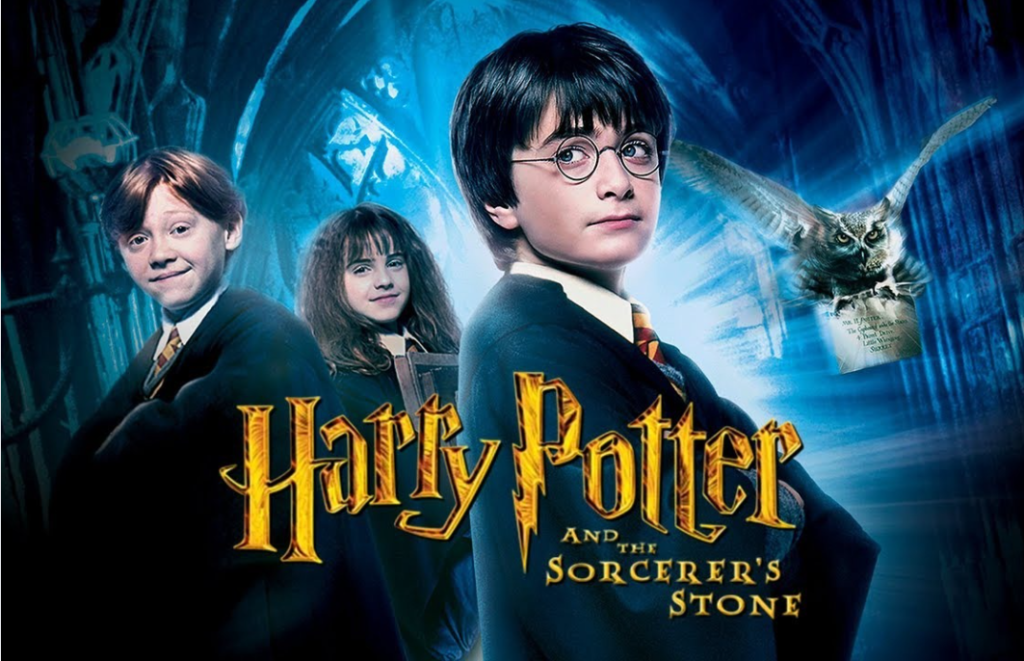
Chris Columbus directed Harry Potter and the Philosopher’s Stone, the first film adaptation of J. K. Rowling’s Harry Potter novels. Harris plays Professor Albus Dumbledore, the wise and powerful headmaster of Hogwarts, alongside Daniel Radcliffe, Emma Watson, Rupert Grint, and Alan Rickman. Dumbledore serves as a mentor and guiding presence for Harry as he discovers the magical world and confronts the mystery surrounding the Philosopher’s Stone. The film became a global phenomenon and introduced Harris’s work to millions of younger viewers.
2002 — The Count of Monte Cristo
Kevin Reynolds directed The Count of Monte Cristo, an adventure drama based on Alexandre Dumas’s novel. Harris plays Abbé Faria, the imprisoned scholar who becomes a mentor to Jim Caviezel’s Edmond Dantès and helps him transform himself during years of captivity. Faria’s knowledge, friendship, and guidance are crucial to Edmond’s eventual escape and quest for revenge. The role gave Harris a memorable supporting part in one of his final theatrical films.
2002 — Harry Potter and the Chamber of Secrets
Chris Columbus’s Harry Potter and the Chamber of Secrets was Harris’s final released appearance as Professor Albus Dumbledore. He again appears alongside Daniel Radcliffe, Emma Watson, Rupert Grint, and the returning Hogwarts cast as Harry investigates the mysterious Chamber of Secrets. Harris’s Dumbledore provides guidance as the school faces an ancient threat connected to Salazar Slytherin. Harris died in October 2002, making the film a posthumous release and his final live-action feature-film performance.
2004 — Kaena: The Prophecy
Kaena: The Prophecy is an animated science-fiction fantasy directed by Chris Delaporte and Pascal Pinon. Harris provides the English-language voice of Opaz, making this a voice performance rather than a conventional on-screen acting role. The film follows a young heroine in a strange world threatened by environmental and supernatural forces. Released after Harris’s death, it is a posthumous feature-film credit and therefore belongs at the end of his chronological filmography.
Conclusion
Richard Harris’s film career covered more than four decades and included an extraordinary range of genres, from British social drama and historical epics to westerns, war films, thrillers, fantasy, adventure, and modern crime stories. His performances in This Sporting Life, A Man Called Horse, Camelot, The Field, Unforgiven, and Gladiator demonstrate the breadth of his screen career, while his portrayal of Albus Dumbledore introduced him to a new generation shortly before his death. The complete record of Richard Harris movies by year also reveals an actor who continued accepting challenging and unusual projects even when they received less attention than his major successes. From his 1959 film debut in Alive and Kicking to his posthumous voice role in Kaena: The Prophecy, Harris left behind one of the most distinctive filmographies of his generation.
