


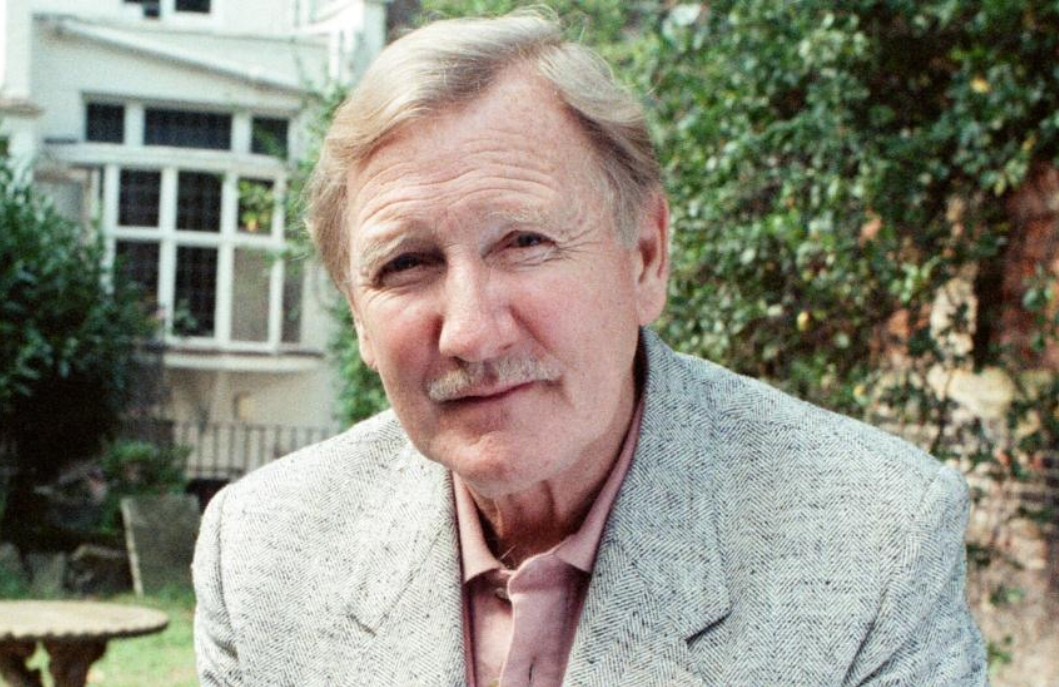
Leslie Phillips was an English actor whose extraordinarily long screen career stretched from the late 1930s into the 2010s. Born in London in 1924, he began appearing in films as a child before establishing himself as one of Britain’s familiar comedy performers during the 1950s and 1960s. He became particularly associated with the Carry On and Doctor films, while also appearing in dramas, war movies, romantic comedies and international productions. Later in his career, Phillips moved into more substantial character roles, including appearances in Out of Africa, Empire of the Sun, Scandal and Venus. He also became internationally recognizable as the voice of the Sorting Hat in three Harry Potter films. His filmography ultimately covered more than seven decades, making Leslie Phillips movies by year a particularly extensive record of British cinema history.
1938 — Lassie from Lancashire
Lassie from Lancashire was released in 1938 and gave Leslie Phillips one of his earliest film appearances. He had a small, uncredited part in the British musical comedy, which starred Gracie Fields and was directed by Henry Edwards. Phillips was still a child actor at the time, making the film an important starting point for his remarkably long screen career.
1938 — The Citadel
Also released in 1938, The Citadel was a British drama directed by King Vidor and based on A. J. Cronin’s novel. Phillips appeared in a small uncredited role alongside Robert Donat, Rosalind Russell and Ralph Richardson. Although his part was minor, the production gave the young actor an opportunity to work on a major dramatic film early in his career.
1938 — Climbing High
Climbing High was another 1938 production featuring Phillips in a small, uncredited role. The musical comedy starred Jessie Matthews and Michael Redgrave and was directed by Carol Reed. Phillips’ appearance was brief, but it formed part of the early run of film work that established his presence at British studios.
1939 — The Mikado
In 1939, Phillips appeared in The Mikado, a musical comedy adaptation of Gilbert and Sullivan’s famous operetta. He was credited as a boy in an uncredited appearance, with the film directed by Victor Schertzinger. The movie was among the early productions made at Pinewood Studios, where Phillips later recalled being one of the earliest actors still working decades after the studio opened.
1939 — The Four Feathers
The Four Feathers arrived in 1939 as a British adventure drama directed by Zoltan Korda. Phillips had an uncredited appearance as a boy at a parade, while the principal cast included John Clements, Ralph Richardson and C. Aubrey Smith. The film became a respected adaptation of A. E. W. Mason’s novel and is another notable entry from Phillips’ childhood screen work.
1940 — The Proud Valley
The Proud Valley was released in 1940 and starred Paul Robeson in a powerful musical drama set against the world of Welsh coal mining. Phillips had a small uncredited role and had the opportunity to work alongside Robeson, whom he greatly admired. Directed by Pen Tennyson, the film is particularly notable within Phillips’ early career because of its social themes and distinguished central performance.
1940 — The Thief of Bagdad
The Thief of Bagdad was a lavish fantasy adventure released in 1940, with production involving filmmakers including Ludwig Berger, Michael Powell and Tim Whelan. Phillips appeared uncredited as an urchin in the Baghdad market. The Technicolor production became one of the celebrated British fantasy films of its era, featuring Sabu, Conrad Veidt and June Duprez.
1948 — Anna Karenina
After his wartime service and theatrical work, Phillips returned to cinema with a small uncredited appearance in the 1948 adaptation of Anna Karenina. Directed by Julien Duvivier, the drama starred Vivien Leigh as Anna Karenina, with Ralph Richardson and Kieron Moore also among the cast. Phillips’ part was minor, but the film represented his return to the screen following the Second World War.
1948 — The Red Shoes
The Red Shoes, released in 1948, was the celebrated British drama about a young ballerina caught between her artistic ambitions and personal life. Directed by Michael Powell and Emeric Pressburger, it starred Moira Shearer, Anton Walbrook and Marius Goring. Phillips appeared as an uncredited audience member in the film, which later became one of the best-known productions associated with the Powell and Pressburger partnership.
1949 — Train of Events
Train of Events was released in 1949 as a British anthology drama built around interconnected stories involving a railway accident. Phillips appeared as a fireman in the segment titled “The Engine Driver.” Directed by Basil Dearden, the film gave him a more identifiable supporting role as he gradually moved beyond his earliest child-actor appearances.
1950 — The Woman with No Name
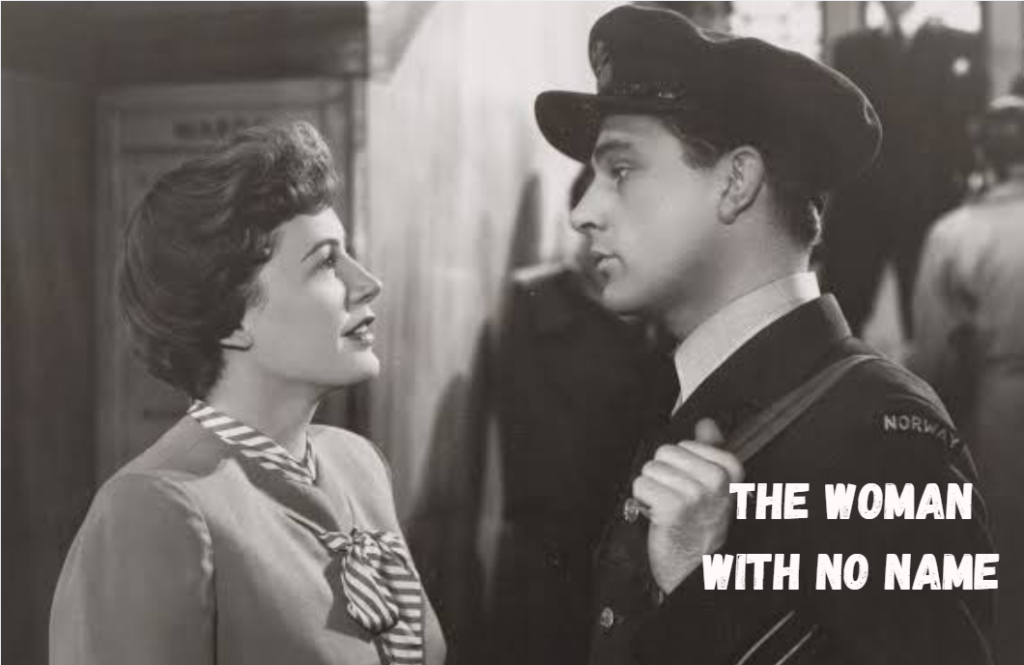
In 1950, Phillips appeared in The Woman with No Name, a British drama starring Phyllis Calvert. He played an officer in the production, which explored the life of a woman whose memory loss leaves her uncertain about her identity and past. The role was another supporting appearance during the period when Phillips was steadily building his adult film career.
1951 — Pool of London
Pool of London was released in 1951 and was directed by Basil Dearden. Phillips played Harry in the crime drama, which followed dock workers and sailors living and working around London’s docks. The film is particularly notable for its realistic depiction of postwar London and for its exploration of racial prejudice and interracial relationships.
1951 — The Galloping Major
The Galloping Major was a 1951 British comedy directed by Henry Cornelius. Phillips appeared as a reporter in an uncredited role, alongside Basil Radford, Jimmy Hanley and others. The film revolves around a group of characters who attempt to raise money through a racehorse, reflecting the lighter comic style that would increasingly feature in Phillips’ career.
1952 — The Sound Barrier
David Lean’s The Sound Barrier arrived in 1952 as a British aviation drama concerning the race to break the sound barrier. Phillips had an uncredited role as a controller, while Ralph Richardson, Ann Todd and Nigel Patrick led the cast. The film was a major technical and dramatic production and won the Academy Award for Best Story.
1953 — Time Bomb
Time Bomb was released in 1953 and combined crime, mystery and suspense elements around an unexploded wartime bomb. Phillips appeared as a police sergeant in an uncredited role. The film was directed by Ted Tetzlaff and featured multiple performers from the British postwar cinema scene.
1953 — The Limping Man
In The Limping Man, Phillips took the credited role of Cameron. The 1953 British crime mystery was directed by Cy Endfield and starred Lloyd Bridges as a former serviceman who becomes involved in a murder investigation. Phillips’ appearance marked another step toward the more substantial supporting parts he would receive during the following decade.
1954 — You Know What Sailors Are
You Know What Sailors Are was a 1954 British comedy directed by Maurice Elvey. Phillips appeared as an embassy secretary in an uncredited role, supporting a story built around sailors, misunderstandings and romantic complications. Although his appearance was small, it fitted the comic British productions that were becoming a regular part of his film work.
1955 — As Long as They’re Happy
As Long as They’re Happy was released in 1955 and starred Jack Buchanan and Diana Dors in a musical comedy directed by J. Lee Thompson. Phillips played a box-office manager in a credited supporting role. The film was adapted from a stage comedy and provided Phillips with another opportunity to work in the polished British comedy style that increasingly suited his screen persona.
1955 — Value for Money
In Value for Money, Phillips played Robjohns in a British comedy released in 1955. The film starred Diana Dors and Diana Dors’s fellow leading performers in a story about money, ambition and social expectations. Phillips’ role was part of his growing collection of comic and character appearances during the middle of the 1950s.
1956 — The Gamma People
The Gamma People was released in 1956 as a British science-fiction thriller directed by John Gilling. Phillips played Howard Meade, appearing alongside Paul Douglas and Eva Bartok in a story involving an isolated European dictatorship and sinister scientific experiments. The film stands out among Phillips’ work because it moved away from conventional comedy into science-fiction and suspense.
1956 — The Big Money
The Big Money was a 1956 British comedy directed by John Paddy Carstairs. Phillips played a receptionist in a film centered on a pair of characters whose criminal ambitions create a series of comic complications. The movie added another lighthearted supporting performance to the actor’s increasingly busy 1950s filmography.
1957 — The Barretts of Wimpole Street
The 1957 version of The Barretts of Wimpole Street was a period drama directed by Sidney Franklin. Phillips played Harry Bevan, appearing alongside Jennifer Jones, John Gielgud and Virginia McKenna. The film dramatized the relationship between poets Elizabeth Barrett and Robert Browning and gave Phillips a role in a more literary and historical production.
1957 — Brothers in Law
Brothers in Law was released in 1957 and was directed by Charles Crichton. Phillips played a shop assistant in the British comedy, which starred Ian Carmichael, Richard Attenborough and Terry-Thomas. The film follows a young barrister’s introduction to the unpredictable world of legal practice and became one of the notable British comedies of the period.
1957 — The Smallest Show on Earth
In The Smallest Show on Earth, Phillips played Robin Carter, a supporting role in Basil Dearden’s affectionate comedy about a struggling old cinema. The cast included Virginia McKenna, Bill Travers, Peter Sellers, Margaret Rutherford and Bernard Miles. Released in 1957, the film has remained particularly memorable for its celebration of traditional neighborhood cinemas and British comedy.
1957 — High Flight
High Flight was a 1957 aviation drama directed by John Gilling. Phillips played Squadron Leader Blake in a story centered on young Royal Air Force pilots and the pressures of military flying. The role suited the polished military image Phillips could bring to screen and anticipated several later appearances in military and aviation stories.
1957 — Les Girls
George Cukor’s Les Girls became one of the most important films in Phillips’ early career. The 1957 musical comedy starred Gene Kelly, Mitzi Gaynor, Kay Kendall and Taina Elg, with Phillips playing Sir Gerald Wren. The Hollywood production was a critical success and represented one of Phillips’ rare major American studio appearances; he ultimately chose to continue his career primarily in Britain rather than relocate permanently to Hollywood.
1957 — Just My Luck
Just My Luck was another 1957 British comedy directed by John Paddy Carstairs. Phillips played the Hon. Richard Lumb in a cast led by Norman Wisdom. The story revolves around an ordinary man whose life changes after an unexpected run of good fortune, giving Phillips another opportunity to play a polished supporting character.
1958 — I Was Monty’s Double
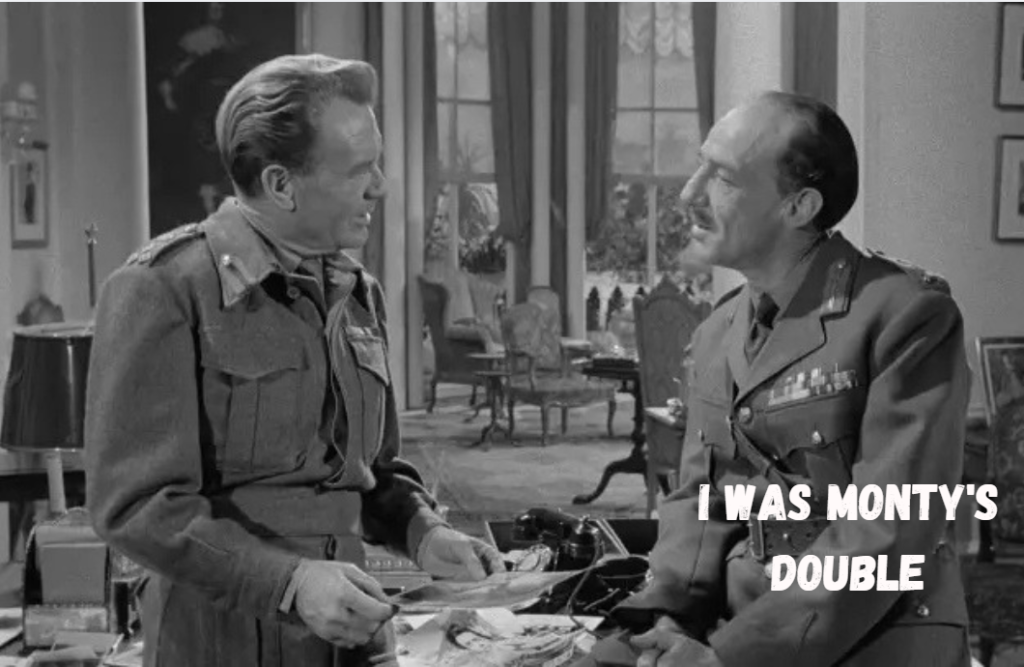
I Was Monty’s Double was released in 1958 and dramatized a real wartime deception involving an actor who impersonated General Bernard Montgomery. Phillips played Major Tennant, alongside M. E. Clifton James and John Mills. Directed by John Guillermin, the war drama was significant in the development of Phillips’ recurring screen association with military characters.
1959 — The Navy Lark
The Navy Lark was released as a film in 1959 after the success of the BBC radio comedy series. Phillips played Lieutenant Pouter, reprising his naval-comedy persona alongside Cecil Parker and Ronald Shiner. Directed by Gordon Parry, the movie is an unusual entry in Phillips’ filmography because it transferred one of his best-known radio roles to the big screen.
1959 — The Man Who Liked Funerals
The Man Who Liked Funerals was a short British comedy directed by David Eady. Phillips starred as Simon Hurd, a man who resorts to blackmail in an effort to help save a youth club. The film runs for roughly an hour and is notable as one of Phillips’ early starring vehicles rather than simply a supporting performance.
1959 — The Angry Hills
Robert Aldrich directed The Angry Hills, a 1959 war thriller starring Robert Mitchum. Phillips played Ray Taylor in the story of an American journalist caught in wartime Greece while carrying sensitive information. The production broadened Phillips’ film work beyond domestic comedy and placed him in an international cast.
1959 — Carry On Nurse
Carry On Nurse was released in 1959 and became one of the defining films of Phillips’ comedy career. Directed by Gerald Thomas, the hospital farce featured Phillips as Jack Bell alongside Joan Sims, Kenneth Connor, Shirley Eaton and Hattie Jacques. His memorable comic persona and catchphrase helped make the performance one of his best-known early roles and strengthened his association with the Carry On series.
1959 — Carry On Teacher
Later in 1959, Phillips appeared in Carry On Teacher as Alistair Grigg. Gerald Thomas directed the school-based comedy, with Ted Ray, Kenneth Connor, Joan Sims and Charles Hawtrey among the cast. Phillips’ performance continued the smooth, comic character style that had become strongly associated with him after Carry On Nurse.
1959 — The Night We Dropped a Clanger
The Night We Dropped a Clanger was a 1959 British black-and-white comedy directed by Darcy Conyers. Phillips played Squadron Leader Thomas alongside Brian Rix, Cecil Parker and William Hartnell in a farcical wartime story involving mistaken identities and a secret mission. The film was also released in the United States under the title Make Mine a Double.
1959 — Please Turn Over
Gerald Thomas directed Please Turn Over, a 1959 comedy in which Phillips played Dr. Henry Manners. The story centers on a respectable doctor whose private behavior becomes the subject of a controversial novel written by a teenage girl. The film showcased Phillips in the type of sophisticated comic role that would become central to his public screen image.
1959 — Ferdinando I, re di Napoli
Ferdinando I, re di Napoli was an Italian comedy released in 1959 and directed by Gianni Franciolini. Phillips played Pat in a cast that included Peppino De Filippo, Titina De Filippo, Vittorio De Sica and Marcello Mastroianni. The production is one of the more unusual international entries in Phillips’ filmography and demonstrates that his work was not confined entirely to British cinema.
1959 — This Other Eden
This Other Eden was a 1959 Irish comedy-drama directed by Muriel Box, with Phillips playing the Englishman Crispin Brown. He starred alongside Audrey Dalton and Niall MacGinnis in a story involving Irish political history, social divisions and long-held secrets. The film is particularly notable because it was the first Irish feature film directed by a woman.
1960 — Inn for Trouble
Inn for Trouble was released in 1960 as a British comedy directed by C. M. Pennington-Richards. Phillips played John Belcher, continuing his run of comic roles during one of the busiest periods of his film career. The story centers on the complications surrounding an inn and its occupants, reflecting the broad farce popular in British cinema at the time.
1960 — Carry On Constable
In Carry On Constable, Phillips played P.C. Tom Potter, one of several inexperienced recruits causing trouble within a police station. Gerald Thomas directed the 1960 comedy, with Sid James, Kenneth Connor and Charles Hawtrey among the principal cast. It was Phillips’ third Carry On film and the final one in which he appeared as a regular member of the series’ early cast.
1960 — Doctor in Love
Doctor in Love marked Phillips’ first major appearance as Dr. Tony Burke in the popular Doctor comedy series. Directed by Ralph Thomas, the 1960 film starred Michael Craig, Donald Sinden and James Robertson Justice alongside Phillips. The story follows the romantic and professional complications of young doctors, establishing Phillips as one of the key comic performers associated with the series.
1960 — Watch Your Stern
Watch Your Stern was a 1960 British naval comedy directed by Gerald Thomas. Phillips played Lieutenant Commander Bill Fanshawe in a story involving a naval vessel, secret equipment and comic misunderstandings. The film allowed Phillips to combine the military persona seen in several earlier productions with the broad comedy that had become his specialty.
1960 — No Kidding
No Kidding, also known as Beware of Children, was released in 1960 and featured Phillips as David Robinson. The comedy was based around children, adults and the problems created when family expectations collide with youthful independence. Phillips appeared alongside Geraldine McEwan, giving him another opportunity to play a father figure in a lighter domestic story.
1961 — A Weekend with Lulu
A Weekend with Lulu was a 1961 British comedy directed by Paul. Phillips played Timothy Gray, while the cast included Bob Monkhouse and Leslie Phillips among the comic ensemble. The film revolves around a weekend trip that becomes increasingly complicated, reflecting the romantic farce popular in British cinema during the period.
1961 — Very Important Person
Very Important Person was released in 1961 as a British wartime comedy. Phillips played Flying Officer Jimmy Cooper DFC, appearing alongside James Robertson Justice and Stanley Baxter. The story follows the comic difficulties surrounding a British officer who becomes involved in a prisoner-of-war escape situation, allowing Phillips to combine military characterization with comedy.
1961 — Raising the Wind
In Raising the Wind, Phillips played music student Mervyn Hughes. Directed by Gerald Thomas, the 1961 British comedy follows a group of students at a music college and features Ian Carmichael, Liz Fraser and Kenneth Connor. Phillips’ performance was another example of the fast-moving ensemble comedies that dominated much of his early-1960s film work.
1962 — Crooks Anonymous
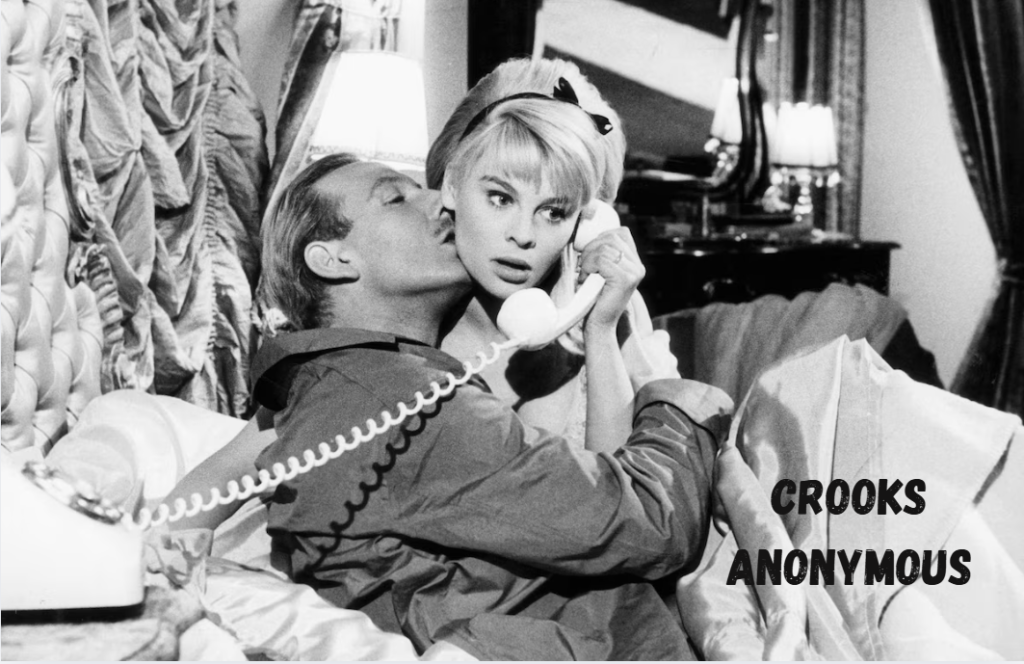
Crooks Anonymous was a 1962 British comedy about a group attempting to abandon criminal habits. Phillips played Dandy Forsdyke, one of the film’s comic personalities. The production was directed by Ken Annakin and gave Phillips another opportunity to play a suave character within a farcical ensemble.
1962 — In the Doghouse
In the Doghouse was released in 1962 and featured Phillips as Jimmy Fox-Upton. The British comedy centers on the chaotic operation of a veterinary practice and was directed by Charles Saunders. Phillips’ polished comic style contrasted with the increasingly chaotic situations surrounding the characters.
1962 — The Longest Day
The Longest Day was an expansive 1962 war epic depicting the Allied invasion of Normandy. Directed by Ken Annakin, Andrew Marton and Bernhard Wicki, the film featured an enormous international cast including John Wayne, Robert Mitchum, Richard Burton and Sean Connery. Phillips appeared as RAF Officer Mac in a small but recognizable part within the large ensemble.
1962 — The Fast Lady
The Fast Lady was a 1962 British comedy directed by Ken Annakin. Phillips played Freddie Fox in the story of a young man’s enthusiasm for fast cars and the social complications that follow. The film starred Stanley Baxter and Leslie Phillips among a broader comedy cast and reflected the actor’s continuing association with sophisticated comic characters.
1964 — Father Came Too!
Father Came Too! was released in 1964 and featured Phillips as Roddy Chipfield. The British comedy was directed by Peter Graham Scott and starred Ian Carmichael and Alastair Sim, with the plot revolving around a young couple whose attempt to establish an independent home is complicated by an overbearing father. Phillips’ role fitted the polished, upper-class comic persona for which he had become known.
1965 — You Must Be Joking!
In You Must Be Joking!, Phillips played the Young Husband. The 1965 British comedy was directed by Michael Winner and followed the comic consequences of a series of bets and challenges involving members of the public. Phillips appeared within an ensemble that included Lionel Jeffries, Terry-Thomas and Bernard Cribbins.
1966 — Doctor in Clover
Doctor in Clover returned Phillips to the successful Doctor series, this time as Dr. Gaston Grimsdyke. Directed by Ralph Thomas, the 1966 comedy starred James Robertson Justice, Leslie Phillips and Barbara Murray and continued the series’ mixture of medical situations and romantic farce. The role gave Phillips another prominent showcase for his familiar comic timing.
1967 — Maroc 7
Maroc 7 was a 1967 British spy thriller starring Gene Barry and Elsa Martinelli. Phillips played Raymond Lowe, appearing in a story involving international espionage and a valuable stolen diamond. The film stands apart from his earlier comedies by placing him in a more conventional adventure and thriller setting.
1970 — Some Will, Some Won’t
Some Will, Some Won’t was released in 1970 as a British comedy featuring Phillips as Simon Russell. Directed by Duncan Wood, the film assembled several well-known British comedy performers in a story of romantic complications and mistaken intentions. It was one of Phillips’ first major film appearances after a period in which he had increasingly balanced cinema with television and stage work.
1970 — Doctor in Trouble
Phillips returned as Dr. Tony Burke in Doctor in Trouble, released in 1970. Directed by Ralph Thomas, the comedy continued the popular Doctor franchise and placed Phillips alongside James Robertson Justice, Robert Morley and other familiar British performers. It was his final appearance as Tony Burke and one of his last major comedy leads of this era.
1971 — The Magnificent Seven Deadly Sins
The Magnificent Seven Deadly Sins was a 1971 British anthology comedy built around separate sketches inspired by the seven deadly sins. Phillips played Dickie in the “Gluttony” segment. The film featured a large British comedy cast and is notable for being an episodic rather than conventional single-story feature.
1973 — Not Now, Darling
Not Now, Darling was a 1973 British farce directed by Ray Cooney and David Croft. Phillips played Gilbert Bodley, becoming involved in the escalating complications of a London business and a series of romantic misunderstandings. The film was part of the period when Phillips was frequently cast in sophisticated but sexually mischievous comedy roles.
1974 — Don’t Just Lie There, Say Something!
In Don’t Just Lie There, Say Something!, Phillips played Sir William Mainwaring-Brown, a role associated with the film’s political and sexual farce. Released in 1974, the British comedy was directed by Peter Sykes and featured a large ensemble of established British performers. It continued the bawdy comedy style that Phillips had increasingly been associated with during the 1970s.
1975 — Spanish Fly
Spanish Fly was a 1975 British comedy in which Phillips played Mike Scott. The film was directed by Bob Kellett and centered on comic romantic complications involving a group of British characters and a Spanish setting. Phillips’ performance belonged to the risqué farce tradition that dominated several of his film appearances during this stage of his career.
1976 — Not Now, Comrade
Not Now, Comrade was released in 1976 and featured Phillips as Commander Rimmington. The British farce was directed by Peter Rogers and built its comedy around mistaken identities, political intrigue and romantic confusion. It was among Phillips’ final major films of the 1970s before he shifted his attention more strongly toward theatre and television.
1985 — Out of Africa
Phillips returned to major international cinema with Out of Africa in 1985. Directed by Sydney Pollack and starring Meryl Streep and Robert Redford, the romantic drama was based partly on Karen Blixen’s memoirs and other writings. Phillips played Sir Joseph, a supporting role that helped mark his transition away from the broad comic parts that had dominated much of his earlier film career.
1987 — Empire of the Sun
Steven Spielberg’s Empire of the Sun was released in 1987 and starred Christian Bale as a British boy caught in Japanese-occupied Shanghai during the Second World War. Phillips played Maxton, a prisoner of war, in a more dramatic performance than many of his earlier comedy roles. He lost more than two stone to portray the character as an emaciated prisoner, and the film became an important part of his later dramatic work.
1989 — Scandal
Scandal was released in 1989 and dramatized the political and social controversy surrounding the Profumo affair in Britain. Directed by Christian Bale, the film starred John Hurt, Joanne Whalley and Bridget Fonda, with Phillips playing Lord Astor. The role demonstrated his ability to move comfortably into serious historical and character-driven material.
1990 — Mountains of the Moon
Mountains of the Moon was a 1990 historical adventure drama directed by Bob Rafelson. Phillips played Mr. Arundell in the story of explorers Richard Francis Burton and John Hanning Speke and their search for the source of the Nile. The film featured Patrick Bergin and Iain Glen in the leading roles and provided Phillips with another period-drama supporting part.
1991 — King Ralph
King Ralph was released in 1991 as a British-American comedy starring John Goodman as an ordinary American who unexpectedly becomes heir to the British throne. Phillips played Gordon Halliwell, a member of the royal establishment, alongside Peter O’Toole, John Hurt and Camille Coduri. The film allowed Phillips to return to comedy while retaining the polished British character style associated with his later work.
1992 — Carry On Columbus
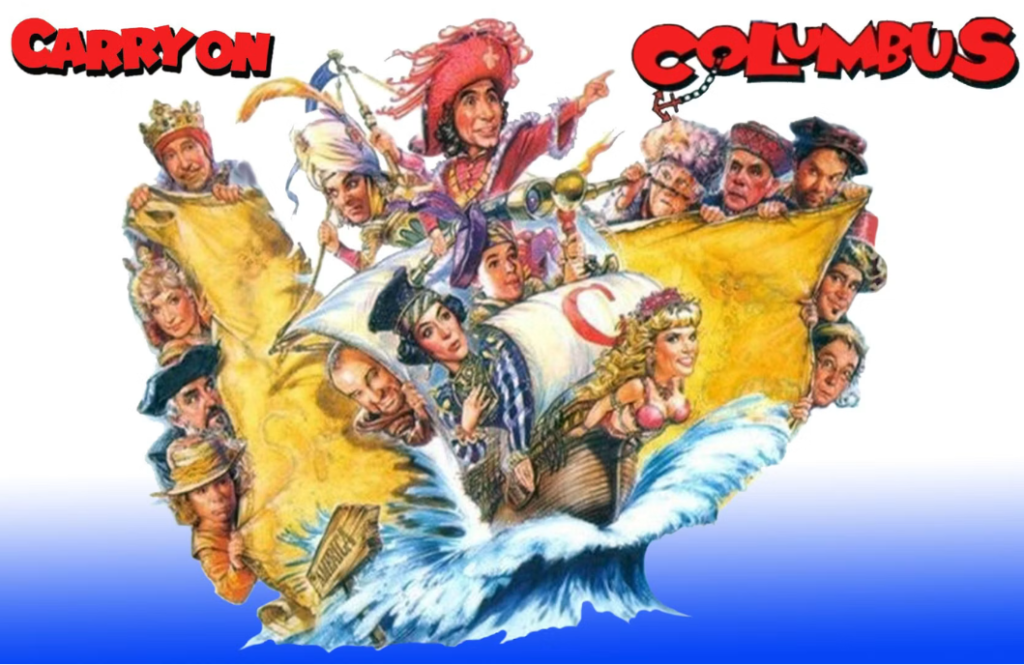
Phillips returned to the Carry On series in 1992 with Carry On Columbus, playing King Ferdinand. The comedy was directed by Gerald Thomas and starred Jim Dale, Bernard Cribbins and Eric Idle, among others. His return connected his later career with the comedy franchise that had helped make him famous more than three decades earlier.
1996 — August
August was a 1996 British drama adapted from Anton Chekhov’s Uncle Vanya. Directed by Anthony Hopkins, who also starred in the film, it featured Phillips as Professor Alexander Blathwaite alongside Kate Burton, Leslie Phillips and other ensemble performers. The film represented another move toward literary and dramatic material in the later phase of Phillips’ career.
1997 — Caught in the Act
Caught in the Act was a British comedy released in the late 1990s and directed by Mark Greenstreet. Phillips played Sydney Fisher in the story of three women who become involved in a talent competition while on holiday. The film also starred Sara Crowe, Annette Badland and Nadia Sawalha, and its roughly 90-minute running time places it firmly within the feature-length comedy category.
1997 — The Jackal
In The Jackal, Phillips played Woolburton, a supporting character in the 1997 crime thriller. Directed by Michael Caton-Jones, the film starred Bruce Willis, Richard Gere and Sidney Poitier and followed an international manhunt for a professional assassin. Phillips’ brief appearance was part of a large ensemble supporting the film’s central cat-and-mouse storyline.
1998 — The Orgasm Raygun
The Orgasm Raygun is a non-standard entry in Phillips’ filmography because his contribution was a voice role rather than a conventional on-screen acting performance. Released in 1998, the project featured Phillips as the inventor’s voiceover. It should therefore be distinguished from his standard feature-film acting credits rather than treated as a normal screen role.
2000 — Saving Grace
Saving Grace was released in 2000 as a British comedy-drama starring Brenda Blethyn, Craig Ferguson and Martin Clunes. Phillips played the Vicar, a supporting role in the story of a widowed woman who turns to an unconventional way of dealing with financial problems. Directed by Nigel Cole, the film became one of the better-known British comedies of the period and gave Phillips another memorable supporting appearance.
2001 — Lara Croft: Tomb Raider
In Lara Croft: Tomb Raider, Phillips played Wilson, a supporting character connected to Lara Croft’s world. Simon West directed the 2001 action-adventure film, which starred Angelina Jolie as the video-game heroine alongside Jon Voight, Iain Glen and Daniel Craig. The movie marked Phillips’ appearance in a major modern action franchise and introduced his work to a new international audience.
2001 — Harry Potter and the Philosopher’s Stone
Harry Potter and the Philosopher’s Stone introduced another internationally recognizable aspect of Phillips’ later career: his voice performance as the Sorting Hat. Directed by Chris Columbus and starring Daniel Radcliffe, Rupert Grint and Emma Watson, the 2001 fantasy film follows Harry’s first year at Hogwarts. Phillips’ voice helps bring the magical talking hat to life during the important Hogwarts sorting ceremony.
2002 — Thunderpants
Thunderpants was released in 2002 as a British children’s comedy directed by Peter Hewitt. Phillips played the Judge in the unusual story of a boy whose extraordinary flatulence becomes both a problem and an unexpected talent. The film starred Bruce Cook, Rupert Grint and Simon Callow, with Phillips providing another brief comic character performance.
2002 — Harry Potter and the Chamber of Secrets
Phillips returned as the voice of the Sorting Hat in Harry Potter and the Chamber of Secrets. Directed again by Chris Columbus, the fantasy adventure reunited Daniel Radcliffe, Rupert Grint and Emma Watson while introducing the mystery of the Chamber of Secrets. Phillips’ voice role remained a small but distinctive part of the Hogwarts setting.
2003 — Collusion
Collusion was released in 2003 and featured Phillips as Herbert Ames. The British production belongs to the crime and drama side of his later film work rather than the broad comedy associated with his earlier career. Phillips’ role was part of the ensemble surrounding the film’s central story of secrets, relationships and wrongdoing.
2004 — Millions
Danny Boyle’s Millions was released in 2004 and combined family comedy, drama and moral themes. Phillips appeared as himself, making this a cameo-style appearance rather than a conventional fictional character role. The film stars Alex Etel and Lewis McGibbon as brothers who unexpectedly come into possession of a large amount of money shortly before Britain changes its currency arrangements.
2004 — Churchill: The Hollywood Years
Churchill: The Hollywood Years was released in 2004 as a satirical British comedy directed by Peter Richardson. Phillips played Lord W’ruff in the deliberately fictionalized story surrounding Winston Churchill and Hollywood’s treatment of British history. The film starred Christian Slater, Neve Campbell and Harry Enfield and gave Phillips another opportunity to work in historical parody.
2005 — Colour Me Kubrick
Colour Me Kubrick was released in 2005 and starred John Malkovich as a man who impersonates filmmaker Stanley Kubrick. Phillips played Freddie in the comedy-drama directed by Brian W. Cook. The film is notable for its unusual true-story inspiration and for bringing Phillips into an ensemble that included Jim Davidson, Richard E. Grant and other British performers.
2006 — Venus
Venus was released in 2006 and became one of Phillips’ most acclaimed later film performances. Directed by Roger Michell and written by Hanif Kureishi, the comedy-drama starred Peter O’Toole as veteran actor Maurice, with Phillips playing his friend and fellow actor Ian. Phillips received a BAFTA nomination for Best Supporting Actor, while he also won the British Independent Film Award for Best Supporting Actor/Actress.
2008 — Is There Anybody There?
Is There Anybody There? was released in 2008 and starred Michael Caine as an elderly former magician living in a care home. Phillips played Reg in the British comedy-drama directed by John Crowley. The film explored aging, friendship and the relationship between an older resident and a young boy, giving Phillips another character role late in his career.
2011 — Late Bloomers

Late Bloomers was released in 2011 and featured Phillips as Leo. The romantic comedy-drama, directed by Julie Gavras, starred William Hurt and Isabella Rossellini as a long-married couple dealing with the changes that accompany later life. Phillips’ appearance formed part of his final period of conventional feature-film acting.
2011 — Harry Potter and the Deathly Hallows — Part 2
Phillips returned one final time as the voice of the Sorting Hat in Harry Potter and the Deathly Hallows — Part 2. Directed by David Yates and starring Daniel Radcliffe, Emma Watson and Rupert Grint, the film concluded the main Harry Potter story on screen. His voice appearance connected Phillips’ late career to one of the most successful film franchises of the era.
2012 — After Death
After Death was Phillips’ final acting role in a released feature film. Directed by Martin Gooch, the mysterious comedy-drama follows siblings who return to their family home after the death of their father and encounter unresolved secrets and unusual events. Phillips played Jeremiah Jones, and the production is particularly significant because it represented the final completed acting appearance of his extraordinarily long film career.
2022 — Darkheart Manor — Archive Footage
Darkheart Manor is a non-standard posthumous appearance rather than a new performance by Leslie Phillips. Released in 2022, the film reused archive footage of Phillips as Jeremiah Jones from After Death. Because Phillips died in November 2022 and the appearance consists of recycled footage, it should not be counted as a new acting role or as a conventional final performance.
Conclusion
Leslie Phillips’ movie career is one of the longest and most varied in British cinema, beginning with child roles in the 1930s and continuing through his final acting appearance in 2012. His filmography moved from early dramas and musicals to British comedies, Carry On films, the Doctor series, war pictures and international productions. In later decades, he successfully shifted toward character acting in films such as Out of Africa, Empire of the Sun, Scandal and Venus. His voice work as the Sorting Hat also introduced him to a new generation through the Harry Potter films. Looking at Leslie Phillips movies by year therefore reveals a career spanning more than 70 years and encompassing a remarkable range of genres, roles and generations of filmmaking.
