

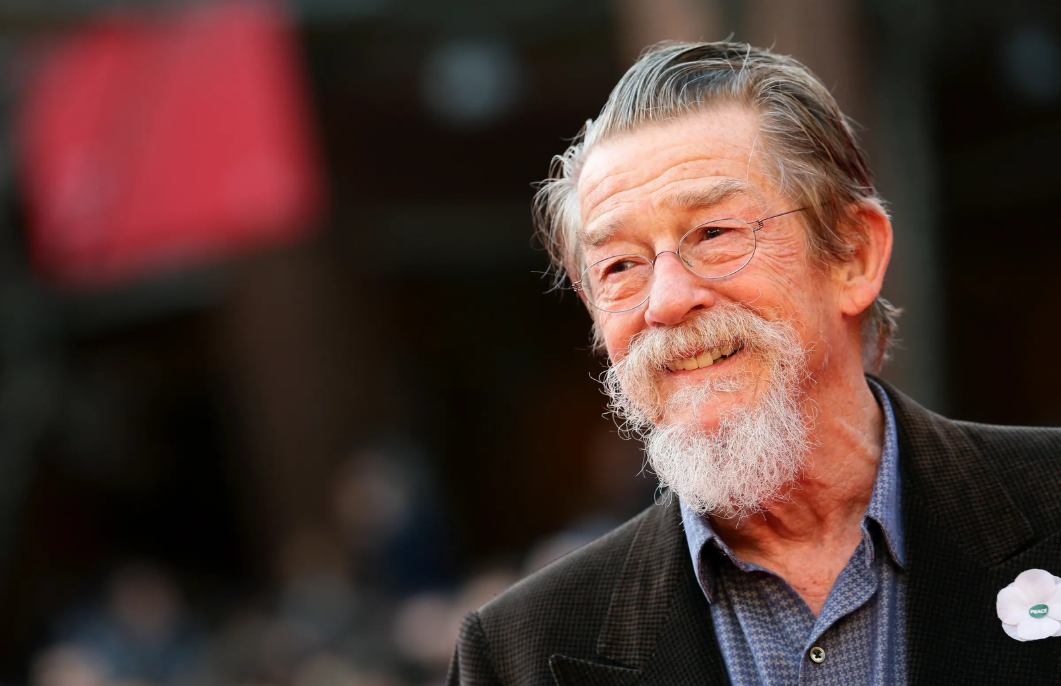
Sir John Hurt was one of Britain’s most distinctive and versatile screen actors, with a film career that stretched from the early 1960s until his death in 2017. He made his film debut in The Wild and the Willing in 1962 and went on to work across British dramas, historical films, science fiction, horror, comedy, animation, fantasy and international cinema. Hurt became particularly celebrated for performances in Midnight Express, Alien, The Elephant Man and Nineteen Eighty-Four, earning two Academy Award nominations during his career. He also became familiar to a new generation through roles such as Garrick Ollivander in the Harry Potter films, Professor Broom in Hellboy, and Professor Oxley in Indiana Jones and the Kingdom of the Crystal Skull. Alongside major productions, Hurt regularly appeared in independent and experimental films, often taking supporting parts that became memorable despite limited screen time. This complete guide to John Hurt movies by year follows his officially released feature-film work chronologically, including important voice, cameo and anthology appearances where relevant.
1962 — The Wild and the Willing
The Wild and the Willing marked John Hurt’s feature-film debut, with the young actor playing Phil Corbett. Directed by Ralph Thomas, the British drama follows a group of students dealing with relationships, ambition and the pressures of university life. Hurt was part of an ensemble that included Ian McShane and Virginia Maskell. The film is an important early entry in John Hurt’s filmography because it introduced an actor who would eventually build one of Britain’s most extensive screen careers.
1964 — This Is My Street
In This Is My Street, John Hurt played Charlie in Sidney Hayers’ British drama. The film focuses on working-class life and personal relationships in post-war London, giving Hurt an early opportunity to work within a realistic contemporary setting. His appearance came before the roles that would establish him as a major British character actor. It remains an early example of his progression from stage and television work into feature films.
1966 — A Man for All Seasons
John Hurt appeared as Richard Rich in Fred Zinnemann’s acclaimed historical drama A Man for All Seasons. The film stars Paul Scofield as Sir Thomas More and dramatizes More’s conflict with King Henry VIII over the king’s desire to end his marriage. Hurt’s Richard Rich becomes an important figure in the political struggle surrounding More. The film won the Academy Award for Best Picture and helped bring Hurt greater attention during the early part of his career.
1967 — The Sailor from Gibraltar
The Sailor from Gibraltar was a British drama directed by Tony Richardson, with John Hurt appearing as John. The story follows a woman who becomes increasingly fascinated by the idea of finding a mysterious sailor from her past. The film featured Jeanne Moreau, Ian Bannen and Vanessa Redgrave among its principal cast. Hurt’s role was part of the varied supporting work that characterized his early film career.
1969 — Sinful Davey
John Hurt took the title role of Davey Haggart in John Huston’s Sinful Davey. The period adventure-comedy follows a Scottish rogue whose life is shaped by theft, deception and constant attempts to escape trouble. Hurt brought youthful energy to the central character, showing an ability to lead a film well before his internationally recognized roles arrived. The production also starred Pamela Franklin and Trevor Howard.
1969 — Before Winter Comes
In J. Lee Thompson’s Before Winter Comes, Hurt played Lieutenant Pilkington. The war drama is set in the aftermath of the Second World War and explores tensions surrounding displaced people and political loyalties. The film featured David Niven and Topol in leading roles. Hurt’s supporting performance formed part of his growing body of British and international period work.
1969 — In Search of Gregory
In Search of Gregory featured John Hurt as Daniel in Peter Wood’s romantic drama. Julie Christie and Michael Sarrazin lead the story, which follows a woman searching for an elusive man while moving through a series of relationships and encounters. Hurt was among the supporting performers in this stylish late-1960s production. The film is a lesser-known but officially released entry in his early filmography.
1971 — 10 Rillington Place
John Hurt delivered one of his breakthrough performances as Timothy John Evans in Richard Fleischer’s 10 Rillington Place. The crime drama examines the real-life murders associated with John Christie, played by Richard Attenborough, and the wrongful execution of Evans. Hurt’s performance earned a BAFTA nomination for Best Supporting Actor and demonstrated his ability to portray vulnerable and deeply troubled characters. The film became an important turning point in his career.
1971 — Mr. Forbush and the Penguins
In Mr. Forbush and the Penguins, Hurt played Richard Forbush, an eccentric researcher who travels to Antarctica to study penguins. The film combines comedy, adventure and environmental themes and was directed by Roy Boulting, Arne Sucksdorff and Alfred Viola. Hurt carried much of the film as its central character, displaying the comic side of his acting range. It remains one of the more unusual leading roles among John Hurt movies by year.
1972 — The Pied Piper
Jacques Demy’s The Pied Piper gave Hurt the role of Franz in a musical fantasy adaptation of the traditional Pied Piper story. The production combined fairy-tale elements with a darker medieval atmosphere and featured Donovan in the title role. Hurt was part of an international cast that also included Donald Pleasence and Diana Dors. The film is notable for its unusual mixture of fantasy, music and period storytelling.
1974 — Little Malcolm and His Struggle Against the Eunuchs
John Hurt played Malcolm Scrawdyke in Stuart Cooper’s Little Malcolm and His Struggle Against the Eunuchs. Adapted from David Halliwell’s satirical play, the film follows a frustrated art student who forms a radical political group with his friends. Hurt had previously played the character on stage, making the film particularly significant in his career. The production also featured David Warner and John McEnery and was associated with George Harrison’s Handmade Films story.
1975 — The Ghoul
Freddie Francis directed The Ghoul, a British horror film in which John Hurt played Tom Rawlings. The story concerns a family and a sinister secret involving an isolated mansion and disturbing supernatural practices. Hurt appeared alongside Peter Cushing and Veronica Carlson. The film is a notable entry in his early horror work before he became internationally famous through Alien.
1976 — La Linea del fiume
John Hurt appeared as Chandler in the Italian drama La Linea del fiume. Directed by Aldo Scavarda, the film is one of the less widely seen international productions in Hurt’s filmography. His participation demonstrates how early in his career he was already moving between British productions and European cinema. It is included here because it represents an officially released feature-film credit rather than a television appearance.
1977 — The Disappearance
In Stuart Cooper’s The Disappearance, Hurt played Atkinson in a psychological thriller centered on a disturbing disappearance and its consequences. The film explores obsession, relationships and uncertainty through a deliberately restrained style. Hurt was part of a cast that included Donald Sutherland and Françoise Fabian. The movie belongs to the period immediately before Hurt’s international breakthrough in the late 1970s.
1977 — Three Dangerous Ladies
Three Dangerous Ladies was an anthology film directed by Robert Fuest, with Hurt appearing as Lieutenant Simmonds in the segment “The Island.” The film combines several stories of mystery, crime and danger rather than presenting one continuous narrative. Hurt’s appearance is therefore a segment-based role rather than a conventional single-story lead. It is an example of the varied formats he accepted throughout his career.
1977 — East of Elephant Rock
John Hurt played Nash in East of Elephant Rock, directed by Don Boyd. The drama is set in a colonial environment and examines relationships, isolation and cultural tensions. Hurt’s performance came during a period when he was increasingly taking complex roles in serious British cinema. The film remains a comparatively obscure but genuine feature entry in his career.
1978 — Midnight Express
Alan Parker’s Midnight Express became one of John Hurt’s defining performances. He played Max, a British prisoner and heroin addict encountered by Billy Hayes, portrayed by Brad Davis, inside an Istanbul prison. Hurt’s intense supporting performance earned him the BAFTA and Golden Globe for Best Supporting Actor and an Academy Award nomination. The film established him internationally and remains one of the central titles in any account of John Hurt movies by year.
1978 — The Shout
In Jerzy Skolimowski’s psychological drama The Shout, Hurt played Anthony Fielding, a composer whose life is disrupted by a mysterious and potentially dangerous stranger. The film blends psychological horror, supernatural ambiguity and experimental storytelling. Hurt’s performance was central to the movie’s unsettling atmosphere. It is regarded as one of his important British cult-film appearances from the same period as Midnight Express.
1978 — Watership Down
John Hurt provided the voice of Hazel in Martin Rosen’s animated adaptation of Richard Adams’ Watership Down. Hazel is the thoughtful rabbit leader who guides his group after they flee their threatened home. Hurt’s distinctive voice helped give the character warmth and authority. The role is a voice performance rather than a live-action appearance, and the film became one of the most enduring British animated features of its era.
1978 — The Lord of the Rings
Hurt voiced Aragorn in Ralph Bakshi’s animated The Lord of the Rings. The fantasy film adapts material from J.R.R. Tolkien’s novels and combines traditional animation with rotoscoping techniques. Hurt’s deep voice suited the noble but battle-worn character of Aragorn. Although later live-action adaptations became more famous, this animated version remains an important part of Hurt’s voice-acting filmography.
1979 — Alien
Ridley Scott’s Alien cast John Hurt as Kane, the executive officer of the spaceship Nostromo. Kane becomes central to one of cinema’s most famous science-fiction horror sequences after an alien organism attaches itself to him. Hurt’s performance helped make the character’s fate one of the film’s most memorable moments, while Sigourney Weaver, Ian Holm and Tom Skerritt led the wider cast. Alien became a landmark in science-fiction horror and a defining film in Hurt’s career.
1980 — The Elephant Man
John Hurt played John Merrick in David Lynch’s The Elephant Man, portraying the severely disfigured Victorian man whose intelligence and humanity challenge the prejudices of those around him. Anthony Hopkins, Anne Bancroft and John Gielgud were among the major supporting performers. Hurt’s work earned the BAFTA for Best Actor and Academy Award and Golden Globe nominations. The film remains one of his most acclaimed performances and a major landmark in British and American cinema.
1980 — Heaven’s Gate

Michael Cimino’s epic western Heaven’s Gate featured Hurt as William C. Irvine. The film dramatizes the violent conflict surrounding land ownership in the American West and features Kris Kristofferson, Christopher Walken and Isabelle Huppert. Hurt’s part is supporting rather than central, but it added another major international production to his résumé. The film later became known for its troubled production history and ambitious scale.
1981 — History of the World, Part I
Mel Brooks’ comedy History of the World, Part I gave Hurt the deliberately comic role of Jesus Christ. The film parodies different periods of history through a series of sketches and episodes featuring Brooks in multiple characters. Hurt’s brief appearance is a cameo-style comedic performance rather than one of the film’s main dramatic roles. It also showed his willingness to move from serious drama into broad comedy.
1981 — Night Crossing
John Hurt starred as Peter Strelzyk in Delbert Mann’s Night Crossing. Based on a true Cold War-era escape, the film follows two East German families who attempt to cross into West Germany using a homemade hot-air balloon. Hurt plays one of the men behind the dangerous plan, alongside Jane Alexander and Beau Bridges. The adventure drama gave him another role based on real events.
1982 — Partners
In the comedy Partners, Hurt played Kerwin under director James Burrows. The film combines crime and comedy and centers on an unusual police partnership. Hurt worked alongside Ryan O’Neal and John Hurt’s performance belongs to a period when he was alternating between major dramas and lighter productions. It is a lesser-known feature in his 1980s filmography.
1982 — The Plague Dogs
John Hurt voiced Snitter in Martin Rosen’s animated film The Plague Dogs. Based on Richard Adams’ novel, the dark story follows two dogs who escape from a laboratory and struggle to survive in the countryside while authorities hunt them. Hurt’s voice performance gives Snitter an emotional vulnerability that contrasts with the film’s bleak themes. The film is notable as another collaboration between Hurt and Rosen following Watership Down.
1983 — The Osterman Weekend
Sam Peckinpah directed The Osterman Weekend, a political espionage thriller featuring Hurt as Lawrence Fassett. The story follows television host John Tanner, played by Rutger Hauer, as he becomes caught in a complex intelligence operation involving his friends. Hurt’s character is deeply involved in the manipulation and surveillance surrounding the central conflict. The film added a harder-edged thriller role to his 1980s work.
1984 — Champions
John Hurt portrayed real-life jockey Bob Champion in Champions, directed by John Irvin. The biographical sports drama follows Champion’s battle with cancer and his determination to return to horse racing. Hurt’s performance earned him the Evening Standard British Film Award for Best Actor. The role demonstrated his ability to combine physical vulnerability with determination in a true-life story.
1984 — Success Is the Best Revenge
Jerzy Skolimowski directed Success Is the Best Revenge, with Hurt playing Dino Montecurva. The drama focuses on an actor and his son as political and personal tensions develop around their lives in exile. Hurt’s performance forms part of the film’s examination of art, family and political identity. It was another collaboration between Hurt and Skolimowski after The Shout.
1984 — The Hit
In Stephen Frears’ The Hit, Hurt played professional hitman Braddock. The crime drama follows Braddock and his young accomplice as they transport a former criminal informant, played by Terence Stamp, toward his execution. Tim Roth also appears as Braddock’s inexperienced partner. Hurt’s controlled performance helped make the film a notable British crime picture of the decade.
1984 — Nineteen Eighty-Four
John Hurt took the leading role of Winston Smith in Michael Radford’s adaptation of George Orwell’s Nineteen Eighty-Four. Winston lives under the surveillance of the totalitarian Party and secretly searches for freedom, love and independent thought. Richard Burton, Suzanna Hamilton and Richard Griffiths were among the principal cast members. Hurt’s restrained and increasingly desperate performance became one of his most recognized dramatic achievements.
1985 — After Darkness
After Darkness featured Hurt as Peter Hunningford in a drama directed by Dominique Othenin-Girard and Sergio Guerraz. The film examines family tensions and emotional conflict in a period marked by uncertainty and personal strain. Hurt leads the cast through a character-driven performance rather than the large-scale spectacle associated with some of his later work. It remains one of the less frequently discussed films in his 1980s career.
1985 — The Black Cauldron
John Hurt provided the voice of the Horned King in Disney’s animated fantasy The Black Cauldron. Directed by Ted Berman and Richard Rich, the film follows a young hero’s struggle against an evil ruler seeking to use a magical cauldron to conquer the land. Hurt’s deep, menacing vocal performance made the Horned King one of Disney animation’s darker villains. His contribution was entirely a voice role.
1986 — Jake Speed
In the adventure-comedy Jake Speed, Hurt played Sid under director Andrew Lane. The film follows a young woman searching for her kidnapped sister while becoming involved with a larger-than-life fictional adventurer. Hurt appears in a supporting capacity alongside Wayne Crawford and Dennis Christopher. The movie is an example of his willingness to appear in smaller genre productions between prestigious dramatic roles.
1987 — Rocinante
John Hurt appeared as Bill in Rocinante, an independent film associated with directors Ann Guedes and Eduardo Guedes. The production is centered on an unusual journey and relationships shaped by movement and personal discovery. Hurt’s involvement was relatively small compared with his major studio roles of the period. It nevertheless forms part of the broad range of independent cinema found in his filmography.
1987 — White Mischief
Michael Radford’s White Mischief featured Hurt as Gilbert Colvile. The period drama is based on the real-life events surrounding the so-called Happy Valley set in colonial Kenya. Greta Scacchi, Charles Dance and Joss Ackland were among the other principal cast members. Hurt’s performance contributed to the film’s atmosphere of privilege, secrecy and scandal.
1987 — From the Hip
In the legal comedy From the Hip, Hurt played Douglas Benoit. The film stars Judd Nelson as a young lawyer whose unconventional courtroom style creates professional and personal complications. Directed by Bob Clark, the movie allowed Hurt to work within a lighter contemporary genre. His supporting role adds another dimension to his varied 1980s screen work.
1987 — Aria
Aria is an anthology film in which different directors interpret operatic music through separate visual stories. Hurt appears as the Actor in the segment based on “Pagliacci,” directed by Bill Bryden. His appearance is therefore part of an anthology rather than a conventional feature-length single narrative. The film is notable for bringing together several filmmakers and performers in an experimental cinematic format.
1987 — Spaceballs
Hurt made a memorable cameo as Kane in Mel Brooks’ science-fiction parody Spaceballs. The appearance deliberately references his role in Alien, recreating the famous chest-bursting gag in comic form. Brooks surrounded Hurt with a cast including Bill Pullman, Rick Moranis and John Candy. It is one of the clearest examples of Hurt humorously revisiting his own cinematic legacy.
1988 — The Bengali Night
John Hurt played Lucien Metz in Nicolas Klotz’s The Bengali Night. The drama is based on Mircea Eliade’s novel and centers on a European engineer whose experiences in India become complicated by relationships and cultural differences. Hurt’s role places him within an international cast and setting. The film is a lesser-known entry but an important part of his late-1980s European work.
1989 — Scandal
Hurt portrayed Stephen Ward in Michael Caton-Jones’ Scandal, a dramatization of the Profumo affair that shook British politics in the 1960s. The film examines Ward’s relationships with Christine Keeler and other figures caught up in the scandal. Hurt’s performance presents Ward as a sophisticated but increasingly vulnerable central figure. The movie became one of his significant British historical dramas.
1989 — Little Sweetheart
In Anthony Simmons’ Little Sweetheart, Hurt played Robert Burger. The British drama explores the difficult circumstances surrounding children and adults in a troubled social environment. Hurt was part of an ensemble that included Anthony Calf and Stephen Rea. The film is considerably less famous than his major productions but belongs to his continuing work in serious British cinema.
1990 — Windprints
Windprints featured John Hurt as Charles Rutherford in a drama directed by David Wicht. The story deals with political violence and personal conflict in southern Africa. Hurt’s character becomes involved in a dangerous situation shaped by the region’s political tensions. The film represents his continuing interest in serious international dramas.
1990 — Romeo.Juliet
John Hurt appeared as Mercutio in the experimental film Romeo.Juliet, directed by Armondo Linus Acosta. The production offers a stylized interpretation of Shakespeare’s tragedy and combines unusual visual and performance techniques. Hurt’s participation was part of the film’s deliberately unconventional approach to the classic material. It is a distinctive and relatively obscure title in his filmography.
1990 — The Field
In Jim Sheridan’s The Field, Hurt played Bird O’Donnell alongside Richard Harris, Brenda Fricker and Tom Berenger. The Irish drama follows a farmer determined to retain control of a piece of land he believes belongs to his family. Hurt’s supporting performance contributes to the film’s portrait of rural conflict, tradition and obsession. The film earned major critical recognition, with Hurt receiving a BAFTA nomination for his performance.
1990 — Frankenstein Unbound
Roger Corman’s science-fiction film Frankenstein Unbound starred Hurt as Joe Buchanan, a scientist transported through time into a world connected to Mary Shelley’s characters. The film blends science fiction, horror and literary fantasy while featuring Raul Julia and Bridget Fonda. Hurt also provides narrative elements within the story. Its unusual mixture of time travel and classic Gothic fiction makes it one of his more distinctive genre films.
1991 — King Ralph

John Hurt played Lord Percival Graves in the comedy King Ralph, directed by David S. Ward. The film stars John Goodman as an American who unexpectedly becomes king of the United Kingdom and must learn how to handle royal responsibilities. Hurt’s character represents the traditional aristocratic world that clashes with Ralph’s unconventional personality. His performance showed a lighter, comic side of the actor.
1993 — L’Oeil qui ment
Hurt played Anthony and the Marquis in Raúl Ruiz’s French-language film L’Oeil qui ment. The surreal drama is characterized by unusual storytelling, shifting identities and dreamlike imagery. Hurt’s dual role suited Ruiz’s deliberately unconventional narrative style. The movie is among the more experimental European productions in his career.
1993 — Kölcsönkapott idő
In the Hungarian production Kölcsönkapott idő, Hurt played Sean. The film is a dramatic international production and represents one of his collaborations outside the British and American mainstream. Hurt’s role adds another European-language project to a career that frequently crossed national cinema boundaries. It remains one of the more obscure titles in his filmography.
1993 — Monolith
Monolith featured John Hurt as Villano in John Eyres’ science-fiction action film. The story involves a mysterious technological object and a dangerous confrontation surrounding its discovery. Hurt took a supporting role in the genre production. The movie is notable mainly as an example of his broad willingness to work across mainstream and lower-profile science-fiction projects.
1993 — Even Cowgirls Get the Blues
Gus Van Sant’s Even Cowgirls Get the Blues featured Hurt as the Countess. Adapted from Tom Robbins’ novel, the film mixes comedy, road-movie elements and surreal character relationships. Uma Thurman, Lorraine Bracco and Keanu Reeves were among the cast. Hurt’s eccentric supporting appearance fitted the film’s deliberately unconventional tone.
1994 — Thumbelina
John Hurt voiced Mr. Mole in Don Bluth and Gary Goldman’s animated Thumbelina. The musical fantasy follows a tiny girl searching for love and trying to escape unwanted suitors. Hurt’s contribution is a voice performance rather than a live-action role. The film added another family-animation credit to a filmography already known for Watership Down and The Black Cauldron.
1994 — Great Moments in Aviation
In Great Moments in Aviation, Hurt played Rex Goodyear under director Beeban Kidron. The comedy-drama follows a group of travelers and aviation enthusiasts whose lives intersect around a flight. The ensemble includes Vanessa Redgrave, Jonathan Pryce and Craig Sheffer. Hurt’s role is another example of his frequent appearances in character-driven British productions.
1994 — Second Best
John Hurt played Uncle Turpin in Chris Menges’ Second Best. The drama centers on a troubled father and son relationship after a young boy is taken into a new family environment. Hurt’s supporting performance contributes to the film’s emotional examination of family, abandonment and belonging. The movie is one of the quieter dramatic projects in his 1990s filmography.
1995 — Rob Roy
Michael Caton-Jones’ Rob Roy featured Hurt as John Graham, Marquis of Montrose. The historical adventure stars Liam Neeson as Scottish folk hero Rob Roy MacGregor and Tim Roth as his ruthless enemy Archibald Cunningham. Hurt’s aristocratic character becomes involved in the political forces surrounding the central conflict. The film is one of his notable 1990s historical roles.
1995 — Dead Man
Jim Jarmusch’s western Dead Man gave Hurt the small but memorable role of John Scholfield. Johnny Depp stars as William Blake, a traveler who becomes caught in a strange and increasingly violent journey through the American frontier. Hurt appears alongside Robert Mitchum and other established performers. Despite having limited screen time, his performance is frequently remembered as part of the film’s eccentric ensemble.
1995 — Wild Bill
John Hurt appeared as Charley Prince in Walter Hill’s western Wild Bill. The film dramatizes the life of legendary lawman Wild Bill Hickok, played by Jeff Bridges. Hurt’s supporting role places him within a cast that also includes Ellen Barkin and Keith Carradine. The production gave him another opportunity to work in the Western genre after his earlier international roles.
1997 — Love and Death on Long Island
In Richard Kwietniowski’s Love and Death on Long Island, Hurt played Giles De’Ath, a reclusive British writer who develops an unusual fascination with a young American film actor. Jason Priestley plays the actor who becomes the object of Giles’s obsession. The film is a sophisticated comedy-drama about loneliness, celebrity culture and personal identity. Hurt’s central performance is one of the most distinctive roles of his later career and received independent-film recognition.
1997 — Contact
Robert Zemeckis’ science-fiction drama Contact featured Hurt as S.R. Hadden, the mysterious industrialist who helps scientist Ellie Arroway pursue evidence of extraterrestrial intelligence. Jodie Foster leads the film, with Matthew McConaughey, James Woods and Tom Skerritt among the principal cast. Hurt’s performance gives Hadden an enigmatic and unconventional presence. The film became one of the major science-fiction releases of the 1990s.
1997 — The Climb
Hurt played Chuck Langer in Bob Swaim’s drama The Climb. The film follows a difficult physical and emotional journey involving mountaineering and personal relationships. Hurt’s role adds an experienced presence to the ensemble. Although less prominent than Contact, it forms part of his unusually diverse 1990s output.
1997 — Bandyta
In the Polish-British drama Bandyta, Hurt played Babits. The film explores crime, imprisonment and redemption through a troubled protagonist sent to work in an orphanage in Romania. Hurt’s supporting role contributes to the film’s serious dramatic tone. The production further illustrates the international character of his career during the 1990s.
1998 — The Commissioner
George Sluizer’s political thriller The Commissioner featured Hurt as James Morton. The film follows a European politician dealing with corruption and political pressure after taking on a powerful new position. Hurt appears in a supporting role alongside John Hurt’s frequent international-cinema collaborators. The film is an example of his continued work in serious political drama.
1998 — Night Train
John Hurt starred as Michael Poole in John Lynch’s Night Train. The thriller follows a mysterious and increasingly dangerous encounter aboard a train. Hurt’s performance anchors the film’s atmosphere of suspicion and uncertainty. It is a relatively intimate production compared with the large-scale films that would later become associated with his name.
1998 — All the Little Animals
In Jeremy Thomas’ All the Little Animals, Hurt played Mr Summers. The drama follows a vulnerable young man who becomes involved with an eccentric older man while trying to escape an abusive family situation. Christian Bale leads the film, with Hurt providing one of its central supporting performances. The movie is notable for its sensitive treatment of outsiders and damaged characters.
1999 — A Monkey’s Tale
John Hurt provided the English voice of Sebastian in A Monkey’s Tale, an animated adventure directed by Jean-François Laguionie. The film follows a young monkey whose journey introduces him to a wider and more complicated world. Hurt’s contribution was an English-dub performance rather than an on-camera appearance. It adds another animated voice credit to his extensive film career.
1999 — If… Dog… Rabbit…
In If… Dog… Rabbit…, Hurt played Sean Cooper. Directed by Matthew Modine, the film is a crime drama centered on two brothers and the consequences of their involvement with criminal activity. Hurt’s role forms part of the ensemble surrounding the younger central characters. The film is an example of his continuing work in independent cinema at the end of the 1990s.
1999 — You’re Dead
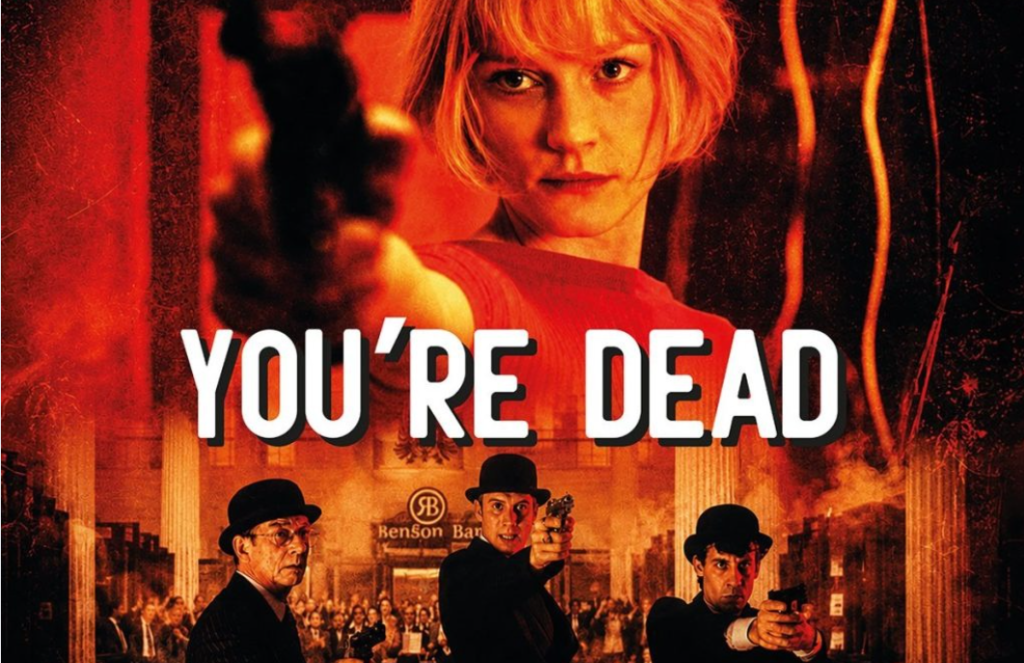
John Hurt appeared as Maitland in Andy Hurst’s crime film You’re Dead. The story involves criminals, betrayal and a series of dangerous complications surrounding a planned robbery. Hurt played a supporting character within the ensemble rather than the central protagonist. The film represents another lower-profile crime project from the latter part of his career.
2000 — The Tigger Movie
Hurt served as narrator in Disney’s animated The Tigger Movie. The family film follows Tigger as he searches for other members of his species and begins questioning his identity and place in the Hundred Acre Wood. Hurt’s contribution is a voice/narration role rather than a conventional character performance. His distinctive voice added a more formal storytelling quality to the animated production.
2000 — New Blood
In New Blood, Hurt played Alan White, a supporting character in the British crime drama directed by Michael Hurst. The film follows a young criminal who becomes involved with an older criminal figure and a dangerous criminal network. Hurt worked alongside John Hurt’s fellow British performers in a gritty contemporary setting. The film continued his regular appearances in crime and thriller productions.
2000 — Lost Souls
Janusz Kamiński’s supernatural thriller Lost Souls featured Hurt as Father Lareaux. The story follows a woman who becomes convinced that a man is destined to become a vessel for evil. Winona Ryder and Ben Chaplin lead the film, with Hurt appearing in a supporting role connected to the supernatural investigation. It was one of his early-2000s ventures into mainstream horror.
2001 — Tabloid
John Hurt played Vince in David Blair’s British crime film Tabloid. The movie examines crime, relationships and the media through a darkly comic and dramatic story. Hurt was part of an ensemble cast in a production that remained outside the mainstream despite his involvement. It is an important lesser-known entry when looking at John Hurt movies by year.
2001 — Captain Corelli’s Mandolin
In Captain Corelli’s Mandolin, Hurt played Dr Yiannis under director John Madden. Set on the Greek island of Cephalonia during the Second World War, the romantic war drama stars Nicolas Cage and Penélope Cruz. Hurt’s character is a respected local doctor whose family becomes caught up in the wartime occupation. The film added another large-scale period production to his international résumé.
2001 — Harry Potter and the Philosopher’s Stone
John Hurt first played wandmaker Garrick Ollivander in Harry Potter and the Philosopher’s Stone, directed by Chris Columbus. Ollivander is the mysterious craftsman who helps Harry discover the significance of his wand and its connection to Voldemort’s wand. Hurt’s appearance is relatively brief but important to the mythology of the series. The role introduced him to a huge new international audience and became one of his most recognizable later characters.
2002 — Miranda
Hurt appeared as Christian in Marc Munden’s dark comedy Miranda. The film stars Christina Ricci as a woman caught in an unusual relationship with a mysterious man, combining romance, crime and surreal humor. Hurt’s supporting role adds to the movie’s eccentric atmosphere. The production is another example of his willingness to take unconventional independent parts.
2003 — Owning Mahowny
Richard Kwietniowski’s Owning Mahowny featured Hurt as Victor Foss. The crime drama stars Philip Seymour Hoffman as a Canadian bank employee whose gambling addiction leads him into increasingly serious financial crimes. Hurt’s character is connected to the gambling world that enables Mahowny’s behavior. The film is notable for its restrained treatment of addiction and financial crime.
2003 — Dogville
John Hurt provided the narration for Lars von Trier’s Dogville. Starring Nicole Kidman, the experimental drama tells the story of a mysterious woman who seeks refuge in an isolated American town. Hurt’s voice guides viewers through the unusual theatrical presentation and episodic structure. His role is therefore a narration performance rather than an on-screen character.
2004 — Hellboy
Guillermo del Toro’s Hellboy featured Hurt as Professor Trevor “Broom” Bruttenholm, the father figure and mentor of the titular superhero played by Ron Perlman. Broom raises Hellboy and attempts to guide him toward using his supernatural abilities for good. Hurt brought warmth and authority to the role, which helped establish the emotional foundation of the film. The comic-book adaptation became one of his most recognizable 21st-century roles.
2004 — Pride
John Hurt provided the voice of Harry in Pride, a documentary-style wildlife production directed by John Downer. The film focuses on lions and other African wildlife, using narration to build its story around the animals’ behavior and survival. Hurt’s contribution is a voice performance rather than a live-action acting role. It demonstrates how frequently filmmakers used his distinctive voice for documentary and nature productions.
2005 — Short Order
In the dark comedy Short Order, Hurt played Felix. The film uses a series of interconnected characters and stories centered around food, relationships and unusual encounters. Hurt’s supporting performance is part of the movie’s international ensemble. It is a less prominent title but belongs in a complete account of his officially released feature-film work.
2005 — Valiant
Hurt voiced Gary Chapman in the animated comedy Valiant. The film follows a small pigeon who joins Britain’s Royal Homing Pigeon Service during the Second World War. Ewan McGregor, Ricky Gervais and Hugh Laurie were among the principal voice cast. Hurt’s role was entirely vocal, adding another animation credit to his extensive résumé.
2005 — Manderlay
Hurt returned as the narrator for Lars von Trier’s Manderlay, the follow-up to Dogville. The film continues von Trier’s highly theatrical approach while examining race, power and social control in an American setting. Hurt’s narration helps maintain the detached storytelling style of the production. As with Dogville, this is a voice/narration contribution rather than a conventional on-screen acting role.
2005 — The Skeleton Key
In Iain Softley’s supernatural thriller The Skeleton Key, Hurt played Ben Devereaux. Kate Hudson stars as a hospice worker who becomes involved with an elderly couple and a mysterious history of hoodoo practices in Louisiana. Hurt’s character is at the center of the film’s unsettling mystery and gives the story much of its emotional weight. The film became one of his prominent horror roles of the 2000s.
2005 — Shooting Dogs
John Hurt played Father Christopher in Shooting Dogs, directed by Michael Caton-Jones. Set during the 1994 Rwandan genocide, the drama follows a Catholic priest and others attempting to protect people trapped at a school compound. Hurt’s character is a fictional priest confronting an unfolding humanitarian catastrophe. The film is a serious historical drama and one of his more morally challenging later roles.
2005 — The Proposition
In John Hillcoat’s Australian western The Proposition, Hurt played Jellon Lamb. Set in the Australian outback, the film stars Guy Pearce, Ray Winstone and Emily Watson in a brutal story of crime, family and revenge. Hurt’s character is an educated and reflective figure caught within the violence of the frontier. The film became particularly noted for its harsh atmosphere and strong ensemble performances.
2006 — V for Vendetta
Hurt played High Chancellor Adam Sutler in V for Vendetta, directed by James McTeigue. The dystopian thriller follows a masked revolutionary known as V, played by Hugo Weaving, as he challenges an authoritarian British government. Hurt’s character is the leader of the regime and represents the political power opposing V. The casting created an interesting connection with Hurt’s earlier performance as Winston Smith in Nineteen Eighty-Four.
2006 — Perfume: The Story of a Murderer
John Hurt served as narrator in Tom Tykwer’s Perfume: The Story of a Murderer. Adapted from Patrick Süskind’s novel, the film follows Jean-Baptiste Grenouille, a man with an extraordinary sense of smell whose obsession becomes increasingly dangerous. Hurt’s voice provides the narrative framework for the period drama. His role is therefore a voice performance rather than an on-screen character.
2007 — Boxes
In Jane Birkin’s Boxes, Hurt played Fanny’s father. The French drama explores memory, family, aging and relationships through an intimate narrative centered on its lead character. Hurt’s supporting performance contributes to the film’s reflective tone. It is another international independent production from the later period of his career.
2008 — The Oxford Murders

Álex de la Iglesia directed The Oxford Murders, with Hurt playing mathematics professor Arthur Seldom. Elijah Wood stars as a graduate student who becomes involved in a series of murders linked to mathematical symbols and philosophical ideas. Hurt’s character acts as both mentor and possible suspect as the mystery develops. The film combines murder mystery, mathematics and psychological thriller elements.
2008 — Indiana Jones and the Kingdom of the Crystal Skull
Hurt played Professor Harold “Ox” Oxley in Steven Spielberg’s Indiana Jones and the Kingdom of the Crystal Skull. Harrison Ford returned as Indiana Jones, while Hurt’s character provides crucial knowledge concerning the mysterious crystal skull at the heart of the adventure. Cate Blanchett, Shia LaBeouf and Karen Allen also feature prominently. The film brought Hurt into another major Hollywood adventure franchise.
2008 — Hellboy II: The Golden Army
Hurt reprised Professor Trevor “Broom” Bruttenholm in Hellboy II: The Golden Army. Directed by Guillermo del Toro, the sequel expands the supernatural world of the first film while introducing the dangerous Golden Army. Hurt’s appearance is a brief posthumous-style flashback/cameo role within the story rather than a major present-day performance. His presence maintained the emotional connection between Hellboy and his adoptive father.
2008 — Outlander
In the science-fiction action film Outlander, Hurt played Hrothgar. The story combines Viking-era warfare with science fiction as an extraterrestrial creature arrives on Earth and threatens a medieval community. Jim Caviezel leads the film, with Hurt playing an older warrior and community figure. The production allowed him to work within another distinctive genre blend.
2008 — Lecture 21
John Hurt appeared as Mondrian Kilroy in Alessandro Baricco’s Lecture 21. The Italian production combines music, philosophy and literary ideas within an unconventional narrative structure. Hurt’s involvement added an established international actor to the film’s experimental ensemble. It remains one of the more obscure feature films from his later career.
2008 — New York, I Love You
Hurt appeared as a bellhop in the segment directed by Shekhar Kapur for the anthology film New York, I Love You. The movie consists of interconnected romantic stories set across New York City, with different directors handling individual segments. Hurt’s role is therefore a short anthology appearance rather than a central performance. The ensemble also included stars such as Bradley Cooper, Natalie Portman and Ethan Hawke.
2009 — The Limits of Control
Jim Jarmusch’s crime drama The Limits of Control featured Hurt as Guitar. The film stars Isaach De Bankolé as a mysterious criminal operative traveling through Spain while receiving cryptic instructions from various contacts. Hurt’s character is one of several enigmatic figures he encounters. The film reunited Hurt with Jarmusch after their collaboration on Dead Man.
2009 — 44 Inch Chest
In Malcolm Venville’s 44 Inch Chest, Hurt played Old Man Peanut, a foul-mouthed East End criminal. Ray Winstone leads the film as a man whose friends attempt to help him deal with the discovery that his wife has been unfaithful. Hurt’s character is part of the group trying to steer him toward revenge. The performance became one of Hurt’s more colorful late-career supporting roles.
2010 — Lou
John Hurt played Doyle in the Australian drama Lou, directed by Belinda Chayko. The film centers on a young girl and her family relationships, with Hurt contributing a mature supporting performance. The story focuses on personal connection, grief and the complicated relationships between generations. It is a quieter independent feature from the final decade of his career.
2010 — A Turtle’s Tale: Sammy’s Adventures
Hurt voiced Grandpa Sammy in the animated family film A Turtle’s Tale: Sammy’s Adventures, directed by Ben Stassen. The film follows a sea turtle across decades as he travels through oceans and encounters changing environments. Hurt’s performance is a voice role, with the character serving as an older perspective on Sammy’s life. The movie added another family-animation credit to his extensive voice portfolio.
2010 — Brighton Rock
In Rowan Joffé’s adaptation of Brighton Rock, Hurt played Phil Corkery. The crime drama, based on Graham Greene’s novel, follows a young gangster whose violent behavior becomes entangled with a murder investigation. Sam Riley leads the film, with Hurt appearing in a supporting role alongside Helen Mirren and John Hurt’s fellow British performers. The film brought a classic British crime story to a modern screen audience.
2010 — Ultramarines: The Movie
Hurt voiced Carnak in Ultramarines: The Movie, an animated science-fiction film set in the Warhammer 40,000 universe. The story follows Space Marines investigating a distress signal on a dangerous world. Hurt’s role was performed entirely through voice acting. His distinctive voice helped give authority to the military science-fiction setting.
2010 — Harry Potter and the Deathly Hallows — Part 1
Hurt returned as Garrick Ollivander in Harry Potter and the Deathly Hallows — Part 1. David Yates directed the film, which follows Harry, Ron and Hermione as they leave Hogwarts to search for Voldemort’s Horcruxes. Ollivander becomes important to the story because of his knowledge of wands and their history. Hurt’s performance connected the later chapter to the character he had first played nearly a decade earlier.
2011 — Harry Potter and the Deathly Hallows — Part 2
In the final Harry Potter film, Hurt again appeared as Garrick Ollivander. Harry Potter and the Deathly Hallows — Part 2 brings the story to its climactic battle at Hogwarts and resolves the conflict between Harry and Voldemort. Ollivander remains an important source of information about the magical world’s wands and their powers. The role completed Hurt’s principal appearances in the film series.
2011 — Melancholia
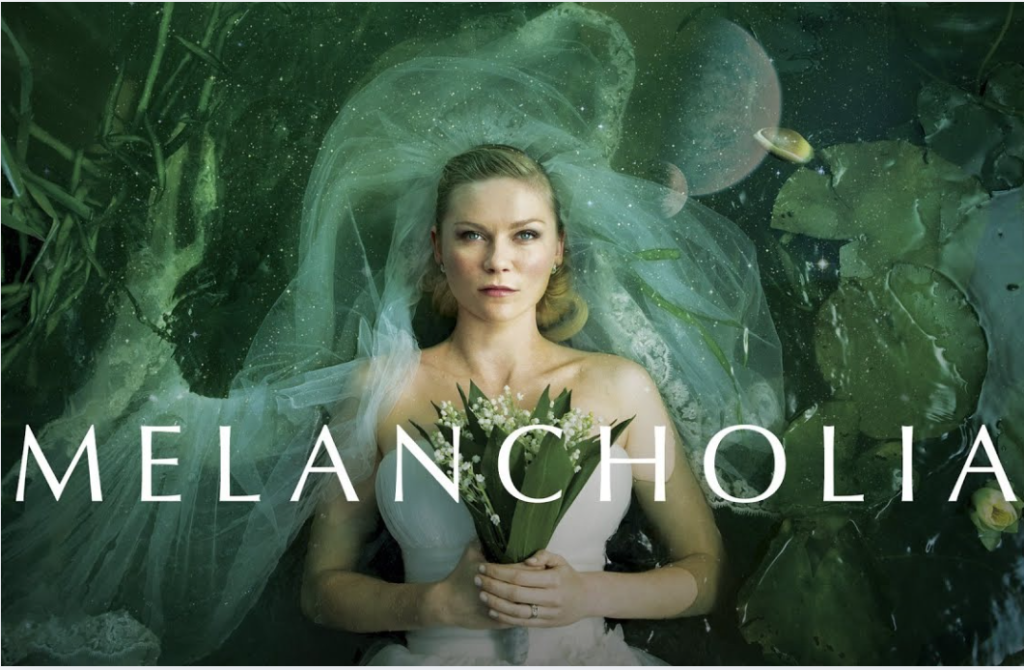
Lars von Trier’s Melancholia featured Hurt as Dexter, the father of Kirsten Dunst’s character Justine. The psychological science-fiction drama follows two sisters as a mysterious planet approaches Earth. Hurt’s role appears within the film’s deeply personal exploration of family relationships, depression and impending catastrophe. The movie was presented as an arthouse drama with strong science-fiction elements.
2011 — Tinker Tailor Soldier Spy
Hurt played Control in Tomas Alfredson’s acclaimed espionage drama Tinker Tailor Soldier Spy. Based on John le Carré’s novel, the film follows retired intelligence officer George Smiley, played by Gary Oldman, as he searches for a Soviet mole inside British intelligence. Hurt’s Control is the senior intelligence chief whose earlier decisions set much of the investigation in motion. The film features a major British ensemble including Colin Firth, Mark Strong and Benedict Cumberbatch.
2011 — Immortals
In Tarsem Singh’s fantasy action film Immortals, Hurt played the Old Man, who also functions as a narrator figure. The story follows Theseus, played by Henry Cavill, as he battles King Hyperion and attempts to prevent the release of the Titans. Hurt’s role provides a framing presence around the mythological action. It was one of his larger fantasy productions during the final years of his career.
2012 — Jayne Mansfield’s Car
Hurt played Kingsley Bedford in Billy Bob Thornton’s ensemble drama Jayne Mansfield’s Car. The story centers on two families from different sides of the Atlantic who meet after the death of a woman and confront old tensions. Hurt appeared alongside Thornton, Robert Duvall, Kevin Bacon and others. The film combines family drama with themes of war, memory and generational conflict.
2012 — In Love with Alma Cogan
In In Love with Alma Cogan, Hurt played the Master of Ceremonies. The British comedy-drama explores nostalgia, celebrity culture and a man’s fascination with singer Alma Cogan. Hurt’s role is supporting and linked to the film’s theatrical and entertainment-world atmosphere. It is one of the smaller productions from his final years.
2012 — Sightseers
Hurt provided an uncredited voice contribution as the narrator of Blake’s “Jerusalem” in Ben Wheatley’s dark comedy Sightseers. The film follows a couple whose caravan holiday becomes increasingly violent and unpredictable. Hurt does not play a conventional on-screen character in the story. His contribution is therefore best classified as a brief voice appearance.
2013 — Only Lovers Left Alive
Jim Jarmusch’s Only Lovers Left Alive featured Hurt as the ancient vampire Christopher Marlowe. Tom Hiddleston and Tilda Swinton star as a pair of centuries-old vampires whose relationship is disrupted by the arrival of a reckless relative. Hurt’s Marlowe is an elderly intellectual and writer living in Tangier. The role was one of his final collaborations with Jarmusch and became a memorable late-career appearance.
2013 — Snowpiercer
In Bong Joon-ho’s Snowpiercer, Hurt played Gilliam, an elder revolutionary aboard a train carrying the last survivors of an environmentally devastated Earth. Chris Evans leads the film as Curtis, who attempts to move through the train’s rigid class system toward its front. Hurt’s character serves as an influential mentor and political figure. The film became an internationally acclaimed science-fiction thriller and one of Hurt’s major final genre performances.
2013 — Charlie Countryman
Hurt provided the narration for The Necessary Death of Charlie Countryman, also released as Charlie Countryman. Fredrik Bond directed the romantic crime film starring Shia LaBeouf, Evan Rachel Wood and Mads Mikkelsen. Hurt’s voice helps establish the unusual fairy-tale-like tone surrounding Charlie’s dangerous journey in Bucharest. His contribution is a narration role rather than a conventional on-screen appearance.
2013 — More Than Honey
John Hurt narrated the English-language version of Markus Imhoof’s documentary More Than Honey. The film investigates honeybees, beekeeping and the environmental challenges affecting bee populations around the world. Hurt’s distinctive voice provides the narration and helps connect the documentary’s scientific and human stories. This is a documentary voice credit rather than a fictional feature-film acting role.
2014 — Hercules
Brett Ratner’s Hercules featured Hurt as Cotys, the king of Thrace who recruits Hercules and his companions. Dwayne Johnson stars as Hercules, while Ian McShane, Rufus Sewell and Aksel Hennie play members of his team. Hurt’s character seeks military help against a powerful enemy threatening his kingdom. The fantasy action film was one of the larger commercial productions of Hurt’s final years.
2015 — A.K.A Nadia
In A.K.A Nadia, Hurt played 347 in Tova Asher’s dramatic feature. The film explores identity, relationships and personal transformation through a character-driven story. Hurt’s role is part of the movie’s international ensemble and is considerably smaller than his roles in major studio productions. It remains part of his officially released late-career film work.
2015 — The Absinthe Drinkers
John Hurt played Antonio Argenti in The Absinthe Drinkers. Directed by John Jopson, the film explores artistic and bohemian life against a historical European backdrop. Hurt’s character contributes to the film’s portrait of artists, personalities and relationships. It is one of the less widely seen independent productions released during his final years.
2015 — Thomas & Friends: Sodor’s Legend of the Lost Treasure
Hurt voiced Sailor John in the animated family film Thomas & Friends: Sodor’s Legend of the Lost Treasure. The story follows Thomas and his friends as they become involved in an adventure involving a pirate and a long-lost treasure. Hurt’s role was entirely vocal and gave the production a recognizable dramatic voice. It was one of his final family-oriented animation credits.
2016 — ChickLit
In ChickLit, Hurt played Francis Bonar in Tony Britten’s British comedy. The film follows a group of men who attempt to write a successful romantic novel after discovering the commercial potential of the genre. Hurt appears within the ensemble cast in a supporting role. The movie is a lighter late-career project compared with the historical dramas and thrillers for which he was best known.
2016 — The Journey
John Hurt played Harry Patterson in Nick Hamm’s political drama The Journey. The film imagines a private meeting between political opponents during the Northern Ireland peace process, with Timothy Spall and Colm Meaney among the principal cast. Hurt’s role is connected to the real-world literary and political figures behind the story. The film is notable as one of his final completed performances.
2016 — Jackie
Pablo Larraín’s Jackie featured Hurt as the priest who speaks with Jacqueline Kennedy following the assassination of President John F. Kennedy. Natalie Portman stars as Jackie Kennedy in the historical drama, which focuses on her experiences during the days following the assassination. Hurt’s appearance is brief but emotionally significant. The film became one of the final major theatrical releases completed during his lifetime.
2016 — Back to Utopia
Hurt provided a voice contribution to Back to Utopia, an experimental production directed by Peter Panludic. His role was vocal rather than a conventional on-screen performance. The project received an international posthumous release context within the broader body of work connected with Hurt’s final years. It is best identified separately from his standard live-action feature roles.
2017 — My Name Is Lenny

Released after John Hurt’s death, My Name Is Lenny featured him as Leslie Salmon. Directed by Ron Scalpello, the British biographical drama focuses on bare-knuckle fighter Lenny McLean, played by Josh Helman. Hurt’s performance is a supporting role in the story of McLean’s rise through London’s criminal and boxing worlds. The film is considered one of Hurt’s posthumously released screen performances.
2017 — That Good Night
John Hurt starred as Ralph in That Good Night, directed by Eric Styles. The drama follows an aging writer who attempts to settle unfinished personal matters and make peace with his past. Hurt’s central performance gives the film its emotional focus and became especially significant because it was among his final completed leading roles. The film was released after his death, making it an important posthumous entry in his filmography.
2017 — Damascus Cover
In Damascus Cover, Hurt played Miki in Daniel Zelik Berk’s espionage thriller. The film follows an undercover agent working in the Middle East while attempting to complete a dangerous mission. Hurt appears in a supporting role alongside Jonathan Rhys Meyers and other international performers. It was released after Hurt’s death and is therefore part of the posthumous end of his screen career.
John Hurt’s Movie Career
John Hurt’s film career lasted more than five decades and covered an extraordinary range of genres and filmmaking styles. From his early British dramas and historical productions to Midnight Express, Alien, The Elephant Man and Nineteen Eighty-Four, he repeatedly took roles that demanded emotional intensity and character depth. His later career expanded into blockbuster franchises such as Harry Potter, Hellboy and Indiana Jones, while he continued appearing in independent films and lending his unmistakable voice to animation and documentaries. His filmography also includes memorable collaborations with directors such as David Lynch, Ridley Scott, Jim Jarmusch, Lars von Trier, Guillermo del Toro and Bong Joon-ho. Looking across John Hurt movies by year reveals an actor who continually moved between mainstream productions, art cinema, historical drama, science fiction, horror, comedy and animation without becoming confined to one type of role. His final films, including Jackie, That Good Night, My Name Is Lenny and Damascus Cover, extended that remarkable body of work beyond his death in 2017.
