


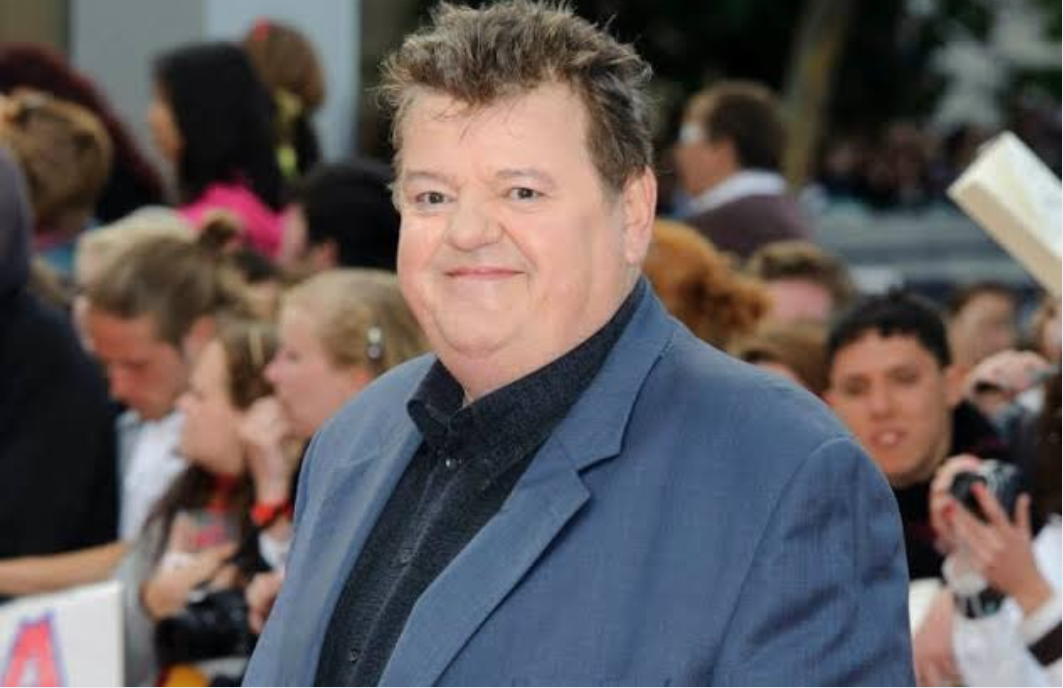
Robbie Coltrane was one of Scotland’s most distinctive actors, known for combining comic timing with warmth, authority, and dramatic depth. Born Anthony Robert McMillan, he built a successful career across British television, cinema, comedy, drama, and voice acting before becoming an international star. His film career began in the early 1980s with appearances in movies such as Flash Gordon and Death Watch, followed by acclaimed British productions including Mona Lisa, Henry V, and Danny, the Champion of the World. Coltrane reached a global audience as Valentin Zukovsky in the James Bond films GoldenEye and The World Is Not Enough, while his portrayal of Rubeus Hagrid made him a defining part of the Harry Potter franchise. He continued working in live-action and animated films into the 2010s, with Effie Gray ultimately becoming his final released feature-film role.
1980 — Flash Gordon
Robbie Coltrane made his feature-film debut in the 1980 science-fiction adventure Flash Gordon, directed by Mike Hodges and starring Sam J. Jones, Max von Sydow, and Melody Anderson. Coltrane appears as a man at an airfield in one of the film’s early sequences. The movie follows Flash Gordon and his companions as they become caught in a conflict involving the planet Mongo and the ruthless Ming the Merciless. Although Coltrane’s part was small, Flash Gordon marked the beginning of his long film career.
1980 — Death Watch
Also released in 1980, Death Watch was a dystopian science-fiction drama directed by Bertrand Tavernier and starring Romy Schneider and Harvey Keitel. Coltrane played a limousine driver in the film, which imagines a future where illness has become rare and television exploits the dying for entertainment. His appearance was brief but came during the earliest stage of his developing screen career. Death Watch is particularly notable as an early example of Coltrane appearing in serious dramatic cinema rather than comedy.
1981 — Subway Riders
Subway Riders was a British crime film released in 1981, with Coltrane credited as Detective Fritz Langley in some film databases. The movie belongs to the gritty independent British cinema of the period and gave the young performer another opportunity to work in a dramatic setting. Coltrane’s role was considerably smaller than many of his later parts, but it demonstrated the range he was beginning to develop. The film remains an early entry in the chronology of Robbie Coltrane movies by year.
1982 — Britannia Hospital
Directed by Lindsay Anderson, Britannia Hospital is a dark British satire starring Malcolm McDowell and John Moffatt. Coltrane appears as a striking worker on a picket line in what is described as a cameo role. The film uses an absurd hospital setting to satirize British institutions, class divisions, politics, and social unrest. Coltrane’s appearance is brief, making this a cameo rather than a substantial starring performance.
1982 — Scrubbers
Scrubbers, directed by Mai Zetterling, is a British drama set inside a young offenders’ institution. Coltrane played Puff Guts, adding another early dramatic credit to his growing filmography. The movie focuses on violence, friendship, and survival among women in a harsh institutional environment. It is an important early feature in Coltrane’s career because it predates the comic and mainstream roles for which he later became internationally famous.
1983 — Ghost Dance
In Ghost Dance, Coltrane played George in a film directed by Ken McMullen. The British-French production blends drama, mystery, and philosophical ideas while exploring themes surrounding identity, death, and cultural memory. Coltrane’s performance came during a period when he was appearing in a mixture of independent productions and larger genre films. The movie is one of the less widely known entries in his early feature-film career.
1983 — Krull
Krull, directed by Peter Yates, was a fantasy adventure starring Ken Marshall, Lysette Anthony, and Freddie Jones. Coltrane played Rhun, one of the characters caught up in the battle against the invading Beast and his forces. The film combines medieval fantasy, science fiction, romance, and adventure, and later developed a cult following. Coltrane’s appearance helped establish his ability to fit naturally into large-scale fantasy productions, a genre that would become especially significant later in his career.
1984 — Chinese Boxes
Chinese Boxes is a British drama from 1984 in which Coltrane played Harwood. The film is an intimate, character-driven production rather than a large commercial genre picture. Coltrane was still building his screen reputation at this point, taking supporting roles across different kinds of British productions. His work during this period helped broaden the range that would eventually make him a sought-after character actor.
1985 — National Lampoon’s European Vacation

In National Lampoon’s European Vacation, Coltrane makes a memorable brief appearance as the man in the bathroom. Directed by Amy Heckerling, the comedy follows the Griswold family as they embark on a chaotic European holiday. Coltrane’s role is small and primarily comic, fitting the increasingly humorous side of his screen persona. The film also gave him exposure to a major American comedy franchise during an important stage of his career.
1985 — The Supergrass
The Supergrass is a British crime comedy directed by Roger Daltrey, based around a young man who becomes involved with the police and criminal underworld. Coltrane played Detective Sergeant Troy, giving the actor another opportunity to combine comedy with a law-enforcement character. The film reflects the mixture of eccentric humour and crime storytelling common in British cinema of the period. It remains one of Coltrane’s lesser-known 1980s feature credits.
1985 — Revolution
Directed by Hugh Hudson, Revolution is a historical drama starring Al Pacino, Donald Sutherland, and Nastassja Kinski. Coltrane appears as a New York burgher in the story, which is set during the American Revolutionary War. His role is a small supporting appearance within a large historical production. The film is notable in his filmography because it placed him alongside major international stars early in his career.
1985 — Defence of the Realm
Defence of the Realm is a British political thriller directed by David Drury and starring Gabriel Byrne, Greta Scacchi, and Denholm Elliott. Coltrane played Leo McAskey, contributing to a tense story about journalists investigating political corruption and a dangerous government secret. The film was well regarded for its serious political atmosphere and suspenseful storytelling. It is among the more substantial dramatic roles in Coltrane’s early film career.
1986 — Caravaggio
Derek Jarman’s Caravaggio is an experimental historical drama inspired by the life and work of Italian painter Michelangelo Merisi da Caravaggio. Coltrane played Scipione Borghese alongside Nigel Terry, Sean Bean, Tilda Swinton, and Dexter Fletcher. The film uses stylized imagery and modern elements to explore the painter’s relationships, artistic ambitions, and turbulent life. Coltrane’s performance is part of one of the most distinctive art-house films of his early career.
1986 — Absolute Beginners
Absolute Beginners, directed by Julien Temple, is a musical drama based on Colin MacInnes’s novel about youth culture in late-1950s London. Coltrane played Mario in a large ensemble that included Eddie O’Connell, Patsy Kensit, David Bowie, and Sade. The film combines music, romance, social commentary, and colourful visual design. Although the movie received mixed reactions, it has remained notable for its ambitious production and musical sequences.
1986 — Mona Lisa
Neil Jordan’s Mona Lisa is a British neo-noir crime drama starring Bob Hoskins, Cathy Tyson, and Michael Caine. Coltrane played Thomas, appearing in a story about an ex-convict who becomes a chauffeur for a high-class escort and becomes entangled in the criminal underworld. The film was critically acclaimed, with Hoskins receiving major awards attention for his performance. Mona Lisa remains one of the strongest early dramatic entries in Robbie Coltrane movies by year.
1987 — Eat the Rich
Eat the Rich is a British satirical comedy directed by Peter Richardson and featuring a large cast associated with the Comic Strip comedy group. Coltrane played Jeremy in the deliberately outrageous story about a group of restaurant workers who take control of an elite establishment. The film mixes political satire, absurd comedy, and anarchic humour. It also reflects Coltrane’s close association with the British alternative-comedy scene during the 1980s.
1988 — The Fruit Machine
The Fruit Machine is a British drama directed by Philip Saville, centred on two young men who become caught up in danger after witnessing a murder. Coltrane played Annabelle, one of the memorable supporting characters in the film. The movie combines crime, drama, and elements of a road movie while exploring friendship and identity. It is an important example of Coltrane continuing to work in British independent cinema before his international breakthrough.
1989 — Henry V
Kenneth Branagh’s Henry V is a celebrated adaptation of William Shakespeare’s historical play. Coltrane portrayed Sir John Falstaff in a cast led by Branagh and featuring Judi Dench, Derek Jacobi, and Ian Holm. The film follows England’s King Henry V during the Hundred Years’ War and his campaign in France. Coltrane’s appearance connected him with one of the most respected Shakespearean screen productions of the late 1980s.
1989 — Bert Rigby, You’re a Fool
Bert Rigby, You’re a Fool is a musical comedy directed by Carl Reiner and starring Robert Lindsay. Coltrane played Sid Trample in this story about a British miner who dreams of becoming a performer in America. The movie blends comedy, music, and culture-clash humour. It is a comparatively obscure but officially released feature in Coltrane’s late-1980s filmography.
1989 — Let It Ride
Let It Ride is an American comedy directed by Joe Pytka and starring Richard Dreyfuss, Teri Garr, and Jennifer Tilly. Coltrane appears as a ticket seller in the story of a cab driver who becomes convinced that he has discovered a winning streak at the racetrack. The film revolves around gambling, luck, and escalating comic situations. Coltrane’s contribution is a smaller supporting appearance within the ensemble comedy.
1989 — Danny, the Champion of the World
Danny, the Champion of the World was adapted from Roald Dahl’s novel and featured Coltrane as Victor Hazell. The story follows a young boy and his father, whose relationship becomes tied to a long-running conflict with the wealthy Hazell. Coltrane plays the imposing antagonist in a family-oriented drama about loyalty, courage, and class. The production was made for television rather than as a conventional theatrical feature, so it is best treated as a television-film appearance rather than a standard cinema credit.
1989 — Slipstream
Slipstream is a science-fiction adventure directed by Steven Lisberger and starring Mark Hamill, Bill Paxton, and Kitty Aldridge. Coltrane played Montclaire in the post-apocalyptic story, which is set in a world shaped by ecological and social collapse. The film has since attracted interest as an unusual science-fiction production with a distinctive visual style. Coltrane’s role adds another genre credit to his diverse 1980s résumé.
1990 — Nuns on the Run
In the comedy Nuns on the Run, Coltrane played Charlie McManus, one of two small-time criminals who disguise themselves as nuns while attempting to escape trouble. Eric Idle co-starred, while Jonathan Lynn directed the film. The movie relies heavily on physical comedy and mistaken identity, giving Coltrane a chance to use his broad comic talents. It became one of his more recognizable comedy performances before his major international breakthrough.
1990 — Perfectly Normal
Perfectly Normal is a Canadian comedy-drama directed by Yves Simoneau. Coltrane played Alonzo Turner, adding a more eccentric supporting performance to the film. The story explores relationships, personal ambitions, and unusual circumstances through a mixture of comedy and drama. It is one of the lesser-known feature films from the period immediately preceding Coltrane’s growing international recognition.
1991 — The Pope Must Die
Originally released as The Pope Must Die and retitled The Pope Must Diet in the United States, this satirical comedy was directed by Peter Richardson. Coltrane plays the Pope, a role that allowed him to lean heavily into physical and irreverent comedy. The film centres on an accidentally appointed pope who becomes caught in a bizarre Vatican conspiracy. Its controversial comic premise makes it one of the more unusual entries in Coltrane’s filmography.
1992 — Oh, What a Night
Oh, What a Night is a Canadian comedy-drama directed by Eric Till and starring Corey Haim and Barbara Williams. Coltrane played Todd, a local garage owner, in a story set in Ontario during the summer of 1955. The film follows two teenagers as they begin discovering relationships and adulthood while their parents deal with their own complicated lives. Coltrane’s role is supporting but memorable within the small-town setting.
1993 — The Adventures of Huck Finn
The Adventures of Huck Finn is a Disney adventure film directed by Stephen Sommers and starring Elijah Wood as Huck Finn. Coltrane played the Duke, one of the con men who encounter Huck and Jim during their journey down the Mississippi River. The film adapts Mark Twain’s classic novel into a family-oriented adventure filled with humour and danger. Coltrane’s comic performance helped make the Duke one of the film’s memorable supporting figures.
1995 — GoldenEye

GoldenEye, directed by Martin Campbell, introduced Coltrane to one of his most famous non-Hagrid characters: Russian gangster and arms dealer Valentin Zukovsky. Starring Pierce Brosnan as James Bond, the film revived the Bond franchise for a new era and became a major commercial success. Coltrane brought humour and personality to Zukovsky, who would become an important recurring character in the Bond series. GoldenEye was a major milestone in Robbie Coltrane movies by year and significantly increased his international profile.
1997 — Buddy
In Buddy, Coltrane played Dr. Bill Lintz, a scientist and member of the family at the centre of the story. Directed by Caroline Thompson and starring Rene Russo, the film follows a family whose unusual relationship with gorillas creates both emotional and ethical challenges. Coltrane’s performance brings warmth and authority to the scientific side of the story. The family drama is particularly notable for its combination of live-action performances and animal-centred storytelling.
1998 — Frogs for Snakes
Amos Poe’s Frogs for Snakes is a crime comedy featuring Barbara Hershey, Harry Hamlin, John Leguizamo, and Robbie Coltrane. Coltrane played Al Santana, a loan shark connected to the film’s network of struggling performers, criminals, and New York characters. The story focuses on an actress working in Manhattan who becomes involved in dangerous dealings while trying to make ends meet. The film is a lesser-known but genuine feature credit in Coltrane’s late-1990s career.
1998 — Montana
Directed by Jennifer Leitzes, Montana is a crime thriller starring Kyra Sedgwick, Stanley Tucci, Robin Tunney, Philip Seymour Hoffman, and Robbie Coltrane. Coltrane played The Boss, a crime figure whose disappearance of money and involvement with a runaway girlfriend set the central conflict in motion. The film combines crime, action, drama, and dark humour. Although Coltrane was not the lead, his imposing performance gives the criminal world at the centre of the story added weight.
1999 — Message in a Bottle
Message in a Bottle is a romantic drama directed by Luis Mandoki and starring Kevin Costner, Robin Wright, and Paul Newman. Coltrane played Charlie Toschi, appearing in a story that begins when a mysterious romantic letter is discovered and sets a journalist on a search for its author. The film combines romance, family drama, and grief against a coastal New England backdrop. It gave Coltrane another opportunity to work within a large Hollywood production.
1999 — The World Is Not Enough
Coltrane returned as Valentin Zukovsky in the James Bond film The World Is Not Enough. Directed by Michael Apted and starring Pierce Brosnan, Sophie Marceau, and Robert Carlyle, the movie sends Bond into a dangerous international conspiracy involving oil, terrorism, and political power. Zukovsky remains one of the more entertaining supporting characters, and Coltrane once again combined menace with comic timing. The film is an important part of both his Bond legacy and his overall movie career.
1999 — Alice in Wonderland — Television Film
Coltrane also appeared as Ned Tweedledum in the 1999 Alice in Wonderland, directed by Nick Willing and made for television. The production featured an unusually large ensemble including Whoopi Goldberg, Ben Kingsley, Christopher Lloyd, Martin Short, Gene Wilder, and Tina Majorino. Coltrane played one half of the Tweedle brothers alongside George Wendt. Because this was a made-for-television film rather than a theatrical feature, it should be identified separately from his standard feature-film credits.
2001 — On the Nose
On the Nose is a Canadian-Irish comedy directed by David Caffrey. Coltrane played Delaney in the story, which revolves around an unusual horse-racing-related discovery and a group of characters hoping to profit from it. The film mixes comedy with crime and supernatural elements. It was one of Coltrane’s final feature appearances before Harry Potter transformed his worldwide profile.
2001 — From Hell
In the crime thriller From Hell, Coltrane played Inspector Peter Godley opposite Johnny Depp’s Inspector Frederick Abberline. Directed by the Hughes brothers, the film is a dark interpretation of the Jack the Ripper murders in Victorian London. Coltrane provides a grounded, experienced presence as Godley while the investigation becomes increasingly disturbing. The film remains one of his most substantial dramatic roles outside the Harry Potter franchise.
2001 — Harry Potter and the Philosopher’s Stone
Coltrane’s career changed dramatically when he appeared as Rubeus Hagrid in Harry Potter and the Philosopher’s Stone, released in the United States as Harry Potter and the Sorcerer’s Stone. Directed by Chris Columbus, the film introduced Daniel Radcliffe, Emma Watson, and Rupert Grint as Harry, Hermione, and Ron, while Coltrane became the warm-hearted half-giant who guides Harry into the wizarding world. Hagrid quickly became one of the franchise’s most beloved supporting characters. The film launched Coltrane’s eight-movie journey as Hagrid and introduced him to a worldwide generation of viewers.
2002 — Harry Potter and the Chamber of Secrets
Coltrane returned as Hagrid in Harry Potter and the Chamber of Secrets, the second film in the series. Directed again by Chris Columbus, the story follows Harry, Ron, and Hermione as Hogwarts is threatened by a mysterious force hidden within the school. Hagrid becomes central to the mystery because his past and his connection with magical creatures are misunderstood. Coltrane retained the character’s combination of humour, loyalty, vulnerability, and physical presence.
2004 — Harry Potter and the Prisoner of Azkaban
Alfonso Cuarón directed Harry Potter and the Prisoner of Azkaban, with Coltrane once again playing Hagrid. The third film introduces a darker atmosphere as Harry learns more about Sirius Black, the Dementors, and the secrets surrounding his parents. Hagrid becomes the Care of Magical Creatures teacher, giving Coltrane more opportunities to show the character’s gentle relationship with unusual creatures. The film is widely regarded as one of the most stylistically distinctive entries in the series.
2004 — Ocean’s Twelve
In Steven Soderbergh’s Ocean’s Twelve, Coltrane played Matsui, also connected to the character Ian Nicholas McNally. The film reunites George Clooney, Brad Pitt, Matt Damon, Julia Roberts, and other members of the original heist ensemble for a European-set sequel. Coltrane’s character participates in the elaborate world of international thieves and con artists. His brief appearance added another major Hollywood ensemble to his already varied filmography.
2004 — Van Helsing: The London Assignment — Voice Role
Van Helsing: The London Assignment is an animated prequel to the live-action Van Helsing. Coltrane provided the voice of Mr. Hyde, making this a voice performance rather than a conventional on-camera role. The film expands the backstory of the monster hunter before the events of the Hugh Jackman-led live-action movie. It is therefore best classified separately from Coltrane’s standard live-action feature appearances.
2005 — Harry Potter and the Goblet of Fire
Mike Newell directed Harry Potter and the Goblet of Fire, with Coltrane returning as Hagrid. The fourth film places Hogwarts at the centre of the dangerous Triwizard Tournament, while Voldemort’s return becomes an increasingly serious threat. Hagrid has an important relationship with Harry and remains one of the school’s most dependable adults. The film expanded the darker tone of the franchise while maintaining Coltrane’s warm and humorous contribution.
2006 — Alex Rider: Operation Stormbreaker
Coltrane played the Prime Minister in Alex Rider: Operation Stormbreaker, a family action-adventure directed by Geoffrey Sax. Based on Anthony Horowitz’s novel, the film follows teenager Alex Rider as he is drawn into the world of espionage. Coltrane appears alongside Alex Pettyfer, Ewan McGregor, Mickey Rourke, and Bill Nighy. His role is relatively brief but places him within another major young-adult adventure franchise.
2006 — Provoked: A True Story

Provoked: A True Story is a drama directed by Jag Mundhra and inspired by the real-life case of Kiranjit Ahluwalia. Coltrane played Lord Edward Foster, appearing alongside Aishwarya Rai Bachchan and Miranda Richardson. The film examines domestic abuse, the legal system, and the international campaign surrounding Ahluwalia’s case. It represents one of Coltrane’s more serious dramatic roles during the height of his Harry Potter fame.
2007 — Harry Potter and the Order of the Phoenix
Coltrane returned as Hagrid in Harry Potter and the Order of the Phoenix, directed by David Yates. The story sees Harry facing increasing political interference at Hogwarts while Lord Voldemort’s return is denied by the authorities. Hagrid remains an important protector and friend, although his own storyline becomes more complicated. The movie continued Coltrane’s long-running association with one of cinema’s biggest fantasy franchises.
2008 — The Tale of Despereaux — Voice Role
In the animated fantasy The Tale of Despereaux, Coltrane provided the voice of Gregory. Directed by Sam Fell and Robert Stevenhagen, the film follows a small mouse who dreams of becoming a hero despite the limitations imposed by his size. Coltrane was part of a voice cast that included Matthew Broderick, Dustin Hoffman, Emma Watson, and Sigourney Weaver. His contribution was a voice performance rather than a live-action appearance.
2008 — The Brothers Bloom
The Brothers Bloom, directed by Rian Johnson, stars Adrien Brody, Mark Ruffalo, Rachel Weisz, and Robbie Coltrane. Coltrane played The Curator, a mysterious figure connected to the film’s elaborate world of deception and con artistry. The movie follows two brothers who make a living by staging sophisticated scams, eventually becoming involved with an eccentric heiress. It gave Coltrane another unusual supporting role outside the Harry Potter universe.
2009 — Gooby — Voice Role
Gooby is a family fantasy film in which Coltrane provided the voice of the title character, a large imaginary bear. The story centres on a young boy dealing with fears and family changes while finding comfort in the mysterious creature. Coltrane’s deep voice helped distinguish the unusual fantasy character. The film is a relatively obscure entry in his later filmography, but it is an officially released movie and therefore belongs in a complete Robbie Coltrane movies by year listing.
2009 — Harry Potter and the Half-Blood Prince
Coltrane reprised Hagrid in Harry Potter and the Half-Blood Prince, directed by David Yates. The film explores Voldemort’s past while Harry and Dumbledore attempt to understand the weaknesses of the increasingly powerful dark wizard. Hagrid continues to provide Harry with friendship and loyalty during the escalating conflict. By this point, Coltrane’s portrayal had become inseparable from the cinematic identity of Hagrid.
2010 — Harry Potter and the Deathly Hallows: Part 1
In Harry Potter and the Deathly Hallows: Part 1, Coltrane returned as Hagrid as the story moved beyond Hogwarts and into the final battle against Voldemort. Directed by David Yates, the film follows Harry, Ron, and Hermione as they attempt to destroy the Horcruxes. Hagrid remains one of Harry’s most trusted allies and plays a role in helping him escape from danger. The film began the two-part conclusion to Coltrane’s decade-long journey as the character.
2011 — Harry Potter and the Deathly Hallows: Part 2
Coltrane’s final appearance as Hagrid came in Harry Potter and the Deathly Hallows: Part 2. The climactic film brings the battle for Hogwarts and Harry’s confrontation with Voldemort to its conclusion. Hagrid is present during the final conflict and remains a symbol of loyalty to Harry and the school. For Coltrane, the movie marked the end of his most internationally famous film role after eight Harry Potter movies.
2011 — Arthur Christmas — Voice Role
Coltrane provided the voice of the Lead Elf in Arthur Christmas, Sony Pictures Animation’s festive family comedy directed by Sarah Smith and Barry Cook. The film imagines a high-tech Santa Claus operation and follows the clumsy but determined Arthur as he tries to deliver a forgotten Christmas present. Coltrane’s performance was part of a voice cast that included James McAvoy, Hugh Laurie, Bill Nighy, and Jim Broadbent. The movie demonstrated his continued versatility in animation after his work in The Tale of Despereaux.
2012 — Brave — Voice Role
In Pixar’s animated fantasy Brave, Coltrane voiced Lord Dingwall. Directed by Mark Andrews and Brenda Chapman, the film follows Scottish princess Merida as she challenges tradition and accidentally unleashes a magical curse. Coltrane’s character is one of the clan lords involved in the political and comic events surrounding Merida’s future. His participation was particularly fitting given his Scottish background and long association with Scottish characters and settings.
2012 — Great Expectations
Coltrane played the intimidating lawyer Mr. Jaggers in Mike Newell’s adaptation of Charles Dickens’s Great Expectations. The film stars Jeremy Irvine as Pip alongside Helena Bonham Carter, Ralph Fiennes, Holliday Grainger, and Robbie Coltrane. Jaggers is a powerful and mysterious solicitor whose actions become central to Pip’s unexpected rise in social status. The role allowed Coltrane to return to the kind of serious period drama that had featured prominently earlier in his career.
2014 — Effie Gray
Effie Gray, directed by Richard LaGravenese, was Coltrane’s final released feature film role. He played a doctor in the historical drama, which focuses on the troubled marriage of Victorian writer John Ruskin and Effie Gray. Dakota Fanning, Greg Wise, Emma Thompson, and David Suchet were among the principal cast. Released in 2014, the film brought Coltrane’s feature-film career to a close after more than three decades of work across comedy, drama, fantasy, crime, action, and animation.
Other Released Screen Appearances
A complete look at Robbie Coltrane movies by year should also distinguish several appearances that are not conventional feature films. The Gruffalo (2009) and The Gruffalo’s Child (2011) were animated television specials in which Coltrane voiced the Gruffalo, rather than theatrical feature films. Harry Potter 20th Anniversary: Return to Hogwarts (2022) was a television reunion special featuring Coltrane as himself through the retrospective celebration of the franchise, rather than a new narrative feature. He also appeared in television productions and documentaries throughout his career, but these should not be counted as standard feature-film credits.
Conclusion
Robbie Coltrane’s movie career stretched from his early appearances in British and international productions in the 1980s to his final feature role in Effie Gray in 2014. Along the way, he demonstrated remarkable versatility in films ranging from political thrillers and Shakespeare adaptations to crime movies, comedy, fantasy, animation, and major Hollywood franchises. His performances as Valentin Zukovsky in the James Bond series and Rubeus Hagrid in Harry Potter remain especially memorable, but his earlier dramatic and comedic work deserves equal recognition. Coltrane’s ability to make supporting characters distinctive helped turn even relatively small appearances into memorable parts of his extensive film legacy.
