



Ralph Fiennes is one of Britain’s most respected screen actors, known for bringing intensity, restraint, and complexity to a remarkably wide range of characters. After beginning his film career with Wuthering Heights in 1992, he quickly established himself with major performances in films such as Schindler’s List and The English Patient. His career has since moved comfortably between literary dramas, historical films, thrillers, comedies, fantasy adventures, animated productions, and major franchises. He became internationally recognizable as Lord Voldemort in the Harry Potter series and later played Gareth Mallory, or M, in the James Bond films. Fiennes has also expanded his work behind the camera, directing Coriolanus and The Invisible Woman, while continuing to take on demanding acting roles. His most recent released films include The Choral and 28 Years Later: The Bone Temple in 2025 and 2026, respectively.
1992 — Wuthering Heights
Wuthering Heights marked Ralph Fiennes’ feature-film debut, with the actor playing Heathcliff in Peter Kosminsky’s adaptation of Emily Brontë’s classic novel. The romantic drama also stars Juliette Binoche as Catherine Earnshaw and follows the destructive passion between the two central characters. Fiennes’ brooding performance established the intense dramatic style that would become a defining feature of his early film career. The film remains an important starting point when tracing Ralph Fiennes movies by year.
1993 — The Baby of Mâcon
In Peter Greenaway’s The Baby of Mâcon, Fiennes played the Bishop’s Son in an unusual period drama blending theatre, religion, sexuality, and social satire. The film was deliberately stylized, using an elaborate theatrical presentation rather than a conventional historical-film approach. It was an early opportunity for Fiennes to work within Greenaway’s highly distinctive visual and narrative style. The movie was also presented at the Cannes Film Festival, where Fiennes’ involvement helped establish his presence in European art cinema.
1993 — Schindler’s List
Steven Spielberg’s Schindler’s List became the breakthrough film of Fiennes’ early career. He played Amon Göth, the brutal commandant of the Płaszów concentration camp, opposite Liam Neeson and Ben Kingsley. The historical drama follows Oskar Schindler’s efforts to save Jewish workers during the Holocaust and became one of the most acclaimed films of the decade. Fiennes’ chilling performance earned him an Academy Award nomination for Best Supporting Actor and remains one of his most widely recognized roles.
1994 — Quiz Show
Fiennes portrayed American academic Charles Van Doren in Robert Redford’s Quiz Show. The historical drama examines the 1950s television quiz-show scandals surrounding the rigging of popular programs. Fiennes plays Van Doren as a talented and conflicted intellectual whose success becomes entangled in the deception. The performance demonstrated that Fiennes could move beyond period romance and villainous roles into more restrained character-driven drama.
1995 — Strange Days
Kathryn Bigelow’s science-fiction thriller Strange Days cast Fiennes as Lenny Nero, a former police officer who makes a living selling recordings of other people’s experiences. Set in a dystopian Los Angeles around the turn of the millennium, the film combines science fiction, crime, and psychological thriller elements. Fiennes was joined by Angela Bassett and Juliette Lewis, while the screenplay was written by James Cameron and Jay Cocks. The film also marked Fiennes’ first collaboration with Bigelow, with whom he later worked on The Hurt Locker.
1996 — The English Patient
Fiennes starred as Count László de Almásy in Anthony Minghella’s sweeping romantic drama The English Patient. The film, adapted from Michael Ondaatje’s novel, follows a badly burned Hungarian explorer whose memories reveal a tragic wartime love affair. Kristin Scott Thomas, Juliette Binoche, Willem Dafoe, and Colin Firth also feature in the acclaimed ensemble. Fiennes received his first Academy Award nomination for Best Actor for the role, making the film a major milestone in his career.
1997 — Oscar and Lucinda
In Oscar and Lucinda, Fiennes played Oscar Hopkins, an unconventional Anglican minister who becomes involved with Lucinda Leplastrier, portrayed by Cate Blanchett. Gillian Armstrong directed the adaptation of Peter Carey’s Booker Prize-winning novel. The period romantic drama explores faith, gambling, obsession, and an ambitious plan to transport a glass church across the Australian landscape. Fiennes’ performance gave him another opportunity to portray a complicated historical character driven by both idealism and personal weakness.
1998 — The Avengers
Fiennes took on the role of John Steed in Jeremiah S. Chechik’s The Avengers, a big-screen adaptation of the British television series. The spy comedy also stars Uma Thurman as Emma Peel and Sean Connery as Sir August de Wynter. The film mixes espionage, action, science fiction, and deliberately eccentric British humor. Although it was very different from his serious dramatic work, it demonstrated Fiennes’ willingness to experiment with lighter mainstream material.
1998 — The Prince of Egypt

Fiennes provided the voice of Moses’ adoptive brother, Ramesses, in DreamWorks Animation’s The Prince of Egypt. The animated biblical epic dramatizes the story of Moses and the Exodus and features an ensemble voice cast including Val Kilmer, Michelle Pfeiffer, Sandra Bullock, and Patrick Stewart. Fiennes’ role was a voice performance rather than a live-action appearance, making this a notable change from his previous period dramas and thrillers. The film remains one of his most significant early animation credits.
1999 — Sunshine
István Szabó’s historical drama Sunshine featured Fiennes in three generations of the Sonnenschein family: Ignatz, Adam, and Ivan. The story follows a Hungarian Jewish family through major political upheavals across much of the 20th century. Fiennes’ multi-role performance required him to portray characters separated by decades while maintaining a connection between the generations. The ambitious historical drama became one of the most substantial ensemble films of his late-1990s career.
1999 — Onegin
In Onegin, Fiennes played the title character, Evgeny Onegin, opposite Liv Tyler as Tatyana. The romantic period drama was directed by Martha Fiennes and adapted from Alexander Pushkin’s famous verse novel. Onegin is a sophisticated but emotionally detached aristocrat whose relationship with Tatyana develops into a story of missed opportunities and regret. Fiennes also served as an executive producer, making the project significant beyond his acting work.
1999 — The End of the Affair
Neil Jordan directed Fiennes in The End of the Affair, where he played novelist Maurice Bendrix opposite Julianne Moore and Stephen Rea. Adapted from Graham Greene’s novel, the romantic drama explores jealousy, faith, secrecy, and the consequences of a wartime affair. Fiennes brings an increasingly obsessive quality to Bendrix as he attempts to understand why his relationship suddenly ended. The film further strengthened his reputation for emotionally demanding literary adaptations.
2000 — The Miracle Maker
Fiennes provided the voice of Jesus in The Miracle Maker, a stop-motion and live-action animated retelling of the life of Jesus. The production combined different animation techniques with a dramatic approach to the biblical story. Fiennes’ contribution was a voice role rather than a conventional on-screen performance. It is therefore best regarded as a notable animation credit within his filmography rather than a standard live-action feature appearance.
2002 — Spider
In David Cronenberg’s psychological drama Spider, Fiennes played Dennis “Spider” Cleg, a troubled man returning to the East End of London after spending years in a psychiatric institution. The film gradually reveals Spider’s fractured memories and increasingly uncertain perception of reality. Miranda Richardson and Gabriel Byrne also appear in the film, with Richardson taking multiple roles connected to Spider’s memories. Fiennes’ restrained performance is central to the film’s unsettling exploration of trauma and mental disintegration.
2002 — The Good Thief
Fiennes appeared as Tony Angel in Neil Jordan’s The Good Thief, a crime drama led by Nick Nolte. The story follows an aging gambler and criminal who plans a complicated robbery while battling addiction and personal decline. Fiennes’ appearance was uncredited, making it a less conventional entry in his filmography. Even so, the role belongs among his officially released feature-film appearances.
2002 — Red Dragon
Fiennes played serial killer Francis Dolarhyde in Brett Ratner’s Red Dragon, a prequel to The Silence of the Lambs. Edward Norton stars as FBI investigator Will Graham, who seeks Hannibal Lecter’s help while pursuing Dolarhyde. The psychological crime thriller is adapted from Thomas Harris’s novel and places Fiennes in one of the darkest roles of his career. His portrayal combines physical menace with the character’s deeply damaged emotional life.
2002 — Maid in Manhattan
Fiennes shifted into romantic comedy with Maid in Manhattan, playing Christopher Marshall, a wealthy political candidate who falls for hotel maid Marisa Ventura, played by Jennifer Lopez. Wayne Wang directed the film, which combines romance and mistaken identity with a Cinderella-style premise. Fiennes’ character initially believes Lopez’s character belongs to the wealthy social world surrounding him. The movie showed his ability to work successfully within a lighter mainstream studio production.
2003 — Beyond Borders
Fiennes starred as Nick Callahan in the romantic drama Beyond Borders, opposite Angelina Jolie. The film follows humanitarian workers across several international conflict zones and examines the personal relationship that develops between its central characters. Martin Campbell directed the production, which combines romance with war drama and humanitarian themes. Fiennes’ performance is considerably more heroic and idealistic than many of his darker roles from the preceding decade.
2004 — The Chumscrubber
In The Chumscrubber, Fiennes played Mayor Michael Ebbs, a suburban father caught in a darkly comic story about teenagers, drugs, family pressure, and social disconnection. Arie Posin directed the ensemble drama, which features Jamie Bell, Glenn Close, Carrie-Anne Moss, and other prominent performers. Fiennes’ character represents the adult world that is struggling to understand the younger generation around him. The film is a less celebrated but important example of his willingness to take on contemporary independent drama.
2005 — Chromophobia
Fiennes appeared as Stephen Tulloch in Martha Fiennes’ Chromophobia, a British drama about several interconnected characters dealing with privilege, illness, ambition, and family relationships. The ensemble includes Kristin Scott Thomas, Penélope Cruz, Ian Holm, and Ben Chaplin. Rather than focusing on a single protagonist, the film uses multiple storylines to examine contemporary British society. It is notable within Ralph Fiennes movies by year because it reunited him professionally with his sister Martha Fiennes after Onegin.
2005 — The Constant Gardener
In Fernando Meirelles’ The Constant Gardener, Fiennes played British diplomat Justin Quayle, whose investigation into his wife’s murder exposes a dangerous pharmaceutical conspiracy. Rachel Weisz co-stars as Tessa Quayle, with the film adapting John le Carré’s political thriller. The movie combines mystery, romance, political drama, and international conspiracy elements. Fiennes’ performance was praised for its quiet emotional progression as Justin changes from a reserved diplomat into a determined investigator.
2005 — Wallace & Gromit: The Curse of the Were-Rabbit
Fiennes supplied the voice of Victor Quartermaine in Aardman’s stop-motion comedy Wallace & Gromit: The Curse of the Were-Rabbit. Nick Park and Steve Box directed the animated feature, which follows eccentric inventor Wallace and his loyal dog Gromit as they confront a giant rabbit threatening the town’s vegetable competition. Fiennes plays the arrogant hunter Victor, who becomes Wallace’s romantic rival for Lady Tottington. This voice role is a notable departure from his predominantly live-action film work.
2005 — The White Countess
James Ivory’s period drama The White Countess featured Fiennes as American expatriate Todd Jackson. Set in 1930s Shanghai, the film follows an idealistic nightclub owner who forms a relationship with a Russian refugee played by Natasha Richardson. The movie was written by Kazuo Ishiguro and also stars Hiroyuki Sanada and Vanessa Redgrave. Fiennes’ performance again placed him at the center of a sophisticated historical drama involving displacement, politics, and personal ambition.
2005 — Harry Potter and the Goblet of Fire
Fiennes made his major franchise debut as Lord Voldemort in Harry Potter and the Goblet of Fire. Directed by Mike Newell, the fantasy adventure follows Harry Potter as he is unexpectedly entered into the dangerous Triwizard Tournament. Fiennes’ Voldemort emerges near the end of the film as a terrifying physical presence and becomes Harry’s principal enemy for the remainder of the series. The role transformed him into one of the defining villains of 21st-century fantasy cinema.
2006 — Land of the Blind
Fiennes played Joe in Robert Edwards’ political drama Land of the Blind. The film explores authoritarianism, revolution, imprisonment, and the complicated consequences of political rebellion. Donald Sutherland co-stars in the story, which uses a fictional dictatorship to examine the relationship between political idealism and power. It is one of the less widely known feature films in Fiennes’ career but remains part of his chronological filmography.
2007 — Harry Potter and the Order of the Phoenix
Fiennes returned as Lord Voldemort in David Yates’ Harry Potter and the Order of the Phoenix. The film follows Harry’s growing resistance to the Ministry of Magic and the increasing threat posed by Voldemort’s return. Fiennes plays the villain during the film’s climactic confrontation at the Ministry of Magic, facing Harry and a group of his allies. His continued portrayal helped establish Voldemort as the central antagonist of the franchise.
2008 — In Bruges
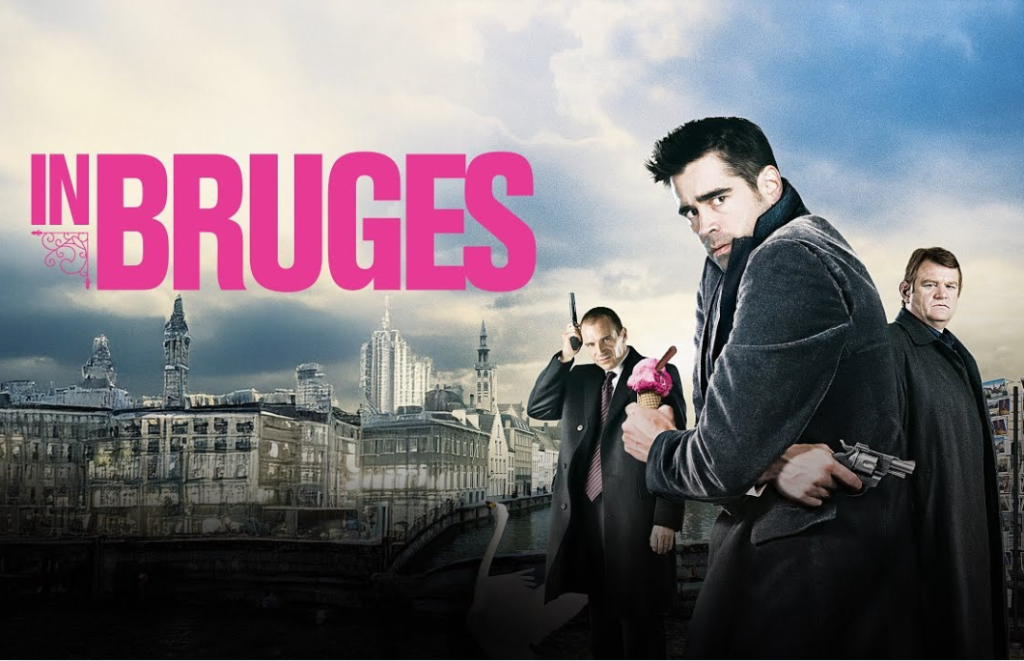
Martin McDonagh’s dark comedy In Bruges cast Fiennes as Harry Waters, a ruthless crime boss who sends two hitmen to the Belgian city of Bruges after a job goes wrong. Colin Farrell and Brendan Gleeson star as the conflicted assassins Ray and Ken. Fiennes appears later in the film but gives Harry an explosive and memorable presence. The movie combines crime, black comedy, guilt, and violence and became a particularly admired entry in Fiennes’ modern filmography.
2008 — The Duchess
Fiennes played William Cavendish, the Duke of Devonshire, in Saul Dibb’s period drama The Duchess. Keira Knightley stars as Georgiana Cavendish, whose marriage to the emotionally distant duke becomes the central conflict of the story. The film explores aristocratic marriage, political influence, public image, and the restricted choices available to women in 18th-century British society. Fiennes gives the duke a controlled but increasingly severe presence opposite Knightley’s more expressive performance.
2008 — The Reader
In The Reader, Fiennes played the older Michael Berg, a German lawyer haunted by a relationship from his youth. Stephen Daldry directed the adaptation of Bernhard Schlink’s novel, with Kate Winslet playing Hanna Schmitz and David Kross portraying the younger Michael. The film moves between postwar Germany and Michael’s adult life as he struggles with guilt, memory, and the moral consequences of the past. Fiennes’ older Michael provides the reflective framework through which the story is told.
2009 — The Hurt Locker
Kathryn Bigelow’s The Hurt Locker featured Fiennes in a supporting role as the leader of a private military contractor team. The Iraq War thriller follows an American bomb-disposal unit working under extreme psychological pressure. Jeremy Renner, Anthony Mackie, and Brian Geraghty lead the principal cast, while Fiennes’ brief appearance contributes to the film’s dangerous wartime atmosphere. The movie ultimately won the Academy Award for Best Picture and reunited Fiennes with Bigelow after Strange Days.
2009 — Harry Potter and the Half-Blood Prince
Fiennes’ presence in Harry Potter and the Half-Blood Prince is non-standard because the film uses archival footage connected to Voldemort rather than a substantial newly filmed performance by the actor. David Yates directed the fantasy sequel, which explores Tom Riddle’s history and Harry’s attempts to understand Voldemort’s past. Fiennes therefore remains part of the film’s Voldemort-related material, but it should not be treated as a conventional full acting appearance.
2010 — Cemetery Junction
Fiennes appeared as Mr. Kendrick in Cemetery Junction, a British coming-of-age comedy directed by Ricky Gervais and Stephen Merchant. Set in 1970s Reading, the film follows three young men navigating work, friendship, romance, and the expectations of working-class life. Fiennes plays a wealthy and influential businessman who represents a different social world from the film’s young protagonists. The role gave him an opportunity to work in a distinctly British comedy.
2010 — Clash of the Titans
Fiennes played Hades in Louis Leterrier’s fantasy action film Clash of the Titans. The movie is a modern remake of the 1981 mythological adventure and follows Perseus as he battles supernatural forces and attempts to protect humanity. Fiennes’ Hades is the underworld god and one of the story’s principal antagonistic forces. The film brought him into a large-scale effects-driven adventure, a major contrast to his earlier literary dramas.
2010 — Nanny McPhee and the Big Bang
In Nanny McPhee and the Big Bang, Fiennes played Lord Gray, appearing in the family fantasy comedy directed by Susanna White. The story centers on a young mother who struggles to manage her children and receives supernatural help from Nanny McPhee, played by Emma Thompson. Fiennes’ character belongs to the adult social world surrounding the family rather than serving as the main protagonist. The movie added another family-oriented production to his increasingly varied filmography.
2010 — Harry Potter and the Deathly Hallows — Part 1
Fiennes returned as Lord Voldemort in Harry Potter and the Deathly Hallows — Part 1. The first half of the finale follows Harry, Ron, and Hermione as they leave Hogwarts and attempt to destroy the objects containing pieces of Voldemort’s soul. Voldemort’s growing control over the wizarding world gives the film a darker tone than many earlier installments. Fiennes’ performance presents Voldemort as an increasingly powerful and openly tyrannical figure.
2010 — The Wildest Dream: Conquest of Everest
Fiennes provided narration and a voice performance associated with George Mallory in the documentary The Wildest Dream: Conquest of Everest. Anthony Geffen’s film explores Mallory’s historic attempts to climb Mount Everest and the mystery surrounding his disappearance. The documentary combines archival material, climbing footage, and modern expeditions investigating Mallory’s story. This is a documentary and voice contribution rather than a conventional narrative feature-film role.
2011 — Harry Potter and the Deathly Hallows — Part 2
The final Harry Potter film gave Fiennes his biggest sustained presence as Lord Voldemort. David Yates directed the conclusion, which brings Harry and Voldemort toward their decisive confrontation at Hogwarts. Fiennes’ performance emphasizes Voldemort’s arrogance, cruelty, and fear of mortality as the character’s control begins to collapse. The film completed one of the most commercially significant villain roles of his career.
2011 — Coriolanus
Fiennes made his directorial debut with Coriolanus, in which he also played the title character, Caius Martius Coriolanus. The Shakespeare adaptation relocates the ancient Roman political tragedy to a contemporary conflict zone and features Gerard Butler, Vanessa Redgrave, Brian Cox, and Jessica Chastain. Fiennes’ dual role as director and star gives the film a particularly personal place in his career. The production combines Shakespearean language with the visual language of modern political and military conflict.
2012 — Wrath of the Titans
Fiennes returned as Hades in Wrath of the Titans, the sequel to Clash of the Titans. Jonathan Liebesman directed the fantasy adventure, with Sam Worthington returning as Perseus and Liam Neeson appearing as Zeus. The story expands its mythology as the gods face threats from the Titans and the underworld. Fiennes’ Hades is less straightforwardly villainous than in the previous film, giving the character a more complicated relationship with Perseus and Zeus.
2012 — Skyfall
Fiennes joined the James Bond franchise in Skyfall as Gareth Mallory, a senior British intelligence official who eventually becomes the new M. Directed by Sam Mendes, the film stars Daniel Craig as James Bond and Javier Bardem as the antagonist Raoul Silva. Fiennes initially plays Mallory as a skeptical government figure before becoming an important ally to Bond. The role marked the beginning of his long-running presence in the Bond series.
2012 — Great Expectations
In Mike Newell’s Great Expectations, Fiennes portrayed Abel Magwitch, the mysterious escaped convict who becomes connected to Pip’s life. The adaptation of Charles Dickens’ classic novel also stars Jeremy Irvine, Helena Bonham Carter, and Holliday Grainger. Magwitch’s relationship with Pip provides one of the story’s most important emotional and moral developments. Fiennes’ performance gives the character a mixture of toughness, vulnerability, and paternal affection.
2013 — The Invisible Woman
Fiennes directed and starred in The Invisible Woman, portraying Charles Dickens opposite Felicity Jones as Nelly Ternan. The historical drama explores Dickens’ secret relationship with the much younger Ternan while examining the pressures surrounding his public reputation and private life. It was Fiennes’ second feature as a director after Coriolanus. The film demonstrates his continuing interest in literary figures and historical subjects while expanding his role behind the camera.
2014 — The Grand Budapest Hotel
Wes Anderson’s The Grand Budapest Hotel gave Fiennes one of his most celebrated comic roles as Monsieur Gustave H., the impeccably mannered concierge of a famous European hotel. The ensemble cast includes Tony Revolori, Saoirse Ronan, Adrien Brody, Willem Dafoe, Jeff Goldblum, Jude Law, and Bill Murray. The story mixes comedy, mystery, adventure, and nostalgia against a fictional European setting. Fiennes’ fast-paced, highly controlled performance became one of the film’s defining elements and earned widespread critical praise.
2014 — Two Women
Fiennes appeared as Mikhail Alexandrovich Rakitin in Two Women, Vera Glagoleva’s adaptation of Ivan Turgenev’s play A Month in the Country. The Russian period drama examines romantic attraction, social expectations, and emotional disappointment among members of the landed class. Fiennes’ involvement gave the international production an English actor in a predominantly Russian literary setting. It is a comparatively obscure but legitimate feature-film credit in his career.
2015 — A Bigger Splash
Fiennes played Harry Hawkes in Luca Guadagnino’s psychological drama A Bigger Splash. The film stars Tilda Swinton and Matthias Schoenaerts alongside Dakota Johnson and Fiennes, who plays an energetic music producer whose arrival disrupts a couple’s quiet holiday. What begins as a reunion gradually develops into a tense exploration of jealousy, attraction, friendship, and rivalry. Fiennes’ exuberant performance is deliberately different from the controlled characters he often portrays.
2015 — Spectre

Fiennes returned as Gareth Mallory, now serving as M, in Sam Mendes’ James Bond film Spectre. Daniel Craig again stars as Bond, while Christoph Waltz plays the mysterious Ernst Stavro Blofeld. As M, Fiennes becomes increasingly involved in protecting Bond and defending the future of the 00 section against political pressure. The film established him as a continuing central figure in the modern Bond series.
2016 — Hail, Caesar!
Fiennes played Laurence Laurentz in the Coen brothers’ Hollywood comedy Hail, Caesar!. Laurentz is a demanding European-style director attempting to stage a prestigious historical drama while working within the chaotic American studio system. The ensemble includes Josh Brolin, George Clooney, Scarlett Johansson, Tilda Swinton, and Channing Tatum. Fiennes’ scenes provide some of the film’s funniest observations about actors, directors, and the filmmaking business.
2016 — Kubo and the Two Strings
Fiennes provided the voice of the Moon King in Laika’s stop-motion fantasy Kubo and the Two Strings. The film follows a young boy named Kubo who uses music and magical origami to confront supernatural forces connected to his family. Charlize Theron, Art Parkinson, Matthew McConaughey, and Rooney Mara also contribute major voice performances. Fiennes’ Moon King serves as one of the story’s principal supernatural antagonists.
2017 — The Lego Batman Movie
Fiennes voiced Alfred Pennyworth in The Lego Batman Movie, a comic animated interpretation of the Batman mythos. Will Arnett voices Batman, while Fiennes’ Alfred acts as the responsible counterbalance to the hero’s self-centered behavior. The film mixes superhero parody with family comedy and features numerous references to Batman’s cinematic and comic-book history. It added another major animated voice performance to Fiennes’ film career.
2017 — Sea Sorrow — Documentary
Sea Sorrow was directed by Vanessa Redgrave and explores the refugee crisis through personal testimony, historical context, and political commentary. Fiennes participated in the documentary as part of its ensemble of contributors rather than playing a fictional character. Because it is a documentary rather than a conventional narrative feature, it should be treated as a non-standard film appearance in Ralph Fiennes movies by year.
2018 — The White Crow
Fiennes directed and appeared in The White Crow, a biographical drama about Russian ballet dancer Rudolf Nureyev. He played Alexander Pushkin, the influential ballet teacher who becomes an important figure in Nureyev’s development, while Oleg Ivenko played Nureyev. The film focuses on Nureyev’s artistic growth and his eventual defection from the Soviet Union. It was another opportunity for Fiennes to combine directing with a substantial acting performance.
2018 — Holmes & Watson
In the comedy Holmes & Watson, Fiennes played Professor James Moriarty and Jacob Musgrave in a film led by Will Ferrell as Sherlock Holmes and John C. Reilly as Dr. Watson. Etan Cohen directed the deliberately broad parody of Arthur Conan Doyle’s detective stories. Fiennes’ Moriarty is a comic variation on the traditional Holmes villain rather than a serious dramatic interpretation. The film represents another example of his willingness to appear in mainstream comedy.
2019 — Official Secrets
Fiennes played lawyer Ben Emmerson QC in Gavin Hood’s political thriller Official Secrets. The film tells the true story of British intelligence translator Katharine Gun, portrayed by Keira Knightley, who leaked information concerning the Iraq War. Fiennes’ character becomes involved in the legal effort surrounding the leak and the resulting prosecution. The role allowed him to return to serious political drama built around real events.
2019 — The Lego Movie 2: The Second Part
Fiennes made a brief voice appearance as Alfred Pennyworth in The Lego Movie 2: The Second Part. The animated sequel continues the adventures of Emmet and his friends in the increasingly chaotic Lego universe. Fiennes’ role is a cameo/voice appearance rather than a central performance. It nevertheless continues his association with the animated Lego franchise after The Lego Batman Movie.
2020 — Dolittle
Fiennes voiced Barry, a tiger, in Stephen Gaghan’s fantasy adventure Dolittle. Robert Downey Jr. stars as the eccentric physician who can communicate with animals, while the film features an extensive ensemble of animal voice performers. Fiennes’ contribution is entirely vocal and therefore differs from his usual live-action roles. The production combines family comedy, fantasy, adventure, and animal animation.
2021 — The Dig
In The Dig, Fiennes portrayed archaeologist and excavator Basil Brown, who discovers the important Anglo-Saxon burial site at Sutton Hoo. Carey Mulligan and Lily James co-star in Simon Stone’s historical drama, which is based on the real excavation and the people involved in it. Fiennes’ performance emphasizes Brown’s knowledge, modesty, and frustration with the social barriers surrounding his work. The film is a notable example of his later-career preference for complex historical characters.
2021 — The King’s Man
Fiennes starred as Orlando, Duke of Oxford, in Matthew Vaughn’s period action film The King’s Man. The prequel explores the origins of the secret organization that later becomes associated with the Kingsman franchise. Fiennes’ character is a pacifist aristocrat who is drawn into espionage and international conflict during World War I. The role allowed him to combine period drama with large-scale action and was also accompanied by an executive-producer credit.
2021 — No Time to Die
Fiennes reprised his role as M in Cary Joji Fukunaga’s James Bond film No Time to Die. Daniel Craig’s final Bond film follows the retired 007 as he becomes involved in a dangerous mission connected to the scientist Madeleine Swann and the villain Lyutsifer Safin. Fiennes’ M has a larger emotional and operational role as MI6 deals with the consequences of Bond’s return. The film represents the latest released James Bond appearance for Fiennes.
2022 — The Forgiven
Fiennes starred opposite Jessica Chastain in The Forgiven, playing David Henninger, a wealthy English doctor whose Moroccan holiday takes a disastrous turn. Directed by John Michael McDonagh and adapted from Lawrence Osborne’s novel, the drama examines privilege, guilt, resentment, and the consequences of one catastrophic decision. Fiennes’ David is deliberately difficult and morally compromised, making the role one of his more uncomfortable recent performances. The film is a dark character study rather than a conventional thriller.
2022 — The Menu
Fiennes played the enigmatic and intimidating Chef Julian Slowik in Mark Mylod’s dark comedy thriller The Menu. Anya Taylor-Joy and Nicholas Hoult star as a young couple visiting an exclusive island restaurant where the evening takes an increasingly disturbing turn. Fiennes’ chef treats cooking as an art form while using his elaborate menu to expose the obsessions and hypocrisy of his wealthy guests. The performance combines menace, theatricality, dry humor, and unexpected vulnerability.
2023 — The Wonderful Story of Henry Sugar — Short Film
Wes Anderson’s The Wonderful Story of Henry Sugar is a short film rather than a conventional feature, and Fiennes plays Roald Dahl as well as a policeman. The film adapts Dahl’s story about a wealthy man who discovers a method that appears to allow him to see without using his eyes. Benedict Cumberbatch plays Henry Sugar, with Dev Patel and Ben Kingsley also among the cast. Fiennes’ presence helps frame the story through a playful dramatization of Dahl himself.
2023 — The Swan — Short Film
Fiennes also appeared in Wes Anderson’s The Swan, another short adaptation of a Roald Dahl story. He plays Dahl within the film’s stylized storytelling framework, while the story itself follows a boy subjected to cruel treatment by two older youths. The short was released as part of Anderson’s series of Dahl adaptations for Netflix. Because it is a short film, it should not be counted as a standard feature-length movie role.
2023 — The Rat Catcher — Short Film
In The Rat Catcher, Fiennes plays the Rat Man as well as Roald Dahl in another Wes Anderson adaptation. The story follows an eccentric professional who specializes in eliminating rats and becomes increasingly obsessed with his work. Anderson’s production uses highly theatrical staging and narration to reproduce Dahl’s unusual storytelling style. Fiennes’ multiple roles make this another distinctive but non-standard entry in his filmography.
2023 — Poison — Short Film
Fiennes appeared as Roald Dahl in Poison, Wes Anderson’s short adaptation of another Dahl story. Benedict Cumberbatch and Dev Patel lead the central narrative, which revolves around an unsettling claim made by a man who believes a poisonous snake is lying beneath his bed. The film uses Anderson’s characteristic controlled compositions and deadpan dialogue to build suspense and dark humor. Like the other Dahl adaptations, it is a short film rather than a feature-length theatrical production.
2024 — The Return
Fiennes played Odysseus in Uberto Pasolini’s historical drama The Return. Inspired by Homer’s Odyssey, the film focuses on Odysseus’ return to Ithaca after the Trojan War and his reunion with his family. Juliette Binoche plays Penelope, while Charlie Plummer appears as Telemachus. Fiennes’ performance places the emphasis on a battle-worn hero confronting the emotional consequences of years away from home.
2024 — Conclave
In Edward Berger’s Conclave, Fiennes played Cardinal Thomas Lawrence, a senior Vatican figure tasked with overseeing the secret election of a new pope. The political thriller also features Stanley Tucci, John Lithgow, Isabella Rossellini, and other members of an international ensemble. Lawrence becomes increasingly uncertain as hidden rivalries and revelations emerge during the conclave. Fiennes’ performance earned major awards recognition and became one of the defining dramatic roles of his later career.
2024 — Macbeth — Stage Recording
Fiennes played Macbeth opposite Indira Varma in a filmed presentation of Simon Godwin’s stage production of Shakespeare’s Macbeth. This release is best classified as a stage recording rather than a conventional feature film made specifically for cinema. Fiennes’ performance brings the tragic Scottish king to the screen through a production originally created for the stage. It is therefore included here as a non-standard screen appearance rather than a normal feature-film credit.
2025 — The Choral
Fiennes starred as Dr. Henry Guthrie in Nicholas Hytner’s The Choral. The period drama is set in England during World War I and follows a group of students who become involved with a local choir. Fiennes leads an ensemble that includes Mark Addy and Roger Allam, bringing a measured authority to the story’s adult characters. The film is among his most recent released dramatic features.
2025 — 28 Years Later
Fiennes appeared as Dr. Ian Kelson in Danny Boyle’s 28 Years Later, the long-awaited continuation of the post-apocalyptic horror franchise. The film stars Jodie Comer, Aaron Taylor-Johnson, Alfie Williams, and Jack O’Connell and returns to a world devastated by the rage virus. Fiennes’ character is a mysterious doctor connected to the film’s increasingly disturbing exploration of survival and humanity. His performance became an important part of the film’s later chapters and its expansion of the franchise’s mythology.
2026 — 28 Years Later: The Bone Temple
Fiennes reprised Dr. Ian Kelson in 28 Years Later: The Bone Temple, directed by Nia DaCosta. The film continues the story established in 28 Years Later and expands the post-apocalyptic world through new characters and threats. Fiennes’ return makes Kelson an important continuing figure within the revived horror series. It is the latest released feature film in the Ralph Fiennes filmography as of September 2026.
Conclusion
Ralph Fiennes’ movie career has developed across more than three decades, beginning with Wuthering Heights in 1992 and expanding into acclaimed dramas, literary adaptations, historical films, animation, comedy, fantasy, action, horror, and major franchises. His performances as Amon Göth, Count Almásy, Lord Voldemort, M. Gustave, Gareth Mallory, Chef Slowik, and Cardinal Lawrence demonstrate the range that has made him one of Britain’s most distinctive screen actors. Fiennes has also repeatedly expanded his creative role by directing and producing projects such as Coriolanus and The Invisible Woman. His latest releases, including The Choral and 28 Years Later: The Bone Temple, show that his film career continues to move across very different genres. For anyone researching Ralph Fiennes movies by year, his filmography offers a particularly broad record of dramatic, commercial, independent, animated, and non-standard screen performances.
