


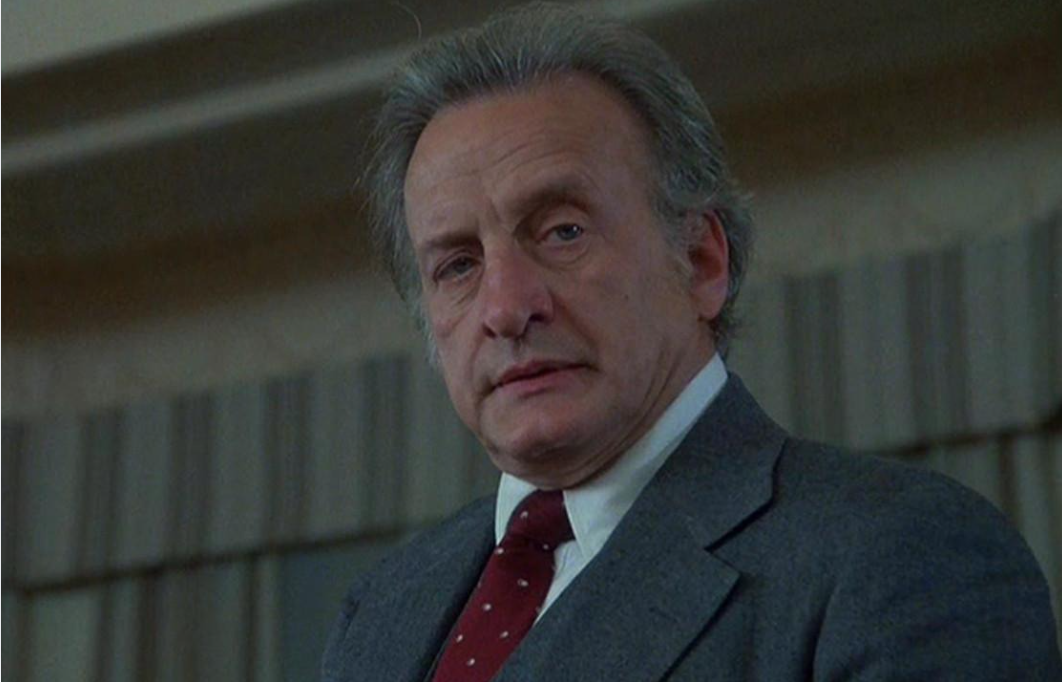
George C. Scott was one of the most commanding and versatile American actors of his generation, known for bringing intensity, intelligence, and authority to both dramatic and character roles. His film career began with an uncredited appearance in Somebody Up There Likes Me in 1956 before he established himself with major supporting performances in The Hanging Tree and Anatomy of a Murder in 1959. Throughout the 1960s and 1970s, Scott appeared in acclaimed productions including The Hustler, Dr. Strangelove, Patton, The Hospital, and The Day of the Dolphin. He won the Academy Award for Best Actor for Patton but famously declined the Oscar, making the performance one of the most distinctive achievements in Hollywood history. Later in his career, Scott moved between mainstream dramas, thrillers, horror films, comedies, and family entertainment, including The Changeling, Firestarter, The Exorcist III, and The Rescuers Down Under. This George C. Scott movies by year guide focuses on his officially released feature films, while clearly identifying his uncredited and voice appearances and excluding made-for-television productions.
1956 — Somebody Up There Likes Me
George C. Scott made one of his earliest screen appearances in Somebody Up There Likes Me, the 1956 boxing drama directed by Robert Wise and starring Paul Newman. Scott appears as a prisoner in an uncredited role, making this a minor early appearance rather than a substantial starring performance. The film follows boxer Rocky Graziano from his troubled youth toward professional success and became an important early entry in Newman’s career. Because Scott’s part was uncredited, it is best identified separately from his later credited feature-film roles.
1959 — The Hanging Tree
The Hanging Tree marked one of George C. Scott’s first credited feature-film performances. Directed by Delmer Daves and starring Gary Cooper and Maria Schell, the Western centers on a mysterious doctor whose past and moral choices shape the lives of people in a frontier community. Scott plays George Grubb, supporting the film’s central story with a memorable character performance. The movie helped establish Scott as a serious screen actor during the late 1950s.
1959 — Anatomy of a Murder
Otto Preminger’s Anatomy of a Murder gave Scott a major dramatic role as Claude Dancer, a lawyer involved in a complicated murder trial. James Stewart, Lee Remick, and Ben Gazzara headline the courtroom drama, which examines questions of law, morality, truth, and criminal responsibility. Scott’s forceful performance contributed to the film’s celebrated ensemble and earned him his first Academy Award nomination for Best Supporting Actor. The film remains one of the most respected courtroom dramas of its era.
1961 — The Hustler
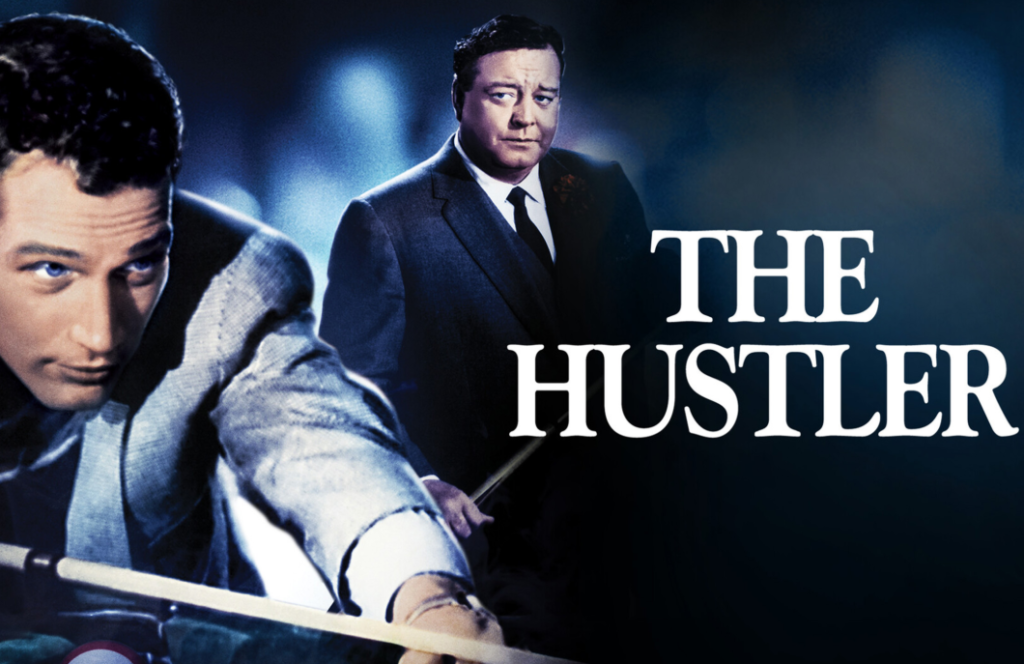
In 1961, Scott appeared as Bert Gordon in Robert Rossen’s acclaimed drama The Hustler. Paul Newman stars as pool player “Fast” Eddie Felson, while Scott plays the calculating and manipulative gambler who becomes a major influence on Eddie’s career. The film combines sports drama, psychological conflict, and character study, with Scott giving one of his most memorable early performances. The Hustler became a landmark American film and earned Scott another Academy Award nomination.
1963 — The List of Adrian Messenger
Scott played Anthony Gethryn in John Huston’s mystery thriller The List of Adrian Messenger. The story follows an investigation into a series of unusual deaths connected to a mysterious list, creating an intricate puzzle involving identity and deception. Kirk Douglas and Robert Mitchum were among the film’s prominent stars, while Scott brought an authoritative presence to the mystery. The movie is particularly notable for its elaborate disguise and makeup work involving several famous actors.
1964 — Dr. Strangelove or: How I Learned to Stop Worrying and Love the Bomb
Stanley Kubrick’s Dr. Strangelove remains one of George C. Scott’s most famous films. He plays General “Buck” Turgidson, a loud, aggressive military commander caught in the terrifyingly absurd consequences of a nuclear crisis. Peter Sellers famously performs multiple roles, while Sterling Hayden and Scott provide key military perspectives within the dark political satire. The film is regarded as a classic of black comedy and Cold War cinema, and Scott’s performance is one of its defining elements.
1964 — The Yellow Rolls-Royce
The Yellow Rolls-Royce is an anthology drama built around three different stories connected by the same luxury automobile. Scott plays Paolo Maltese in the segment involving an American woman and a Yugoslavian partisan during wartime, appearing alongside an international cast that includes Ingrid Bergman, Shirley MacLaine, and Rex Harrison. Directed by Anthony Asquith, the film blends romance, drama, and historical storytelling across different periods and locations. Although its American release is often associated with 1965, the film itself was released in 1964 in its country of origin.
1966 — The Bible: In the Beginning…
John Huston’s epic The Bible: In the Beginning… featured Scott as Abraham in a large-scale dramatization of stories from the Book of Genesis. The film covers several major biblical narratives and combines religious drama with historical spectacle. Huston also appears in the film, alongside actors including Michael Parks, Richard Harris, and Ava Gardner. Scott’s Abraham is one of the film’s central dramatic performances and demonstrated his ability to handle demanding historical material.
1966 — Not with My Wife, You Don’t!
Scott moved into comedy with Not with My Wife, You Don’t!, playing Colonel “Tank” Martin. Directed by Norman Panama, the film stars Tony Curtis and Virna Lisi and revolves around military rivalry, romance, and a complicated marital situation. Scott’s stern screen persona was used for comic effect as the story played with misunderstandings between its central characters. The movie showed a lighter side of an actor increasingly associated with serious dramatic performances.
1967 — The Flim-Flam Man
In The Flim-Flam Man, Scott plays Mordecai Jones, a seasoned con artist who takes a younger man under his wing. The comedy-drama, directed by Irvin Kershner, follows their travels through the American South as they use confidence tricks to make money. Scott’s charismatic performance allowed him to balance humor with the sharper edges of a professional swindler. The film became one of his notable character-driven performances of the 1960s.
1968 — Petulia
Richard Lester’s Petulia cast Scott as Dr. Archie Bollen, a successful but emotionally complicated doctor. Julie Christie stars as the title character, with George C. Scott and Richard Chamberlain forming part of the film’s troubled relationship drama. The movie combines romance, psychological drama, and an unconventional visual style to examine affluent San Francisco life and fractured relationships. Scott’s controlled performance adds considerable weight to the film’s examination of emotional instability and marriage.
1970 — Patton
Patton became the defining film of George C. Scott’s career when he portrayed controversial American general George S. Patton Jr. Directed by Franklin J. Schaffner, the epic war drama examines Patton’s battlefield brilliance, ambition, arrogance, and conflicts with military leadership during World War II. Scott’s commanding performance earned him the Academy Award for Best Actor, although he famously declined the award. The role remains one of the most celebrated portrayals of a military figure in American cinema.
1971 — They Might Be Giants
Scott played Justin Playfair in the quirky comedy-drama They Might Be Giants, directed by Anthony Harvey. His character is a wealthy widower who believes himself to be Sherlock Holmes, while Joanne Woodward plays the psychiatrist assigned to evaluate him. The film mixes romance, comedy, mystery, and psychological themes as Playfair’s imaginary world begins to collide with reality. Scott’s eccentric and sympathetic performance demonstrated his range beyond conventional dramatic roles.
1971 — The Last Run
In Richard Fleischer’s crime drama The Last Run, Scott plays Harry Garmes, a retired getaway driver who is pulled back into dangerous criminal activity. The film co-stars Colleen Dewhurst and Trish Van Devere and follows Garmes as he accepts one final assignment that becomes increasingly complicated. Scott gives the character a weary, tough-edged quality that fits the film’s melancholy crime-story atmosphere. The Last Run is an important example of his work as a leading man during the early 1970s.
1971 — The Hospital
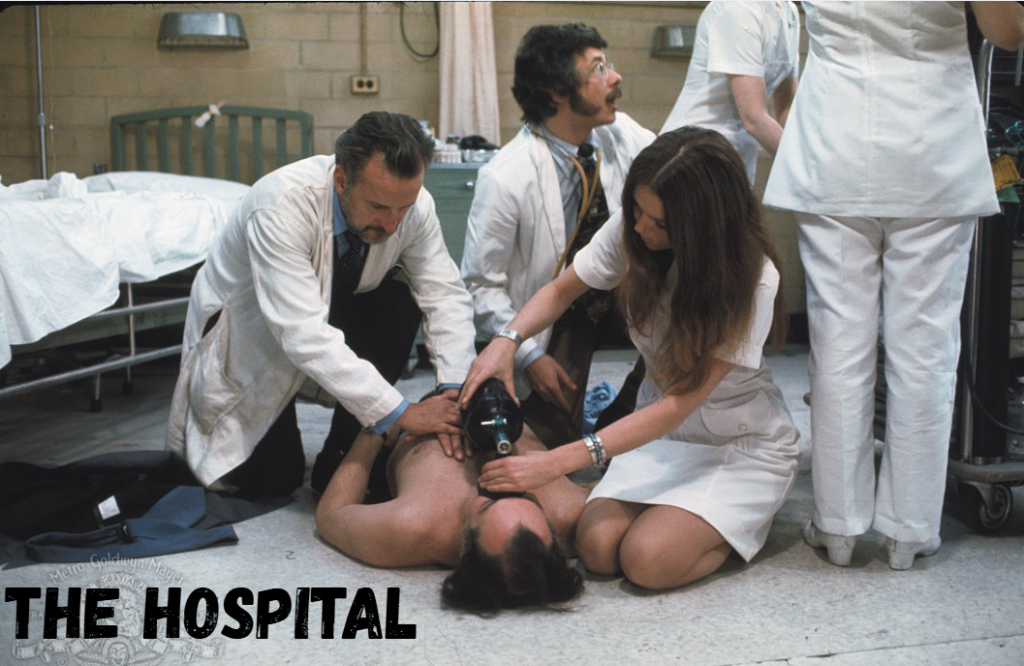
Scott starred as Dr. Herbert Bock in Arthur Hiller’s dark comedy The Hospital. The story follows a physically and emotionally exhausted hospital administrator dealing with professional chaos, personal problems, and a series of bizarre incidents. Scott’s performance turns Bock into a deeply human character whose frustration and despair drive much of the movie’s dark humor. The role earned Scott another Academy Award nomination for Best Actor and remains one of his most acclaimed performances.
1972 — The New Centurions
The New Centurions reunited Scott with director Richard Fleischer for a gritty police drama. Scott plays Sergeant Andy Kilvinski, an experienced Los Angeles police officer who becomes a mentor to younger officers entering the profession. The film explores the pressures, dangers, and emotional toll of police work rather than presenting a simple action story. Scott’s restrained performance gives the movie much of its emotional authority.
1972 — Rage
Scott directed and starred in Rage, playing Dan Logan, a rancher whose son is exposed to a deadly biological weapon. The drama follows Logan as he tries to understand what has happened and seeks answers while dealing with the consequences of government secrecy. The film was notable because Scott took on both the leading acting role and directing duties. It represented an important expansion of his career behind the camera as well as in front of it.
1973 — Oklahoma Crude
In Stanley Kramer’s Oklahoma Crude, Scott plays Noble Mason, an independent oilman caught up in the struggle surrounding an Oklahoma oil property. Faye Dunaway stars opposite him in this Western-tinged drama about greed, independence, and the battle over natural resources. Scott brings his characteristic toughness to Mason while allowing the character room for humor and vulnerability. The film is an interesting example of his work outside the military and institutional roles for which he was often known.
1973 — The Day of the Dolphin
Mike Nichols directed Scott in The Day of the Dolphin, a science-fiction thriller based on the novel by Robert Merle. Scott plays Dr. Jake Terrell, a marine scientist who trains dolphins and becomes alarmed when powerful interests attempt to exploit his research. The film combines scientific speculation, environmental concerns, suspense, and political intrigue. Scott’s serious performance anchors the story as Terrell struggles to protect the intelligent animals he has studied.
1974 — Bank Shot
Scott took a comic turn as Walter Upjohn Ballentine in Bank Shot, a crime comedy directed by Gower Champion. His character leads an unusual group of criminals who attempt to steal an entire bank building rather than simply rob its vault. The movie mixes heist conventions with broad comedy and absurd situations, giving Scott another opportunity to play against his naturally stern image. It remains one of the lighter feature films in his filmography.
1974 — The Savage Is Loose
The Savage Is Loose was another unusual project for Scott because he served as both director and star. He plays John, a father who becomes isolated with his family after a shipwreck and must confront the consequences of life removed from society. The film is a psychological drama built around family relationships, isolation, and the gradual breakdown of social boundaries. It is particularly notable as one of Scott’s few feature films as a director.
1975 — The Hindenburg
Robert Wise’s disaster film The Hindenburg cast Scott as Colonel Franz Ritter, a German officer assigned to investigate possible threats against the famous airship. The historical thriller dramatizes the final flight of the Hindenburg while mixing fictional characters and events with the real disaster. Scott’s role gives the film a serious investigative dimension as Ritter attempts to determine whether sabotage is involved. The production was notable for its large-scale recreation of the famous airship and its dramatic reconstruction of the disaster.
1977 — Islands in the Stream
Scott starred as Thomas Hudson in Islands in the Stream, Franklin J. Schaffner’s adaptation of Ernest Hemingway’s posthumously published novel. Hudson is an artist living in the Caribbean whose relationships with his children and the realities of World War II gradually change his life. The film combines family drama, adventure, and wartime elements, with Scott carrying much of the emotional weight. His performance suited the film’s portrait of a strong but increasingly isolated man.
1978 — Crossed Swords
In Richard Fleischer’s Crossed Swords, Scott appears as the Ruffler, a colorful supporting character in the adventure comedy based on Mark Twain’s The Prince and the Pauper. The film stars Mark Lester and Oliver Reed and combines historical adventure, comedy, and swashbuckling action. Scott’s appearance is comparatively brief, making it closer to a supporting/cameo-style contribution than a leading role. The movie is nevertheless part of his officially released feature-film record.
1978 — Movie Movie
Stanley Donen’s Movie Movie allowed Scott to demonstrate his comic and musical versatility by playing two contrasting characters, Gloves Malloy and Spats Baxter. The film is structured as a playful double feature inspired by Hollywood entertainment from earlier decades, combining a boxing story with a backstage musical. Scott appears opposite Trish Van Devere and works deliberately with the exaggerated style of old-fashioned studio pictures. His dual performance makes the film one of the more unusual entries in his career.
1979 — Hardcore
Paul Schrader’s Hardcore cast Scott as Jake Van Dorn, a conservative businessman searching for his missing teenage daughter. The investigation takes him into the adult-film world, forcing him to confront an environment far removed from his religious and moral beliefs. Scott gives the character a tense, increasingly desperate quality as the search becomes both a physical and psychological journey. The dark crime drama is considered one of the most challenging and distinctive films of his later 1970s career.
1980 — The Changeling
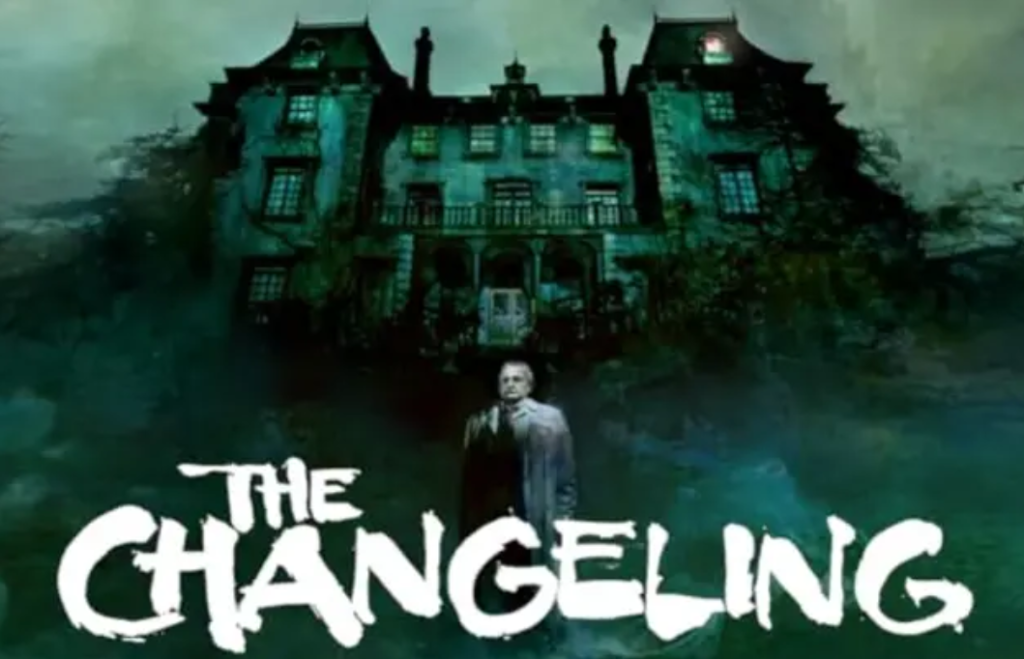
Scott starred in Peter Medak’s supernatural horror film The Changeling as composer John Russell. After suffering a devastating personal tragedy, Russell moves into an old mansion where he begins experiencing unexplained supernatural events connected to its past. The film blends psychological drama, mystery, and atmospheric horror rather than relying primarily on graphic violence. Scott’s restrained performance was central to the movie’s effectiveness and helped make The Changeling one of the best-known horror films of his career.
1980 — The Formula
In The Formula, Scott plays Lieutenant Barney Caine, a Los Angeles police detective investigating a murder that leads to an international conspiracy. John G. Avildsen directed the thriller, which also features Marlon Brando in a major role. The story combines police investigation, corporate interests, World War II secrets, and a potentially revolutionary synthetic-fuel formula. Scott’s performance gives the film a grounded investigative center amid its increasingly complicated conspiracy plot.
1981 — Taps
Scott played Brigadier General Harlan Bache in the military drama Taps, directed by Harold Becker. The story focuses on cadets at a military academy who take control of their school after believing its traditions and future are under threat. Scott’s character represents the established military authority confronting the increasingly serious actions of the students. The film also features young actors including Timothy Hutton, Sean Penn, and Tom Cruise, making it notable as an early showcase for several future stars.
1984 — Firestarter
Scott appeared as John Rainbird in the supernatural thriller Firestarter, based on Stephen King’s novel. Drew Barrymore stars as a young girl with powerful pyrokinetic abilities who is pursued by people seeking to exploit her unusual gift. Scott’s Rainbird is a dangerous and determined operative assigned to capture the girl, giving the film a strong antagonist. Directed by Mark L. Lester, the movie combines science fiction, horror, and suspense.
1990 — The Exorcist III
After a lengthy period with fewer theatrical features, Scott returned to major-screen horror with The Exorcist III. He plays Lieutenant William F. Kinderman, the detective investigating a series of murders that appear connected to an earlier case. William Peter Blatty wrote and directed the film, adapting his own novel and expanding the story into a psychological supernatural thriller. Scott’s performance is central to the film’s investigative structure and gives the detective character considerable depth and authority.
1990 — The Rescuers Down Under
Scott moved into animation as the voice of villainous poacher Percival C. McLeach in Disney’s The Rescuers Down Under. The adventure follows mice Bernard and Miss Bianca as they travel to Australia to rescue a young boy and a rare golden eagle. Scott’s gravelly voice gives McLeach a threatening personality while fitting the exaggerated tone of an animated villain. This was a voice role rather than a conventional on-screen performance, but the film was a major theatrical animated feature and an important late-career credit.
1993 — Malice
In Harold Becker’s psychological thriller Malice, Scott plays Dr. Martin Kessler, a senior medical figure connected to the film’s increasingly complicated events. Alec Baldwin, Nicole Kidman, and Bill Pullman headline the story, which revolves around medical ambition, deception, murder, and shifting suspicions. Scott’s role is supporting but significant as the plot moves toward its revelations. The film marked one of his later theatrical appearances and showed that he could still add authority to a tense contemporary thriller.
1995 — Angus
Scott played Grandpa Ivan Bethune in the coming-of-age comedy-drama Angus. The story follows an overweight teenage boy dealing with bullying, self-confidence, family relationships, and his desire to fit in at school. Scott’s grandfather character provides a warm and supportive presence, giving the actor an opportunity to show a gentler side rarely emphasized in his tougher roles. Directed by Patrick Read Johnson, Angus became a well-regarded youth-oriented film of the 1990s.
1999 — Gloria
Gloria, directed by Sidney Lumet, was George C. Scott’s final released feature film. He plays Reuben “Ruby” alongside Sharon Stone, who stars as the title character in this crime drama about a woman protecting a young boy from criminals. Scott’s supporting performance adds veteran screen presence to a story involving organized crime, loyalty, and survival. Released in 1999, the film arrived in the same year Scott died and therefore stands as the final theatrical feature credit of his career.
George C. Scott’s Non-Feature and Television Film Appearances
George C. Scott also had numerous important television roles that should not be confused with his theatrical feature films. These include Beauty and the Beast (1976), Oliver Twist (1982), A Christmas Carol (1984), The Last Days of Patton (1986), The Ryan White Story (1989), Descending Angel (1990), Finding the Way Home (1991), The Whipping Boy (1994), Tyson (1995), 12 Angry Men (1997), and Inherit the Wind (1999). Several were highly regarded television productions, but they are excluded from the main George C. Scott movies by year list because they were made for television rather than released as standard theatrical feature films.
He also provided the voice of Smoke in the animated television special Cartoon All-Stars to the Rescue, while The Rescuers Down Under is included above because it was a theatrical animated feature. Scott’s television and stage work was extensive, but his feature-film career remained especially notable for its range, from war epics and courtroom dramas to horror, comedy, crime thrillers, and animation.
Conclusion
George C. Scott’s movie career stretched from his uncredited 1956 appearance in Somebody Up There Likes Me to his final feature film, Gloria, in 1999. Along the way, he delivered acclaimed performances in Anatomy of a Murder, The Hustler, Dr. Strangelove, The Hospital, Patton, The Changeling, and The Exorcist III. His willingness to move between intense drama, comedy, psychological thrillers, horror, historical films, and voice acting made his filmography unusually diverse. For anyone exploring George C. Scott movies by year, his career offers a detailed portrait of one of American cinema’s most distinctive and powerful performers.
