


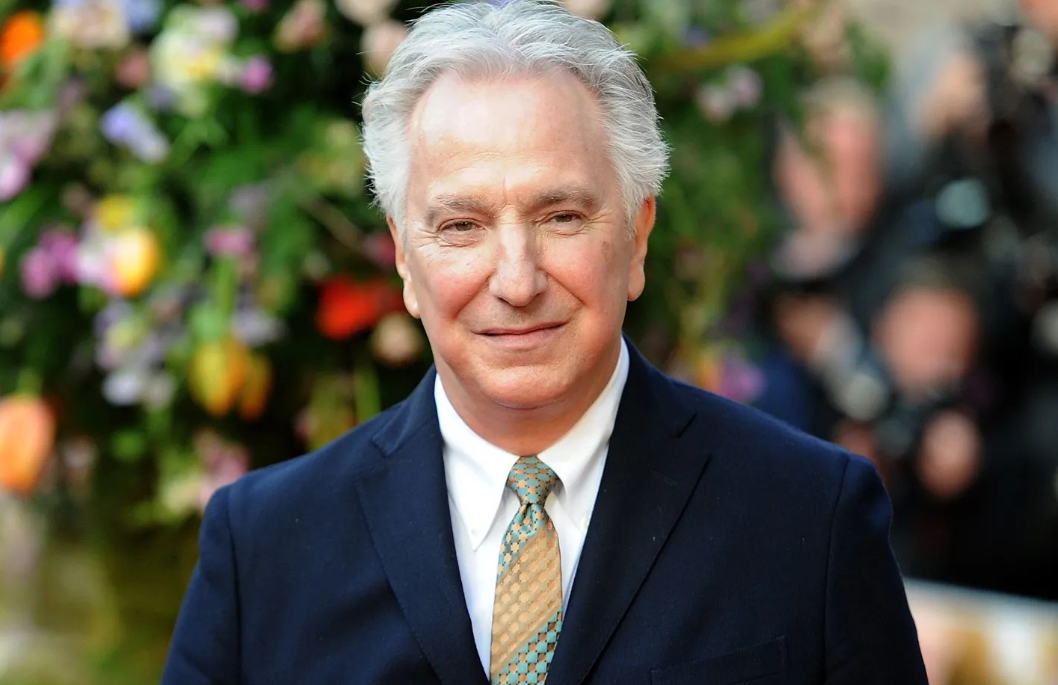
Alan Rickman was one of Britain’s most distinctive actors, celebrated for his commanding screen presence, dry wit, and unmistakably deep voice. Although he first built his reputation through theatre, particularly with the Royal Shakespeare Company and major stage productions, he became an international film star after making his cinema debut as Hans Gruber in Die Hard (1988). Over the following decades, Rickman moved comfortably between action films, romantic dramas, literary adaptations, comedies, historical dramas, and fantasy adventures. His performances as the Sheriff of Nottingham, Colonel Brandon, Alexander Dane, Judge Turpin, and Severus Snape demonstrated an unusually broad range. He also directed two feature films, The Winter Guest and A Little Chaos, while occasionally contributing voice performances and appearances in documentary projects.
This guide to Alan Rickman movies by year follows his officially released feature-film career chronologically, including less widely known titles alongside his best-known productions. His final film appearance came posthumously in Alice Through the Looking Glass (2016), in which he again provided the voice of Absolem.
1988 — Die Hard
Alan Rickman’s feature-film debut came in Die Hard, directed by John McTiernan and starring Bruce Willis as New York police officer John McClane. Rickman played Hans Gruber, the sophisticated German-born criminal mastermind who takes control of Nakatomi Plaza during a Christmas Eve heist. The action thriller became a landmark of the genre, and Rickman’s poised, theatrical performance immediately established him as a memorable screen villain. Die Hard remains the defining starting point for any look at Alan Rickman movies by year.
1989 — The January Man
In The January Man, Rickman played Ed, a painter and the brother of Kevin Kline’s New York police detective character. Directed by Pat O’Connor, the crime thriller follows an investigator brought back into the police force to track a serial killer. Rickman’s role was considerably smaller and more understated than his breakthrough performance in Die Hard, giving him an early opportunity to work within a character-driven ensemble. The film also featured Mary Elizabeth Mastrantonio and Kevin Kline.
1990 — Quigley Down Under
Simon Wincer’s Quigley Down Under cast Rickman as Elliott Marston, a wealthy and ruthless Australian ranch owner. The Western adventure stars Tom Selleck as Matthew Quigley, an American sharpshooter hired by Marston before discovering the true nature of his employer’s plans. Rickman brought an imposing, controlled quality to the antagonist, helping create a memorable conflict between the two leads. The film marked his first major Western-style villain role.
1990 — Truly, Madly, Deeply
Anthony Minghella’s Truly, Madly, Deeply offered Rickman a very different kind of performance as Jamie, the deceased partner who returns as a ghost to Nina, played by Juliet Stevenson. The British romantic drama blends grief, fantasy, comedy, and romance as Nina struggles to move forward after Jamie’s death. Rickman’s performance revealed a gentler and more humorous side of his screen persona and helped prevent him from becoming typecast solely as a villain. The film became one of his most critically admired early performances.
1991 — Closet Land
Closet Land, directed by Radha Bharadwaj, is a stark psychological drama centered on an unnamed writer subjected to interrogation by a government official. Rickman played the Interrogator, delivering an intense performance that contrasts sharply with the warmth of Truly, Madly, Deeply. The film explores censorship, political oppression, fear, and psychological manipulation, making it one of the darker entries in Rickman’s film career. Its production was made with close involvement from Amnesty International.
1991 — Robin Hood: Prince of Thieves
Rickman delivered one of his most celebrated performances as the Sheriff of Nottingham in Kevin Reynolds’ Robin Hood: Prince of Thieves. The adventure film stars Kevin Costner as Robin Hood and Morgan Freeman as Azeem, while Rickman plays the power-hungry sheriff attempting to exploit Nottingham during King Richard’s absence. His flamboyant comic timing and deliberately larger-than-life interpretation made the Sheriff one of the film’s most memorable characters. Rickman won the BAFTA Award for Best Actor in a Supporting Role for the performance.
1991 — Close My Eyes
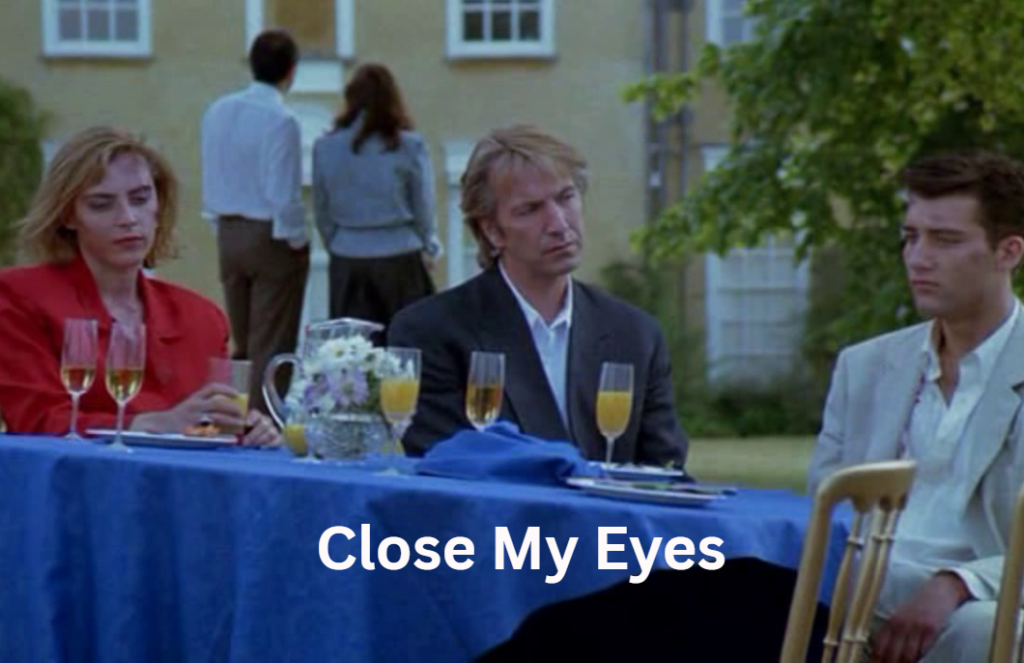
Stephen Poliakoff’s Close My Eyes is a psychological drama about complicated relationships, desire, and family boundaries. Rickman plays Sinclair Bryant, a wealthy businessman connected to the central relationship between siblings played by Clive Owen and Saskia Reeves. The film takes a serious and intimate approach to its controversial subject matter, giving Rickman another opportunity to play a character far removed from his action-film villains. It is an important early example of his work in challenging British dramas.
1992 — Bob Roberts
Bob Roberts, written and directed by Tim Robbins, is a satirical political mockumentary about a conservative folk singer campaigning for the United States Senate. Rickman appears as Lukas Hart III, a sinister political adviser and fixer working behind the scenes. The film uses documentary-style interviews, songs, and staged campaign footage to examine political image-making and media manipulation. Rickman’s controlled performance fits the film’s deliberately unsettling satire.
1994 — Mesmer
In Mesmer, Rickman took the title role of Franz Anton Mesmer, the controversial 18th-century physician associated with the theory of “animal magnetism.” Directed by Roger Spottiswoode, the historical drama follows Mesmer’s medical experiments, ambitions, and growing reputation in European society. Rickman was particularly well suited to the role because of his ability to combine intellectual authority with an undercurrent of mystery. Although the film received a mixed overall response, his central performance was widely regarded as one of its strengths.
1995 — An Awfully Big Adventure
Mike Newell directed An Awfully Big Adventure, a British period drama set around a Liverpool theatre company shortly after the Second World War. Rickman played P. L. O’Hara, an emotionally complicated director whose arrival affects the young performers around him. The film explores theatre, ambition, class, romance, and disappointment, drawing on Beryl Bainbridge’s novel. It provided Rickman with another substantial dramatic role outside the villainous characters for which he was increasingly known.
1995 — Sense and Sensibility
Ang Lee’s Sense and Sensibility adapted Jane Austen’s classic novel with a screenplay by Emma Thompson. Rickman played Colonel Christopher Brandon, a reserved and honourable military officer who develops feelings for Kate Winslet’s Marianne Dashwood. The period romance also starred Thompson, Hugh Grant, and Hugh Laurie and became one of the most acclaimed Austen adaptations of its era. Rickman’s restrained performance earned him a BAFTA nomination for Best Actor in a Supporting Role.
1996 — Michael Collins
Neil Jordan’s historical drama Michael Collins focuses on the Irish revolutionary and political leader portrayed by Liam Neeson. Rickman played Éamon de Valera, the influential Irish political figure whose relationship with Collins forms an important part of the story. The production required Rickman to portray a real historical figure in a politically and emotionally charged period of Irish history. His performance earned another BAFTA nomination and demonstrated his ability to handle demanding historical roles.
1997 — The Winter Guest
The Winter Guest marked Rickman’s feature directorial debut and was adapted from Sharman Macdonald’s play. Emma Thompson stars as Frances, a grieving woman dealing with the death of her husband while spending time with her elderly mother, played by Phyllida Law. Rickman also made a brief, uncredited appearance as a man in the street, although his primary contribution was as director and co-writer. The quiet Scottish drama is notable for revealing another side of his career beyond acting.
1998 — Judas Kiss
In the crime thriller Judas Kiss, Rickman played Detective David Friedman, one of the investigators drawn into a complicated kidnapping case. The film was directed by Sebastian Gutierrez and features a group of characters whose loyalties and motives are deliberately difficult to read. Rickman’s performance adds authority and seriousness to the ensemble while allowing him to move away from the flamboyant villain roles associated with his earlier career. It remains one of his less widely seen feature films.
1998 — Dark Harbor
Dark Harbor is a psychological thriller directed by Adam Coleman Howard, with Rickman starring as David Weinberg. The story follows a married couple whose lives become increasingly complicated after an unexpected encounter with a mysterious young man. Rickman’s role requires a more restrained and troubled performance than many of his earlier screen appearances. The film is notable for its intimate scale and tense exploration of relationships and secrets.
1999 — Dogma
Kevin Smith’s Dogma is a provocative fantasy comedy about two fallen angels attempting to return to Heaven. Rickman played Metatron, the angel who serves as the voice and representative of God, appearing alongside Ben Affleck, Matt Damon, Linda Fiorentino, and Chris Rock. His dry delivery and deadpan comic timing fit the film’s irreverent approach to religious themes. Dogma also demonstrated Rickman’s ability to embrace broad comedy without losing his characteristic gravitas.
1999 — Galaxy Quest
In Galaxy Quest, Rickman played Alexander Dane, a classically trained actor famous for portraying the alien Dr. Lazarus on a cancelled science-fiction television series. Dean Parisot’s comedy follows the reluctant cast when real aliens mistake their old television program for historical documentation and ask them for help. Rickman’s performance brilliantly parodies the frustrations of a serious stage actor trapped by a popular genre role. The film has since become a cult favourite and is widely regarded as one of his finest comedic performances.
2000 — Help! I’m a Fish
Help! I’m a Fish, also known as A Fish Tale, is an animated fantasy comedy from Denmark in which Rickman provided the voice of Joe. The story follows children who are transformed into sea creatures after drinking a magical potion, leading to an underwater adventure. Rickman’s participation was a voice performance rather than a conventional on-screen acting role. The film is therefore a useful example of the variety within Alan Rickman’s movies by year and his willingness to work in animation.
2001 — Blow Dry
Directed by Paddy Breathnach, Blow Dry is a British comedy-drama about competitive hairstylists preparing for a national championship. Rickman played Phil Allen, a former hairdresser whose personal history becomes intertwined with the competition and his family. The ensemble cast included Natasha Richardson, Rachel Griffiths, and Josh Hartnett. The film allowed Rickman to explore a more grounded and understated character in a warm comedy-drama setting.
2001 — The Search for John Gissing
The Search for John Gissing is a workplace comedy in which Rickman plays the title character, an English executive working in the United States. The story follows an ambitious employee who becomes increasingly frustrated by corporate politics and his complicated relationship with Gissing. Rickman’s performance combines his trademark dry humour with the character’s weary intelligence. It is one of his more obscure early-2000s feature-film appearances.
2001 — Harry Potter and the Philosopher’s Stone
Chris Columbus’ Harry Potter and the Philosopher’s Stone introduced Rickman to a new generation as Professor Severus Snape. Snape is the stern Potions professor at Hogwarts whose hostility toward Harry Potter initially makes him appear deeply antagonistic. Daniel Radcliffe, Emma Watson, and Rupert Grint led the young cast, while Rickman brought considerable theatrical weight to the adult ensemble. The film launched one of the most successful fantasy franchises in cinema history and began Rickman’s eight-film portrayal of Snape.
2002 — Harry Potter and the Chamber of Secrets
Rickman returned as Severus Snape in Harry Potter and the Chamber of Secrets, again directed by Chris Columbus. The sequel follows Harry’s second year at Hogwarts as a mysterious chamber is opened and students are threatened by a dangerous creature. Snape remains suspicious of Harry while Rickman’s performance continues to suggest that there may be more to the character than his severe exterior reveals. The film strengthened Snape’s place as one of the franchise’s most intriguing adult characters.
2003 — Love Actually
Richard Curtis’ romantic comedy Love Actually brought Rickman into a large ensemble cast featuring Hugh Grant, Emma Thompson, Colin Firth, Liam Neeson, and Keira Knightley. Rickman played Harry, a married businessman whose attraction to his secretary threatens his relationship with his wife, Karen, played by Emma Thompson. The film interweaves multiple stories about love, friendship, marriage, and loss during the Christmas season. Rickman’s understated performance is especially memorable for its exploration of temptation, guilt, and marital strain.
2004 — Harry Potter and the Prisoner of Azkaban
Alfonso Cuarón directed Harry Potter and the Prisoner of Azkaban, the third film in the series, with Rickman once again playing Professor Snape. The story introduces the escaped prisoner Sirius Black and expands the darker mythology surrounding Harry’s parents and their past. Rickman’s performance becomes more layered as the story reveals connections between Snape, Sirius, and Harry’s family. The film is often regarded as one of the most stylistically distinctive entries in the franchise.
2005 — The Hitchhiker’s Guide to the Galaxy
In The Hitchhiker’s Guide to the Galaxy, Rickman supplied the voice of Marvin the Paranoid Android, a perpetually depressed and highly intelligent robot. Directed by Garth Jennings, the science-fiction comedy adapts Douglas Adams’ influential novel and follows Arthur Dent through an absurd journey across the universe. Rickman’s famously dry delivery was an ideal match for Marvin’s pessimistic personality. His performance became one of the film’s most recognizable comic elements.
2005 — Harry Potter and the Goblet of Fire
Mike Newell’s Harry Potter and the Goblet of Fire sees Rickman reprise Severus Snape as Harry is unexpectedly selected to compete in the dangerous Triwizard Tournament. The fantasy adventure expands the scale of the wizarding world while introducing the return of Lord Voldemort. Rickman continued to keep Snape’s motives deliberately ambiguous, adding tension to the character’s interactions with Harry and other Hogwarts figures. The film marked another important stage in Snape’s long-running arc.
2006 — Snow Cake
Snow Cake, directed by Marc Evans, is a drama about Alex Hughes, played by Rickman, who becomes involved in the life of Linda, an autistic woman portrayed by Sigourney Weaver. After a tragic road accident, Alex stays with Linda and develops an unexpected friendship while confronting his own grief and emotional isolation. Rickman’s performance is quieter and more vulnerable than many of his best-known roles. The film also features Carrie-Anne Moss and is notable for its sensitive character-driven approach.
2006 — Perfume: The Story of a Murderer
Tom Tykwer’s Perfume: The Story of a Murderer is a dark historical drama adapted from Patrick Süskind’s novel. Rickman played Antoine Richis, a wealthy merchant and the father of a young woman who becomes connected to the obsessive perfumer Jean-Baptiste Grenouille, played by Ben Whishaw. The film combines period drama, psychological thriller, and dark fantasy elements while exploring obsession and the pursuit of an impossible scent. Rickman’s performance provides a strong emotional counterpoint to Grenouille’s disturbing ambitions.
2007 — Nobel Son
Nobel Son is a dark comedy directed by Randall Miller in which Rickman plays Eli Michaelson, an arrogant and unconventional Nobel Prize-winning chemistry professor. The story begins when Michaelson’s son is kidnapped around the time of his father’s prestigious award, sending the family into an increasingly bizarre chain of events. Rickman embraces the character’s egotistical personality and sharp humour, making the role very different from Professor Snape. The film showcases his talent for balancing comedy with darker dramatic material.
2007 — Harry Potter and the Order of the Phoenix
In Harry Potter and the Order of the Phoenix, Rickman returned as Severus Snape under director David Yates. The story follows Harry’s growing resistance to the Ministry of Magic and the establishment of a secret student organisation at Hogwarts. Snape’s strained relationship with Harry becomes increasingly important as the series moves toward its final chapters. Rickman’s controlled performance continued to preserve the mystery surrounding Snape’s true loyalties.
2007 — Sweeney Todd: The Demon Barber of Fleet Street
Tim Burton’s musical thriller Sweeney Todd: The Demon Barber of Fleet Street cast Rickman as Judge Turpin, a corrupt and powerful judge whose actions help set the revenge story in motion. Johnny Depp plays the title character, while Helena Bonham Carter portrays Mrs. Lovett. Rickman also had to sing as part of the Stephen Sondheim adaptation, making the role an unusual departure from his previous work. The film became one of his most acclaimed later performances and reunited him with several Harry Potter collaborators.
2008 — Bottle Shock
In Bottle Shock, Rickman played Steven Spurrier, the British wine expert and organiser of a famous wine competition that helped put California wines on the international stage. Randall Miller directed the comedy-drama, which is inspired by the real events surrounding the 1976 Judgment of Paris. Rickman brings his characteristic wit and sophistication to a character navigating the competing worlds of French and American wine. The film also stars Chris Pine and Bill Pullman.
2009 — Harry Potter and the Half-Blood Prince
David Yates directed Harry Potter and the Half-Blood Prince, in which Rickman continued his acclaimed portrayal of Severus Snape. As Harry investigates the history of Voldemort’s rise, Snape becomes increasingly central to the story’s mysteries and tensions. Rickman’s restrained acting is especially effective as the character’s apparent loyalties become harder to interpret. The film was the sixth chapter in the eight-film Harry Potter series.
2010 — The Wildest Dream: Conquest of Everest
The Wildest Dream: Conquest of Everest is a documentary about George Mallory’s attempts to climb Mount Everest and the later search for evidence concerning his fate. Rickman provided the voice of mountaineer Noel Odell, whose testimony is important to the historical account. Unlike his conventional feature performances, this was a voice role in a documentary rather than a fictional on-screen character. It is included here as a notable feature-length film appearance outside his standard acting filmography.
2010 — Alice in Wonderland

Tim Burton’s Alice in Wonderland reimagines Lewis Carroll’s characters in a fantasy adventure starring Mia Wasikowska, Johnny Depp, Helena Bonham Carter, and Anne Hathaway. Rickman provided the voice of Absolem, the blue Caterpillar who offers Alice cryptic guidance during her journey through Underland. His distinctive voice gave the animated character a calm, authoritative presence. The film was a major commercial success and introduced Rickman’s voice performance to another generation of fantasy audiences.
2010 — Harry Potter and the Deathly Hallows: Part 1
In the first half of the Harry Potter finale, Harry Potter and the Deathly Hallows: Part 1, Rickman returned as Snape under David Yates’ direction. Harry, Ron, and Hermione leave Hogwarts to search for Horcruxes while Voldemort’s influence spreads throughout the wizarding world. Snape has become headmaster of Hogwarts, placing him in an increasingly dangerous and morally ambiguous position. Rickman’s performance continues to conceal the character’s ultimate intentions.
2011 — Harry Potter and the Deathly Hallows: Part 2
Harry Potter and the Deathly Hallows: Part 2 concluded the eight-film series and provided the full resolution to Severus Snape’s story. Rick’s portrayal reaches its emotional peak as the film finally reveals the motivations behind Snape’s actions and his complicated connection to Harry’s family. Directed by David Yates, the fantasy epic features Daniel Radcliffe, Emma Watson, Rupert Grint, and a large returning ensemble. Rickman’s performance is widely regarded as one of the defining elements of the entire series.
2012 — Gambit
Michael Hoffman’s Gambit is a crime comedy inspired by the 1966 film of the same name. Rickman played Lionel Shahbandar, an extremely wealthy businessman who becomes the target of an elaborate art-forgery scheme. Colin Firth and Cameron Diaz lead the cast, while Rickman adds a dry and eccentric presence as the powerful art collector. The film allowed him to return to the sophisticated comedy that had worked so well in Galaxy Quest and Dogma.
2013 — The Butler
Lee Daniels’ The Butler is a historical drama inspired by the life of White House butler Eugene Allen, played by Forest Whitaker. Rickman portrayed former U.S. President Ronald Reagan, appearing alongside an ensemble that includes Oprah Winfrey, David Oyelowo, and Jane Fonda. His performance interprets Reagan as an important supporting figure within the film’s larger examination of American political and racial history. The role demonstrated Rickman’s continued ability to portray real historical personalities late in his career.
2013 — A Promise
A Promise, directed by Patrice Leconte, is a romantic period drama set in Germany shortly before the First World War. Rickman played Karl Hoffmeister, a wealthy industrialist whose marriage and relationship with a young woman become central to the story. The film also stars Rebecca Hall and Richard Madden and explores love, loyalty, class, and social expectations. Rickman’s measured performance gives the older husband a complicated emotional presence rather than reducing him to a simple antagonist.
2013 — CBGB
Randall Miller’s CBGB dramatizes the history of the legendary New York punk club associated with the emergence of influential underground music. Rickman played Hilly Kristal, the club’s founder, who helped provide a home for bands that would become central to the punk and rock scenes. The ensemble cast includes actors portraying musicians and performers associated with the venue’s history. Rickman’s portrayal anchors the film around Kristal’s stubborn commitment to the club and its unconventional performers.
2014 — A Little Chaos
A Little Chaos was directed by Rickman himself, making it his second feature as a director. Set during the reign of Louis XIV, the period drama stars Kate Winslet and Matthias Schoenaerts and follows a landscape designer involved in the creation of gardens at Versailles. Rickman also played King Louis XIV, combining his directing duties with a supporting performance as the French monarch. The film became his final completed directorial feature and one of his last substantial acting roles.
2015 — Eye in the Sky
Eye in the Sky, directed by Gavin Hood, is a tense military thriller examining the ethical and political consequences of a proposed drone strike. Rickman played Lieutenant General Frank Benson, a senior British military officer involved in the operation and its increasingly difficult decisions. Helen Mirren, Aaron Paul, Barkhad Abdi, and Phoebe Fox also star in the film. Released in 2015, it became Rickman’s final completed on-screen film appearance during his lifetime.
2016 — Alice Through the Looking Glass
Released after Rickman’s death, Alice Through the Looking Glass was his final film appearance. He again provided the voice of Absolem, the Caterpillar, in Tim Burton’s fantasy sequel directed by James Bobin and starring Mia Wasikowska, Johnny Depp, Anne Hathaway, and Helena Bonham Carter. Rickman died in January 2016, several months before the film’s theatrical release, making the performance a posthumous appearance. The movie is therefore both the final entry in Alan Rickman’s filmography and the last feature-film role associated with his career.
Alan Rickman’s Movie Career in Review
Alan Rickman’s movie career covered a remarkable range of genres and character types, from the iconic villain Hans Gruber in Die Hard to the quietly romantic Jamie in Truly, Madly, Deeply. He earned major recognition for Robin Hood: Prince of Thieves, Sense and Sensibility, Michael Collins, and Sweeney Todd, while his performances in Galaxy Quest, Dogma, and Love Actually highlighted his comic versatility. His eight-film portrayal of Severus Snape in the Harry Potter series ultimately became one of his most enduring screen legacies.
Beyond acting, Rickman directed The Winter Guest and A Little Chaos, while also contributing memorable voice performances in films such as The Hitchhiker’s Guide to the Galaxy and Alice in Wonderland. His final screen work in Eye in the Sky and posthumous appearance in Alice Through the Looking Glass brought an extraordinary film career to a close. Looking across Alan Rickman movies by year, his legacy is defined not simply by the number of films he made, but by the remarkable variety and depth he brought to each performance.
