


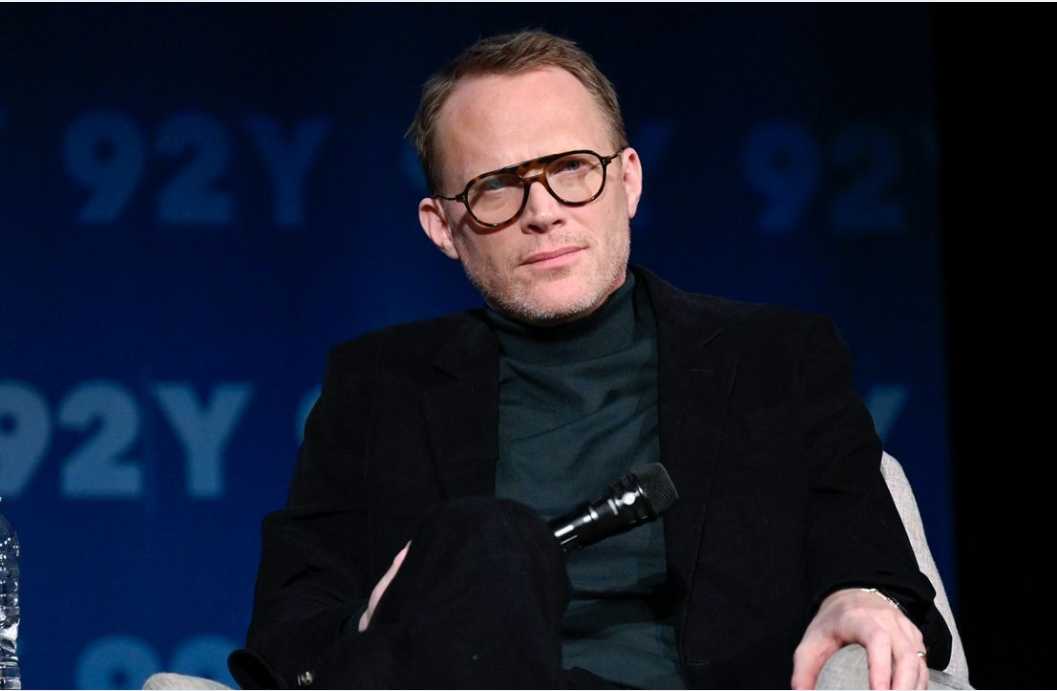
Paul Bettany is an English actor whose film career has moved comfortably between British independent dramas, Hollywood thrillers, historical films, romantic comedies, and major franchise productions. He made his feature-film debut in Bent in 1997 before steadily building recognition through films such as Gangster No. 1, A Knight’s Tale, and A Beautiful Mind. His work with directors including Peter Weir, Lars von Trier, and Ron Howard established him as a versatile character actor capable of taking on very different kinds of roles. Bettany later became globally recognized for voicing J.A.R.V.I.S. in the Marvel Cinematic Universe and portraying Vision, one of the franchise’s most distinctive characters. His non-Marvel work has remained equally varied, including Master and Commander: The Far Side of the World, The Da Vinci Code, The Young Victoria, Margin Call, and Uncle Frank. This complete guide to Paul Bettany movies by year follows his released feature-film career chronologically, while also identifying his voice, cameo, and other non-standard movie appearances.
1997 — Bent
Paul Bettany made his feature-film debut in Bent, directed by Sean Mathias and based on Martin Sherman’s stage play. He played the Captain in the drama, which stars Clive Owen and explores the persecution of gay men in Nazi Germany. The film is a serious historical drama centered on identity, imprisonment, and survival. Although Bettany’s role was relatively small, Bent marked the beginning of his professional movie career.
1998 — The Land Girls
In David Leland’s The Land Girls, Bettany played Philip, a naval officer and the fiancé of Stella, portrayed by Catherine McCormack. The 1998 British-French period drama is based on Angela Huth’s novel and follows three young women serving in Britain’s Women’s Land Army during the Second World War. Bettany appeared alongside Rachel Weisz, Anna Friel, and Steven Mackintosh. The film gave him an early opportunity to work within a large ensemble in a historical setting.
1999 — After the Rain
After the Rain is a South African-American drama directed and written by Ross Kettle. Bettany played Steph Oosthuizen, a troubled Afrikaner whose relationship becomes increasingly tense amid racial and political divisions in post-apartheid South Africa. The film is a dark dramatic story dealing with jealousy, identity, violence, and the legacy of apartheid. It was one of Bettany’s early substantial leading roles and demonstrated his ability to handle psychologically difficult material.
2000 — Kiss Kiss (Bang Bang)
Bettany appeared in Kiss Kiss (Bang Bang) as Jimmy, continuing his early run of British film roles. The film is a crime comedy directed by Stewart Sugg and features a cast that includes Stellan Skarsgård and Chris Penn. Its story combines criminal schemes with dark humor and relationship complications. The movie is less widely known than Bettany’s later work, but it remains part of his early feature-film filmography.
2000 — The Suicide Club
Also known as The Game of Death, The Suicide Club was directed by Rachel Samuels and based on Robert Louis Stevenson’s The Suicide Club. Bettany played Shaw in this mystery thriller, alongside Jonathan Pryce and David Morrissey. The story follows a secret society whose members become involved in a dangerous arrangement surrounding death, guilt, and obsession. Bettany’s appearance came during the period when he was moving from smaller British productions toward more prominent international projects.
2000 — Dead Babies
William Marsh directed Dead Babies, a dark British comedy based on Martin Amis’s novel. Bettany played Quentin, one of the young adults caught up in an increasingly chaotic and destructive weekend involving drugs, relationships, and violence. The ensemble also included Olivia Williams, Katy Carmichael, Hayley Carr, and Kris Marshall. The film’s deliberately abrasive black-comedy style made it one of the more unconventional entries in Bettany’s early career.
2000 — Gangster No. 1
In Gangster No. 1, Bettany played the Young Gangster, a role that brought him considerably greater attention. Directed by Paul McGuigan, the British crime film follows a ruthless London gangster across different stages of his life, with Malcolm McDowell portraying the older version. Bettany’s intense performance helped establish him as an actor capable of playing volatile and morally complicated characters. The film became an important early milestone before his breakthrough in A Knight’s Tale the following year.
2001 — A Knight’s Tale
Bettany became much more widely recognized in A Knight’s Tale, directed by Brian Helgeland and starring Heath Ledger. He played Geoffrey Chaucer, a flamboyant writer and storyteller who becomes an important companion to Ledger’s William Thatcher. The medieval adventure mixes action, comedy, romance, and deliberately modern touches, giving Bettany considerable room to create a memorable supporting character. Chaucer became one of the actor’s best-known early movie roles and remains a defining part of his career.
2001 — A Beautiful Mind
Ron Howard’s acclaimed biographical drama A Beautiful Mind featured Bettany as Charles Herman, the charismatic roommate and friend of mathematician John Nash, played by Russell Crowe. The film explores Nash’s extraordinary mathematical career as well as his struggle with schizophrenia and the impact it has on his personal life. Bettany’s performance adds warmth and humor to an otherwise intense story, while the film went on to win the Academy Award for Best Picture. It became one of the most important films of Bettany’s early Hollywood career.
2002 — The Heart of Me
The Heart of Me is a British romantic drama directed by Thaddeus O’Sullivan and based on Rosamond Lehmann’s novel The Echoing Grove. Bettany played Rickie, becoming involved in a complicated emotional triangle with characters portrayed by Helena Bonham Carter and Olivia Williams. Set in England before and during the Second World War, the film focuses on love, betrayal, family relationships, and emotional consequences. It offered Bettany a quieter dramatic role following the more flamboyant performances that had raised his profile.
2003 — Master and Commander: The Far Side of the World
Peter Weir’s Master and Commander: The Far Side of the World gave Bettany one of the strongest roles of his early career. He played Dr. Stephen Maturin, the intelligent and idealistic ship’s surgeon aboard Captain Jack Aubrey’s vessel, portrayed by Russell Crowe. The historical adventure follows the crew of HMS Surprise during the Napoleonic Wars and combines naval action with detailed character drama. Bettany received widespread praise for the performance, which earned him recognition as a major supporting actor.
2003 — Dogville
Bettany worked with acclaimed filmmaker Lars von Trier in Dogville, playing Tom Edison Jr. The experimental drama stars Nicole Kidman as a woman who seeks refuge in an isolated American town and gradually becomes trapped by its inhabitants. Bettany’s Tom initially presents himself as an idealistic community thinker but becomes increasingly morally compromised as the story develops. The film is notable for its minimalist theatrical staging and its deliberately challenging examination of human behavior.
2003 — The Reckoning
In The Reckoning, Bettany played Nicholas, a priest who becomes involved in a traveling troupe of actors during medieval England. Directed by Paul McGuigan, the historical drama stars Willem Dafoe and explores guilt, faith, murder, and the power of performance. Bettany’s character is central to the film’s emotional and moral conflict. The movie continued his growing association with serious period dramas.
2004 — Wimbledon
Bettany switched to romantic comedy with Wimbledon, directed by Richard Loncraine. He played Peter Colt, a British tennis player whose career is fading until a relationship with rising American star Lizzie Bradbury, played by Kirsten Dunst, gives him renewed confidence. The film combines sports competition with romance and light comedy. It remains one of Bettany’s most accessible leading roles and showed that his screen presence could work effectively outside darker dramas.
2005 — Stories of Lost Souls
Stories of Lost Souls is an anthology film featuring several short segments, rather than a conventional single narrative feature. Bettany appears in the segment “Euston Road”, playing a character credited as Y. His contribution should therefore be regarded as a short-form anthology appearance rather than a standard standalone feature-film role. The film is included here because it forms part of his officially released screen filmography.
2006 — Firewall
In the thriller Firewall, Bettany played Bill Cox opposite Harrison Ford. Directed by Richard Loncraine, the film follows a bank security executive whose family is threatened by criminals attempting to force him into helping them steal money. Bettany’s character is the primary antagonist, giving him a chance to play a controlled but menacing villain. The role demonstrated his ability to carry a mainstream studio thriller as a formidable opposing presence.
2006 — The Da Vinci Code
Bettany played Silas, the mysterious albino monk and assassin, in Ron Howard’s The Da Vinci Code. Based on Dan Brown’s bestselling novel, the film stars Tom Hanks as Robert Langdon and follows a conspiracy involving the Catholic Church, ancient secrets, and a series of murders. Silas is one of the movie’s most visually distinctive and threatening characters. Bettany’s intense physical performance made the role one of the most recognizable supporting parts in his filmography.
2008 — Iron Man
Bettany entered the Marvel Cinematic Universe in Iron Man as the voice of J.A.R.V.I.S., Tony Stark’s sophisticated artificial-intelligence assistant. Directed by Jon Favreau and starring Robert Downey Jr., the superhero film helped launch the interconnected Marvel franchise. Bettany did not physically appear on screen in this first installment, but his voice became an important part of Tony Stark’s technological world. The role eventually led to Bettany portraying Vision, dramatically changing the trajectory of his career.
2008 — Broken Lines
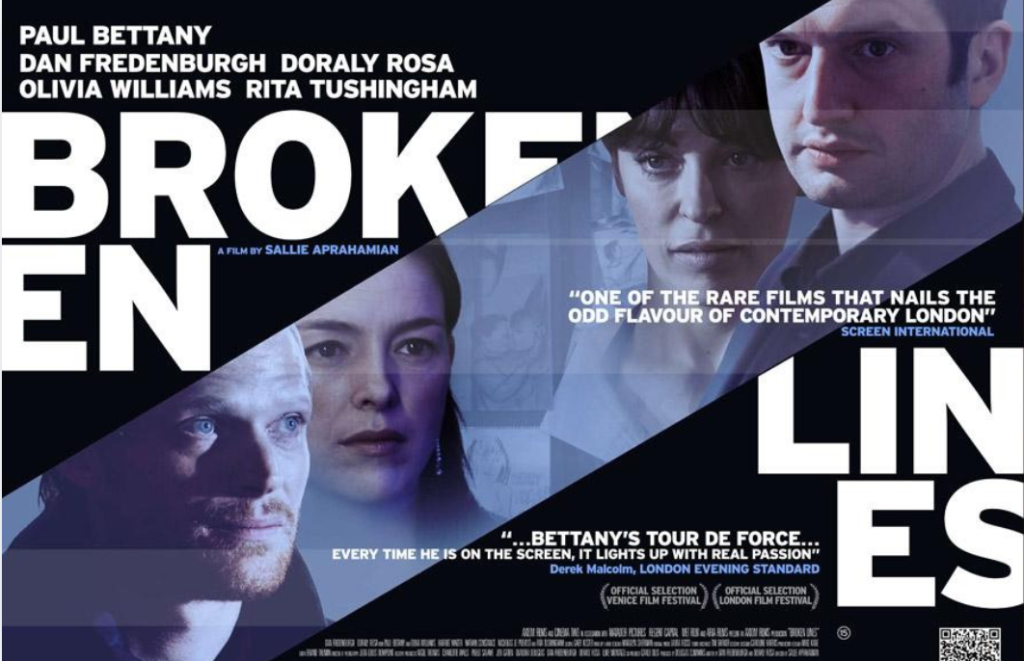
Broken Lines is a British drama directed by Sallie Aprahamian, with Bettany playing Chester. The story follows a man struggling emotionally after a devastating accident and the complicated relationships that emerge in its aftermath. The film is more intimate and character-driven than Bettany’s large studio productions. It represents another example of his willingness to move between independent drama and mainstream filmmaking.
2008 — The Secret Life of Bees
In The Secret Life of Bees, Bettany played T. Ray Owens, the stern and emotionally damaged father of Dakota Fanning’s Lily. Directed by Gina Prince-Bythewood and based on Sue Monk Kidd’s bestselling novel, the film is set in the American South during the civil-rights era. The story follows Lily as she searches for answers about her late mother and finds refuge with a family of beekeepers. Bettany’s performance as an intimidating and troubled father adds considerable tension to the film’s emotional foundation.
2008 — Inkheart
Bettany played the mysterious Dustfinger in Inkheart, a fantasy adventure based on Cornelia Funke’s novel. Directed by Iain Softley, the film follows a man with the ability to bring characters from books into the real world. Dustfinger is a fire-breathing performer who longs to return to the fictional world from which he came. Bettany’s energetic performance made the character one of the movie’s more distinctive figures.
2009 — The Young Victoria
In Jean-Marc Vallée’s historical drama The Young Victoria, Bettany portrayed Lord Melbourne, the British prime minister and an important early influence on Queen Victoria. Emily Blunt played Victoria, while Rupert Friend portrayed Prince Albert. The film concentrates on Victoria’s rise to the throne and the development of her relationship with Albert. Bettany brought restraint and political sophistication to the role, helping ground the romantic and historical elements of the story.
2009 — Creation
Creation presented Bettany in the demanding role of Charles Darwin. Directed by Jon Amiel, the biographical drama examines Darwin’s personal life and his struggle with the implications of his theory of evolution. Bettany starred opposite his then-wife Jennifer Connelly, who played Darwin’s wife, Emma. The film is notable for focusing as much on Darwin’s emotional and intellectual conflicts as on his scientific achievements.
2010 — Legion
Bettany took on an unusual action role in Legion, playing Michael, an archangel who descends to Earth to protect an unborn child. Directed by Scott Stewart, the supernatural action horror film imagines humanity facing an apocalyptic assault after God loses faith in mankind. Bettany’s performance combines religious imagery with a physically demanding action style. The movie became one of his most overtly genre-focused projects.
2010 — Iron Man 2
Bettany returned as the voice of J.A.R.V.I.S. in Iron Man 2, Jon Favreau’s sequel to the original Marvel film. Robert Downey Jr. again played Tony Stark, while the story expanded the franchise with characters including Natasha Romanoff, played by Scarlett Johansson, and Ivan Vanko, played by Mickey Rourke. J.A.R.V.I.S. continued to function as Stark’s trusted technological assistant. Bettany’s voice work helped maintain the character’s presence while remaining an off-screen performance.
2010 — The Tourist
In Florian Henckel von Donnersmarck’s The Tourist, Bettany played Inspector John Acheson. The romantic mystery thriller stars Angelina Jolie and Johnny Depp and follows a woman who becomes involved with an unsuspecting tourist while being pursued by law enforcement and criminals. Bettany’s character is a determined British police inspector attempting to unravel the mystery. The film allowed him to work within a glossy international thriller alongside two major Hollywood stars.
2011 — Priest
Bettany reunited with director Scott Stewart for Priest, playing the title character. The post-apocalyptic action horror film is set in a world where humans and vampires have fought for generations, with Bettany’s warrior priest breaking the rules to rescue a kidnapped family member. The movie combines Western, science-fiction, horror, and religious imagery. It marked another major action-oriented leading role for Bettany.
2011 — Margin Call
Margin Call, directed by J.C. Chandor, featured Bettany as Will Emerson, a senior executive at an investment firm facing a potentially catastrophic financial crisis. The film unfolds over roughly one night as employees discover the scale of a problem that could threaten their company and the wider economy. Bettany appeared alongside Jeremy Irons, Kevin Spacey, Zachary Quinto, and Stanley Tucci. The tightly written financial drama was particularly notable for relying on dialogue and performances rather than conventional action.
2012 — The Avengers
Bettany returned as the voice of J.A.R.V.I.S. in The Avengers, the first Marvel film to bring several major superheroes together in one story. Directed by Joss Whedon, the blockbuster stars Robert Downey Jr., Chris Evans, Chris Hemsworth, Scarlett Johansson, Mark Ruffalo, and Jeremy Renner. J.A.R.V.I.S. remains an important part of Tony Stark’s technology as the Avengers face Loki and his invading forces. Although Bettany was not physically seen, his vocal performance became increasingly important to the Stark storyline.
2013 — Iron Man 3
In Iron Man 3, Bettany again supplied the voice of J.A.R.V.I.S. as Tony Stark dealt with the aftermath of the Battle of New York. Shane Black directed the film, which follows Stark as he confronts the mysterious Mandarin and a new technological threat. J.A.R.V.I.S. remains a key part of Stark’s suits, laboratory, and technological operations. Bettany’s contribution continued to build the relationship between the character and Tony before the major transformation that came in Avengers: Age of Ultron.
2013 — Blood
Blood is a British crime thriller directed by Nick Murphy, with Bettany playing Detective Sergeant Joe Fairburn. The story follows two brothers working as police officers who become entangled in a morally dangerous investigation after a young girl’s death. Bettany shares the screen with Stephen Graham, who plays his brother Chrissie. The film is a tense exploration of guilt, loyalty, justice, and the consequences of crossing ethical boundaries.
2014 — Transcendence
Bettany starred in Transcendence as Max Waters, a computer scientist and close friend of Johnny Depp’s Will Caster. Directed by Wally Pfister, the science-fiction thriller follows a dying artificial-intelligence researcher whose consciousness is uploaded into a computer. Max becomes increasingly concerned about what his friend’s transformation means for humanity. The film was notable for bringing Bettany into a cerebral science-fiction story centered on artificial intelligence, technology, and human identity.
2015 — Mortdecai
In the comedy Mortdecai, Bettany played Jock Strapp, the loyal valet and former military man working for Johnny Depp’s eccentric art dealer Charlie Mortdecai. Directed by David Koepp, the film also stars Gwyneth Paltrow and Ewan McGregor. The plot revolves around stolen artwork, international criminals, and an elaborate treasure hunt. Bettany’s straight-faced performance provides a counterbalance to Depp’s deliberately exaggerated comic style.
2015 — Avengers: Age of Ultron
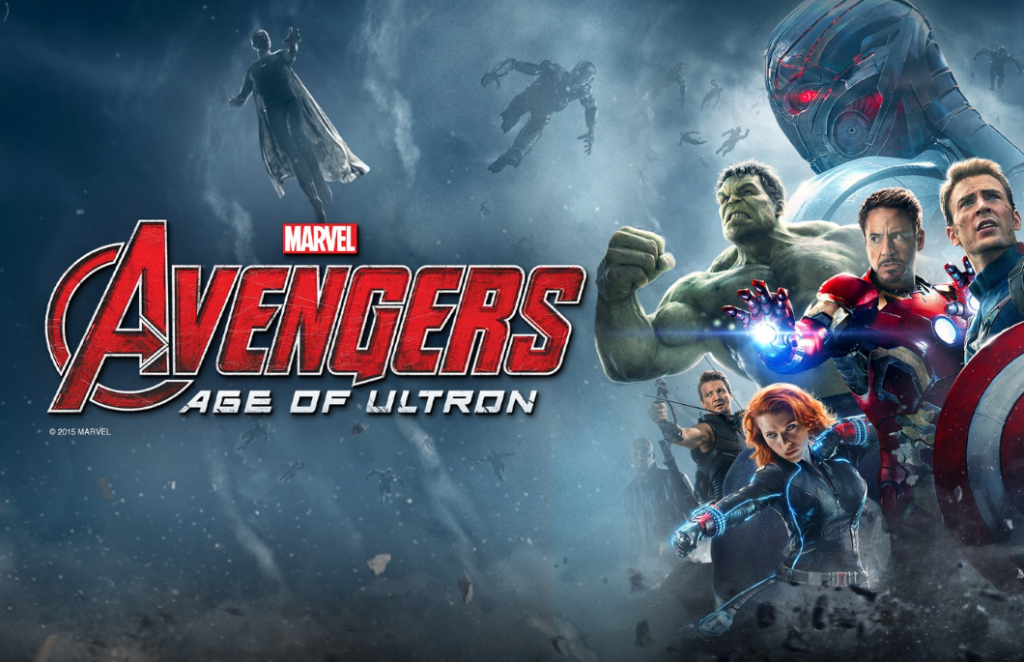
Avengers: Age of Ultron was a major turning point in Bettany’s Marvel career. He initially continues as the voice of J.A.R.V.I.S., but the character’s transformation ultimately leads to the creation of Vision, whom Bettany portrays physically for the first time. Directed by Joss Whedon, the film brings the Avengers together against the artificial intelligence Ultron. Vision’s introduction became one of Bettany’s defining screen roles and established him as a superhero in his own right.
2015 — Legend
Bettany had an uncredited appearance in Legend, the British crime biographical drama directed by Brian Helgeland. He played Charlie Richardson, a real-life London gangster, in a small supporting appearance alongside Tom Hardy, who portrays both Kray brothers. The film dramatizes the rise and fall of Ronnie and Reggie Kray in 1960s London. Because Bettany’s part is uncredited, it is best treated as a minor supporting appearance rather than a conventional starring role.
2016 — Captain America: Civil War
Bettany returned as Vision in Captain America: Civil War, directed by Anthony and Joe Russo. The superhero film divides the Avengers over government oversight, placing Vision on the side of Tony Stark and the Sokovia Accords. His developing relationship with Wanda Maximoff, played by Elizabeth Olsen, also becomes an important part of the wider Marvel storyline. The film expanded Vision beyond the supporting role he had in Age of Ultron and made him an important member of the Avengers.
2017 — Journey’s End
In Journey’s End, Bettany played Osborne, a senior officer serving during the First World War. Directed by Saul Dibb and based on R.C. Sherriff’s celebrated stage play, the film follows British soldiers preparing for a German attack while dealing with fear, exhaustion, and psychological pressure. Bettany’s character acts as a calm and experienced presence amid the escalating tension. The film returned him to the serious historical drama territory that had featured prominently earlier in his career.
2018 — Avengers: Infinity War
Bettany reprised Vision in Avengers: Infinity War, one of the most consequential chapters of the Marvel Cinematic Universe. Directed by Anthony and Joe Russo, the film follows the Avengers and their allies as Thanos attempts to collect the Infinity Stones. Vision possesses the Mind Stone, making him central to Thanos’s plan and placing his relationship with Wanda under extraordinary pressure. Bettany’s performance combines superhero action with the emotional conflict surrounding Vision’s humanity and his bond with Wanda.
2018 — Solo: A Star Wars Story
Bettany joined the Star Wars universe in Solo: A Star Wars Story as Dryden Vos, a powerful crime boss who oversees a criminal organization. Directed by Ron Howard, the film explores the younger years of Han Solo, played by Alden Ehrenreich, and features Donald Glover as Lando Calrissian. Bettany took over the role after production changes and brought a polished but threatening presence to the character. Dryden Vos stands out as one of the film’s major antagonistic figures.
2020 — Uncle Frank
In Uncle Frank, Bettany played the title character, Frank Bledsoe, a gay professor who travels with his niece Beth, played by Sophia Lillis, after a family death. Directed by Alan Ball, the drama is set primarily in the American South during the early 1970s and examines family, sexuality, acceptance, and hidden personal histories. Bettany gives one of his more restrained and emotionally vulnerable performances in the film. The movie was particularly notable for moving away from his large-scale franchise work toward intimate character drama.
2024 — Here
Bettany’s latest released feature film is Here, Robert Zemeckis’s 2024 drama starring Tom Hanks and Robin Wright. He plays Al, a character connected to one of the families whose lives unfold across the same piece of land over many generations. The film is based on Richard McGuire’s graphic novel and uses an unusual fixed-camera concept to explore time, memory, family, love, and loss. Bettany’s role places him within an ensemble that includes Hanks, Wright, and Kelly Reilly, and the film reunites Zemeckis, Hanks, and Wright after Forrest Gump.
Paul Bettany’s Movie Career in Summary
Paul Bettany’s filmography demonstrates an unusually broad range. He moved from small British productions such as Bent and The Land Girls to acclaimed dramas including A Beautiful Mind, Master and Commander: The Far Side of the World, and Dogville. He subsequently established himself as a leading man in projects such as Wimbledon, Priest, and Transcendence, while also becoming one of the most recognizable performers in the Marvel Cinematic Universe through J.A.R.V.I.S. and Vision. His work in Uncle Frank and Here further showed that his career extends well beyond superhero cinema. Taken chronologically, Paul Bettany movies by year reveal a performer who has consistently moved between independent films, historical dramas, mainstream blockbusters, thrillers, comedy, fantasy, and emotionally focused character pieces.
