

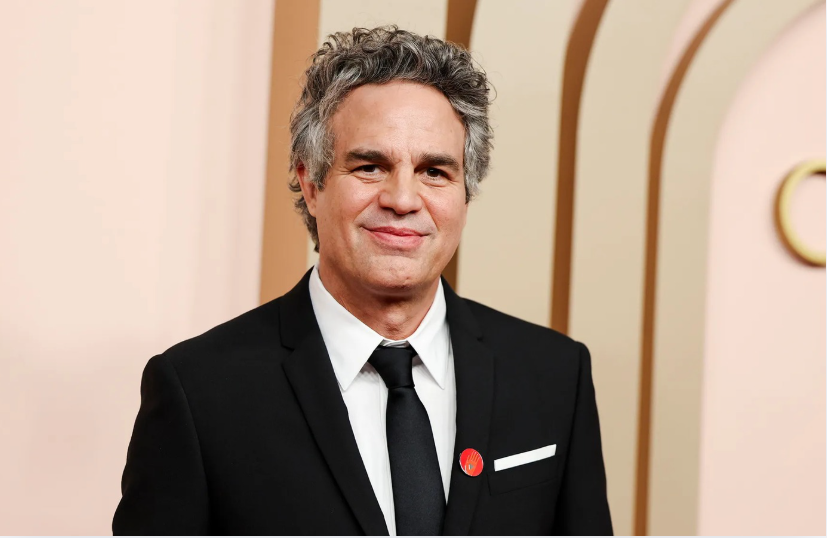
Mark Ruffalo has built one of the most versatile acting careers of his generation, moving comfortably between independent dramas, romantic comedies, thrillers, political films, and major superhero productions. His feature-film career began in the 1990s with small roles before he gained wider recognition through You Can Count on Me in 2000. Over the following years, he worked with filmmakers including David Fincher, Martin Scorsese, Michael Mann, and Kenneth Lonergan while developing a reputation for emotionally grounded performances. Ruffalo later became internationally famous as Bruce Banner and the Hulk in the Marvel Cinematic Universe, beginning with The Avengers in 2012. His acclaimed dramatic work in films such as Foxcatcher, Spotlight, and Dark Waters has also earned him major awards recognition. This complete guide to Mark Ruffalo movies by year covers his released feature films chronologically, including early appearances, cameos, voice performances, and documentary work where relevant.
1994 — Mirror, Mirror II: Raven Dance
Mark Ruffalo made his feature-film debut in Mirror, Mirror II: Raven Dance, a 1994 horror film directed by Jimmy Lifton. He played Christian in the story of a teenage orphan who becomes haunted by a mysterious mirror while living in a Catholic orphanage. The film was released directly to video and is notable primarily because it represents the beginning of Ruffalo’s feature-film career.
1994 — There Goes My Baby
There Goes My Baby is a coming-of-age comedy-drama directed by Floyd Mutrux and set around a group of teenagers during the summer of 1965. Ruffalo played J.D., appearing in an ensemble that included Dermot Mulroney, Noah Wyle, and other young performers. Although the film was made early in his career, it helped give Ruffalo additional experience in an ensemble feature before his later breakthrough.
1995 — Mirror, Mirror III: The Voyeur
Ruffalo returned to the Mirror, Mirror series in Mirror, Mirror III: The Voyeur, a 1995 horror film directed by Rachel Gordon and Virginia Perfili. He played Joey, an unrelated character from his Christian role in the previous installment. The film combines supernatural horror with erotic-thriller elements and was released directly to video, making it another early and relatively obscure entry in Ruffalo’s filmography.
1996 — The Destiny of Marty Fine
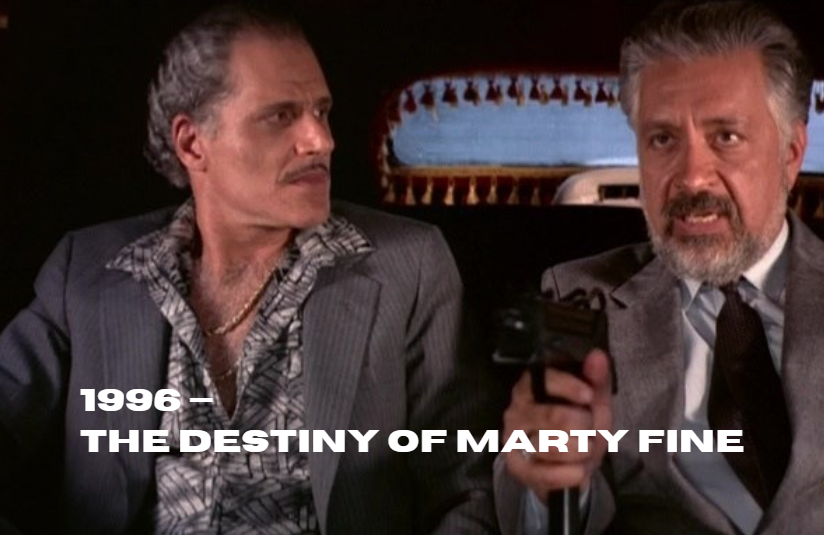
The Destiny of Marty Fine is a 1996 independent drama directed by Michael Hacker, with Ruffalo serving as a co-writer as well as appearing in the film. He played Brett in the story of a washed-up boxer who becomes entangled with criminals after witnessing a mob killing. The film premiered at South by Southwest and is particularly notable for showing Ruffalo’s early involvement in both acting and screenwriting.
1996 — The Dentist
In the horror film The Dentist, Ruffalo played Steve Landers in a supporting role. Directed by Brian Yuzna, the film follows a wealthy dentist whose life begins to collapse into violent paranoia and psychological horror. Ruffalo’s appearance was brief, but the movie remains part of his early feature-film résumé before he began receiving more substantial dramatic roles.
1996 — Blood Money
Blood Money is a low-budget crime thriller directed by John Shepphird. Ruffalo appeared as an attorney in the story of a hardened criminal who escapes prison and pursues revenge against people connected to his conviction. The film belongs to the group of supporting roles that Ruffalo took during the first stage of his career.
1996 — The Last Big Thing
The Last Big Thing is an independent comedy written and directed by Dan Zukovic. Ruffalo played Brent Benedict in the satirical story of a cynical Los Angeles journalist who uses his work to confront performers, artists, and other figures within popular culture. The film premiered in 1996 and later received a U.S. theatrical release, becoming an early example of Ruffalo’s work in independent cinema.
1998 — Safe Men
Ruffalo appeared as Frank in Safe Men, a 1998 crime comedy directed by John Hamburg. The film follows two incompetent safecrackers who become caught up with criminals after being mistaken for professional thieves. Ruffalo’s supporting performance came alongside actors including Sam Rockwell and Steve Zahn and helped establish his presence in offbeat independent comedies.
1998 — 54
In 54, Ruffalo played Ricko in Mark Christopher’s drama about Studio 54, the famous New York nightclub. The film stars Ryan Phillippe, Salma Hayek, Neve Campbell, and Mike Myers and examines the excess, ambition, and nightlife surrounding the legendary club. Ruffalo’s role was supporting, but the film gave him an opportunity to work within a much larger studio production.
1999 — A Fish in the Bathtub
A Fish in the Bathtub is a 1999 comedy-drama directed by Joan Micklin Silver. Ruffalo played Joel in the story of an aging Brooklyn couple whose long marriage is tested by changing family relationships and personal frustrations. The film gave Ruffalo another chance to work in character-driven independent cinema, an area that would become important throughout his career.
1999 — Ride with the Devil
Directed by Ang Lee, Ride with the Devil is a historical Western drama set during the American Civil War. Ruffalo played Alf Bowden, joining a cast that included Tobey Maguire, Skeet Ulrich, Jewel, and Jeffrey Wright. The film is notable within Ruffalo’s early career because it placed him in a major period production under an internationally respected director.
2000 — You Can Count on Me
You Can Count on Me became a major turning point in Ruffalo’s career. Directed by Kenneth Lonergan, the acclaimed drama stars Laura Linney as a single mother and Ruffalo as her unpredictable brother Terry Prescott, whose return to their small hometown disrupts her carefully organized life. Ruffalo’s emotionally natural performance earned widespread critical attention and helped establish him as a serious dramatic actor.
2000 — Committed
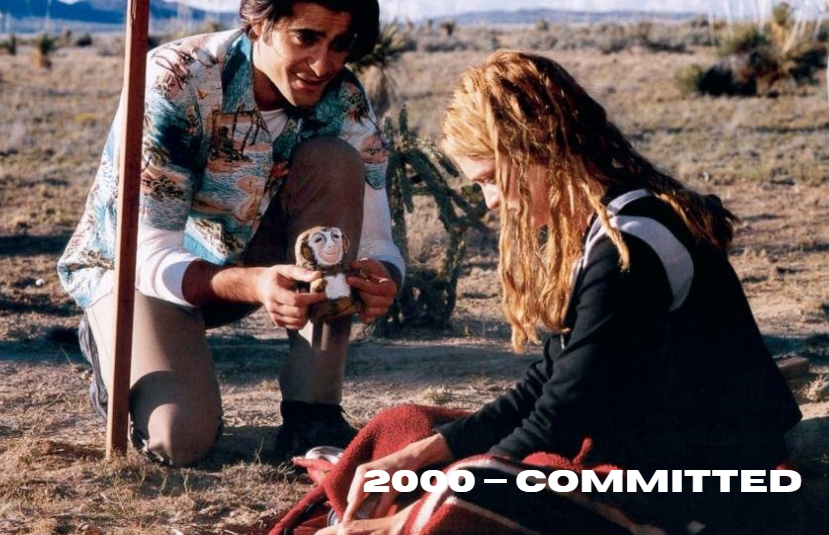
In the romantic comedy Committed, Ruffalo played T-Bo alongside Heather Graham and Casey Affleck. The film follows a woman who becomes increasingly determined to track down her estranged husband while encountering a series of eccentric people. Ruffalo’s role was part of the ensemble, showing the actor continuing to balance independent drama with lighter material.
2001 — The Last Castle
The Last Castle is a military drama directed by Rod Lurie and starring Robert Redford, James Gandolfini, and Mark Ruffalo. Ruffalo played Yates, a soldier involved in a conflict between imprisoned military personnel and the authoritarian prison commander played by Gandolfini. The film gave Ruffalo a supporting part in a larger-scale studio production and expanded the range of roles he was taking at the beginning of the 2000s.
2001 — Apartment 12
Ruffalo starred as Alex in Apartment 12, a comedy-romance directed by Dan Bootzin. Alex is a struggling Los Angeles painter whose career and relationship collapse before he moves into a rundown apartment and becomes involved with his new neighbor. The film is especially notable as an early starring vehicle for Ruffalo and highlights his ability to carry a small independent romantic comedy.
2002 — XX/XY
XX/XY is an independent relationship drama directed by Austin Chick. Ruffalo played Coles, one of three friends whose complicated romantic and sexual relationships unfold across different stages of their lives. The film allowed Ruffalo to explore a more intimate and emotionally complicated character well before he became known for blockbuster roles.
2002 — Windtalkers
Directed by John Woo, Windtalkers is a World War II action drama starring Nicolas Cage and Christian Slater. Ruffalo played Private Pappas, a soldier serving alongside Cage’s character during the Pacific campaign. The movie combined large-scale battle sequences with a story about Navajo code talkers and military loyalty.
2003 — My Life Without Me
My Life Without Me is a Spanish-Canadian drama directed by Isabel Coixet. Ruffalo played Lee, a man who develops a relationship with Sarah Polley’s character after she receives devastating news about her health. The intimate film gave Ruffalo another opportunity to demonstrate the restrained, emotionally sensitive style that had become a hallmark of his performances.
2003 — View from the Top
The comedy View from the Top stars Gwyneth Paltrow as a woman determined to become a successful flight attendant. Ruffalo played Ted Stewart, one of the people who becomes connected to her personal and professional journey. Directed by Bruno Barreto, the film also featured Christina Applegate, Candice Bergen, and Mike Myers and represented another lighter role for Ruffalo.
2003 — In the Cut
Jane Campion directed In the Cut, a psychological thriller starring Meg Ryan as a woman drawn into a dangerous investigation involving a series of murders. Ruffalo played Detective Giovanni A. Malloy, the police officer investigating the crimes. His performance brought a grounded presence to a film built around mystery, erotic tension, and psychological uncertainty.
2004 — We Don’t Live Here Anymore
We Don’t Live Here Anymore is a 2004 relationship drama directed by John Curran and based on stories by Andre Dubus. Ruffalo played Jack Linden, a married writer whose friendship with another couple becomes increasingly complicated by infidelity and resentment. The film was particularly significant because Ruffalo also received an executive producer credit, combining his acting work with a behind-the-scenes role.
2004 — Eternal Sunshine of the Spotless Mind
Michel Gondry’s Eternal Sunshine of the Spotless Mind stars Jim Carrey and Kate Winslet as a couple who undergo a procedure to erase memories of their relationship. Ruffalo played Stan, an employee involved in the memory-erasure process alongside Tom Wilkinson’s character. The inventive science-fiction romantic drama became one of the most acclaimed films of the decade and remains one of Ruffalo’s best-known pre-Marvel supporting performances.
2004 — 13 Going on 30
In 13 Going on 30, Ruffalo played Matt Flamhaff, the childhood friend and eventual romantic interest of Jennifer Garner’s Jenna Rink. Directed by Gary Winick, the fantasy romantic comedy follows a 13-year-old girl who magically wakes up as a 30-year-old woman. Ruffalo’s warm performance helped make the film a lasting favorite and showed his ability to work effectively in mainstream romantic comedy.
2004 — Collateral
Michael Mann’s Collateral is a crime thriller starring Tom Cruise and Jamie Foxx. Ruffalo played Detective Ray Fanning, a police detective trying to connect the night’s murders to the mysterious hitman played by Cruise. Although his role is supporting, the film is notable for placing Ruffalo alongside major stars in a stylish, critically respected thriller.
2005 — Just Like Heaven
Just Like Heaven is a romantic fantasy comedy directed by Mark Waters. Ruffalo starred as David Abbott, a widower who moves into an apartment only to encounter the ghost-like presence of Reese Witherspoon’s character. The film combined romance, comedy, and supernatural elements and gave Ruffalo one of his more prominent mainstream leading roles of the period.
2005 — Rumor Has It…
In Rumor Has It…, Ruffalo played Jeff Daly opposite Jennifer Aniston, Kevin Costner, and Shirley MacLaine. Directed by Rob Reiner, the romantic comedy follows a woman who begins investigating whether her family inspired the story behind The Graduate. Ruffalo’s character is part of the romantic complications at the center of the film.
2006 — All the King’s Men
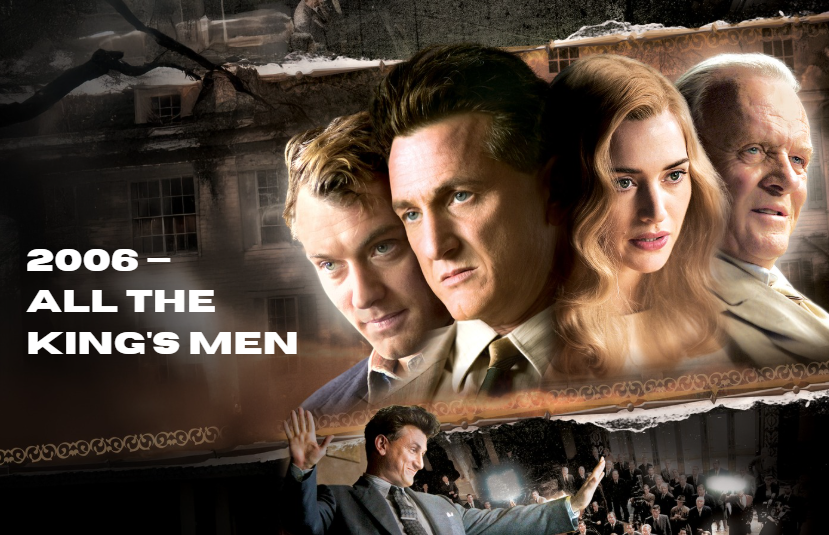
All the King’s Men is a political drama directed by Steven Zaillian and based on Robert Penn Warren’s Pulitzer Prize-winning novel. Ruffalo played Adam Stanton, a respected doctor and lawyer whose relationship with the powerful politician Willie Stark becomes increasingly strained. The film featured an impressive cast including Sean Penn, Jude Law, Anthony Hopkins, and Kate Winslet and gave Ruffalo another substantial dramatic role.
2007 — Chicago 10
Chicago 10 is a documentary combining archival material, animation, and dramatic voice performances to revisit the trial of activists connected to the 1968 Democratic National Convention protests. Ruffalo provided the voice of Jerry Rubin, one of the political figures at the center of the story. Because it is a documentary rather than a conventional narrative feature, Ruffalo’s contribution is best identified as a voice performance rather than a standard on-camera acting role.
2007 — Zodiac
David Fincher’s Zodiac is a mystery thriller based on the investigation into the unidentified Zodiac Killer. Ruffalo played Inspector Dave Toschi, the San Francisco police detective who becomes deeply involved in the long-running investigation, alongside Jake Gyllenhaal and Robert Downey Jr. The film was widely praised for its meticulous atmosphere and investigative storytelling and became one of the most important films of Ruffalo’s career.
2007 — Reservation Road
Reservation Road is a drama directed by Terry George and based on John Burnham Schwartz’s novel. Ruffalo played Dwight Arno, a father whose life changes dramatically after a tragic hit-and-run accident. The emotionally intense film gave Ruffalo another demanding dramatic role and paired him with Joaquin Phoenix, Jennifer Connelly, and Elle Fanning.
2008 — The Brothers Bloom
In The Brothers Bloom, Ruffalo played Stephen, an experienced con artist working alongside his brother Bloom, played by Adrien Brody. Directed by Rian Johnson, the adventure comedy-drama follows the brothers as they attempt what may be their final elaborate con, with Rachel Weisz joining their scheme. The film became a notable cult favorite and showcased Ruffalo in a playful, stylish role.
2008 — Blindness
Blindness, directed by Fernando Meirelles and based on José Saramago’s novel, is a dystopian drama about a mysterious epidemic that causes widespread blindness. Ruffalo played the Doctor, whose wife is portrayed by Julianne Moore, as society begins to collapse around them. The film was ambitious in scale and subject matter and gave Ruffalo another opportunity to play a morally complex character.
2008 — What Doesn’t Kill You
Brian Goodman’s What Doesn’t Kill You is a crime drama inspired by the director’s own experiences growing up in Boston. Ruffalo played Brian Reilly, a man whose involvement in crime threatens his relationships and future. Ethan Hawke and Amanda Peet also star in the film, which premiered at the Toronto International Film Festival and reflects Ruffalo’s continuing interest in grounded, character-driven stories.
2009 — Where the Wild Things Are
Spike Jonze’s Where the Wild Things Are adapts Maurice Sendak’s beloved children’s book into a visually distinctive fantasy drama. Ruffalo played Adrian, the boyfriend of Max’s mother, in a supporting role surrounding the young protagonist’s emotional journey into the world of the Wild Things. Although Ruffalo’s appearance is relatively brief, the film is notable for its ambitious combination of live action, costumes, practical effects, and digital filmmaking.
2010 — Shutter Island
Martin Scorsese’s Shutter Island stars Leonardo DiCaprio as U.S. Marshal Teddy Daniels, who investigates a disappearance at an isolated psychiatric hospital. Ruffalo played Chuck Aule, Teddy’s partner, although the character’s true identity becomes an important part of the film’s central mystery. The psychological thriller was a major commercial success and strengthened Ruffalo’s association with respected filmmakers and serious dramatic material.
2010 — The Kids Are All Right
The Kids Are All Right, directed by Lisa Cholodenko, stars Annette Bening and Julianne Moore as a married couple whose children seek out their biological father. Ruffalo played Paul Hatfield, the sperm donor who becomes unexpectedly involved in the family’s life. His performance earned an Academy Award nomination for Best Supporting Actor and marked one of the strongest critical achievements of his pre-Marvel career.
2010 — Date Night
In the action comedy Date Night, Ruffalo played Brad Sullivan alongside Steve Carell and Tina Fey. Directed by Shawn Levy, the film follows a married couple whose ordinary dinner date turns into a dangerous night involving criminals and mistaken identities. Ruffalo’s supporting appearance added another recognizable face to a comedy built around an ensemble of established actors.
2010 — Sympathy for Delicious
Sympathy for Delicious marked Ruffalo’s feature directorial debut. He also starred as Father Joe in the drama about a newly paralyzed DJ who seeks faith healing, with Christopher Thornton, Juliette Lewis, Laura Linney, and Orlando Bloom also appearing. The film premiered at the Sundance Film Festival, where Ruffalo won a Special Jury Prize, making it an important creative milestone in his career beyond acting.
2011 — Margaret
Margaret is a drama written and directed by Kenneth Lonergan and starring Anna Paquin. Ruffalo played Gerald Maretti, a New York City bus driver whose life becomes connected to the consequences of a tragic accident involving Paquin’s character. Although production and release were unusually complicated, the film eventually became recognized as an ambitious work of New York-centered drama.
2012 — The Avengers
The Avengers was the film that transformed Ruffalo into a global blockbuster star. Directed by Joss Whedon, the Marvel superhero film introduced his version of Dr. Bruce Banner and the Hulk, joining Robert Downey Jr., Chris Evans, Chris Hemsworth, Scarlett Johansson, and Jeremy Renner. Ruffalo’s performance established a distinctive interpretation of Banner that balanced intelligence, vulnerability, humor, and the destructive power of the Hulk.
2012 — Thanks for Sharing
Thanks for Sharing is a comedy-drama directed by Stuart Blumberg that explores relationships and recovery through several interconnected characters. Ruffalo starred as Adam, a man working to maintain a relationship while dealing with compulsive sexual behavior and recovery. The film also featured Gwyneth Paltrow, Tim Robbins, Pink, and Josh Gad and demonstrated that Ruffalo continued taking challenging adult dramas even as his Marvel career was beginning.
2013 — Iron Man 3
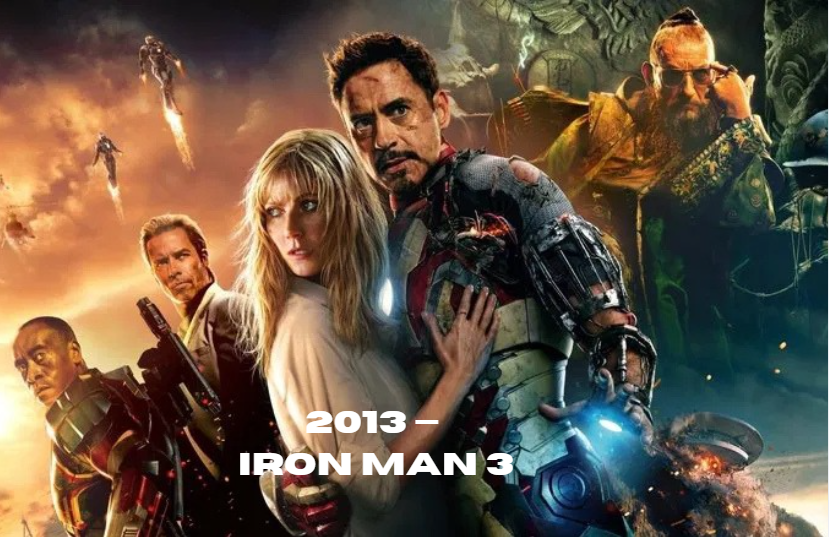
Ruffalo made an uncredited cameo as Bruce Banner in Iron Man 3, appearing during the film’s post-credits sequence with Robert Downey Jr.’s Tony Stark. Directed by Shane Black, the movie was primarily an Iron Man story rather than a Hulk film, so Ruffalo’s appearance is brief and comedic. It nevertheless helped connect the expanding Marvel Cinematic Universe after The Avengers.
2013 — Now You See Me
In Now You See Me, Ruffalo played FBI agent Dylan Rhodes, who investigates a group of illusionists known as the Four Horsemen. Directed by Louis Leterrier, the crime mystery combines magic, elaborate heists, deception, and a large ensemble cast including Jesse Eisenberg, Woody Harrelson, Isla Fisher, Dave Franco, and Morgan Freeman. Ruffalo’s character became central to the franchise’s larger mystery and returned in later installments.
2013 — Begin Again
John Carney’s musical romantic comedy-drama Begin Again stars Keira Knightley as a singer-songwriter whose career intersects with a struggling music producer played by Ruffalo. His character, Dan Mulligan, tries to rebuild his professional life by recording Knightley’s character in unconventional locations around New York. The film became one of Ruffalo’s most warmly received non-superhero projects and featured music as a major part of its storytelling.
2014 — Infinitely Polar Bear
Infinitely Polar Bear is a comedy-drama directed by Maya Forbes and inspired by Forbes’s own childhood experiences. Ruffalo played Cam Stuart, a father living with severe emotional instability who tries to care for his two daughters while his wife works to rebuild the family’s financial future. Ruffalo also served as an executive producer, and his performance was praised for combining humor with vulnerability.
2014 — Foxcatcher
In Bennett Miller’s Foxcatcher, Ruffalo portrayed Olympic wrestler Dave Schultz, a real-life athlete caught in the increasingly disturbing world surrounding wealthy patron John du Pont. Steve Carell played du Pont while Channing Tatum portrayed Mark Schultz, Dave’s younger brother. Ruffalo received an Academy Award nomination for Best Supporting Actor for his emotionally detailed performance, making the film one of the most significant dramatic achievements of his career.
2015 — Avengers: Age of Ultron
Ruffalo returned as Bruce Banner and the Hulk in Avengers: Age of Ultron, directed by Joss Whedon. The film brings together the Avengers as they face Ultron, an artificial intelligence created by Tony Stark and Bruce Banner that turns against humanity. Ruffalo’s performance further developed Banner’s complicated relationship with the Hulk and his connection with Natasha Romanoff, played by Scarlett Johansson.
2015 — Spotlight
Spotlight, directed by Tom McCarthy, follows the investigative journalists of The Boston Globe as they investigate allegations of abuse within the Catholic Church. Ruffalo played real-life reporter Michael Rezendes, whose determination becomes central to the newspaper team’s investigation. The film won the Academy Award for Best Picture, while Ruffalo earned his third Oscar nomination for his performance.
2016 — Now You See Me 2
Ruffalo returned as Dylan Rhodes in Now You See Me 2, the sequel to the 2013 magic-themed crime thriller. Directed by Jon M. Chu, the film follows the Four Horsemen as they become involved in another elaborate conspiracy involving technology, theft, and illusion. Ruffalo’s character remains particularly important to the franchise because of his connection to the mysterious organization known as the Eye.
2016 — Dear President Obama
Dear President Obama is a documentary focused on the growing clean-energy movement and environmental activism in the United States. Ruffalo contributed as narrator and executive producer rather than as a conventional acting performer. His participation makes this a non-standard film credit in the Mark Ruffalo movies by year timeline and reflects his long-standing involvement in environmental issues.
2017 — Thor: Ragnarok
Ruffalo returned as Bruce Banner and the Hulk in Thor: Ragnarok, directed by Taika Waititi. The film follows Thor, played by Chris Hemsworth, as he is forced into a gladiatorial battle that unexpectedly brings him face-to-face with the Hulk. Ruffalo’s performance helped turn the Banner-Hulk dynamic into one of the movie’s major sources of comedy and character development.
2017 — Anything
Anything is an independent drama directed by Timothy McNeil, with Ruffalo serving as an executive producer. The film centers on a grieving man who moves to Los Angeles and develops a friendship with a transgender woman. Ruffalo was not a standard on-screen acting performer in the film, so this credit is best identified as a behind-the-scenes production role rather than a conventional movie performance.
2018 — Avengers: Infinity War
In Avengers: Infinity War, Ruffalo again played Bruce Banner and the Hulk as the Avengers and their allies confronted Thanos. Directed by Anthony and Joe Russo, the massive crossover brought together characters from across the Marvel Cinematic Universe and made Banner’s struggle to access the Hulk an important part of his story. The film became one of the biggest global blockbusters of its era and ended on a major cliffhanger leading into Endgame.
2019 — Captain Marvel
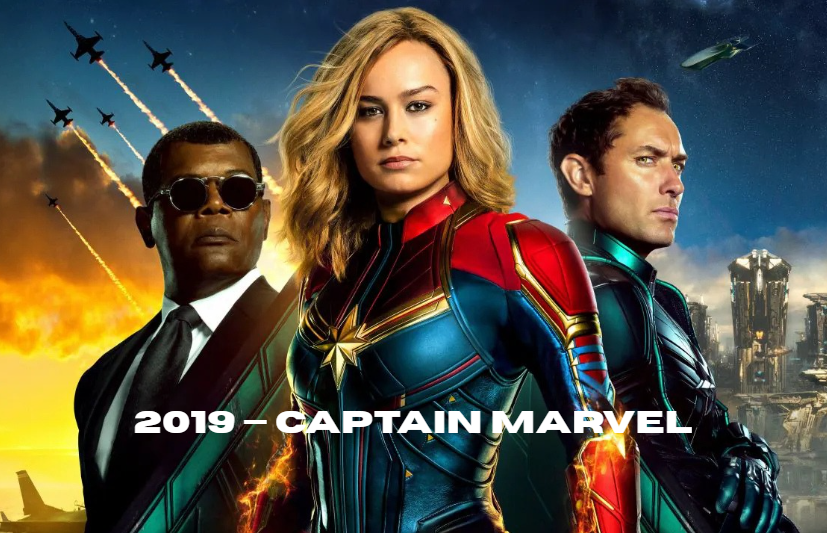
Ruffalo made a brief uncredited appearance as Bruce Banner in the mid-credits scene of Captain Marvel. Directed by Anna Boden and Ryan Fleck, the film is set largely in the 1990s and introduces Carol Danvers, played by Brie Larson. Ruffalo’s cameo connects the film’s story to the larger Avengers narrative and prepares the audience for the events surrounding Avengers: Endgame.
2019 — Avengers: Endgame
Avengers: Endgame, directed by Anthony and Joe Russo, brought Ruffalo’s Bruce Banner to a major turning point. Banner has successfully combined his intellect with the Hulk’s physical form, creating the character commonly known as Smart Hulk, and he plays a major role in the Avengers’ attempt to reverse the devastation caused by Thanos. The film became a landmark conclusion to the MCU’s original Infinity Saga and remains one of Ruffalo’s most commercially significant movies.
2019 — Dark Waters
Todd Haynes directed Dark Waters, a legal drama based on the real-life fight against chemical manufacturer DuPont. Ruffalo starred as attorney Robert Bilott, who investigates the company’s alleged contamination of communities and spends years pursuing accountability. Ruffalo also served as a producer, and the film became one of his most important post-Avengers dramatic projects.
2021 — Shang-Chi and the Legend of the Ten Rings
Ruffalo appeared as Bruce Banner in the post-credits sequence of Shang-Chi and the Legend of the Ten Rings. Directed by Destin Daniel Cretton, the Marvel film stars Simu Liu as Shang-Chi and introduces a new corner of the MCU centered on martial arts, family conflict, and the Ten Rings. Ruffalo’s cameo, alongside Brie Larson’s Captain Marvel, connects Shang-Chi’s story to the wider Avengers universe.
2022 — The Adam Project
The Adam Project is a science-fiction action adventure directed by Shawn Levy. Ruffalo played Louis Reed, the father of Ryan Reynolds’ character, Adam, whose family history becomes central to the time-travel story. The Netflix film also stars Jennifer Garner, Walker Scobell, Catherine Keener, and Zoe Saldaña and gave Ruffalo an opportunity to combine family drama with large-scale science-fiction adventure.
2023 — Poor Things
Yorgos Lanthimos directed Poor Things, a surreal fantasy comedy-drama based on Alasdair Gray’s novel. Ruffalo played Duncan Wedderburn, a flamboyant lawyer who becomes involved with Bella Baxter, played by Emma Stone, during her unusual journey of self-discovery. The film was critically acclaimed and earned Ruffalo an Academy Award nomination for Best Supporting Actor, adding another major awards achievement to his career.
2025 — Mickey 17
Mickey 17 is a science-fiction black comedy written and directed by Bong Joon Ho and based on Edward Ashton’s novel Mickey7. Ruffalo played Kenneth Marshall, the authoritarian leader of a colonization mission to the ice planet Niflheim, opposite Robert Pattinson, Naomi Ackie, Steven Yeun, and Toni Collette. The role allowed Ruffalo to play a deliberately exaggerated political antagonist in a darkly comic story about cloning, class, colonialism, and power.
2025 — Arco
Arco is an animated science-fiction fantasy directed by Ugo Bienvenu. Ruffalo provided an English-language voice performance as Mikki, a robot caretaker who helps the young characters during a time-traveling adventure involving a boy from the future. The film premiered at Cannes in 2025 and later received an international release, making it a notable voice-acting entry in Ruffalo’s filmography.
2025 — Cracking the Code: Phil Sharp and the Biotech Revolution
Cracking the Code: Phil Sharp and the Biotech Revolution is a documentary directed by Bill Haney about Nobel Prize-winning scientist Phil Sharp and the scientific revolution surrounding RNA research. Ruffalo served as the film’s narrator rather than appearing as a conventional dramatic actor. The documentary premiered through PBS in October 2025 and represents another non-standard film contribution in Ruffalo’s career.
2025 — Now You See Me: Now You Don’t
Ruffalo returned as Dylan Rhodes in Now You See Me: Now You Don’t, the third film in the Now You See Me series. Directed by Ruben Fleischer, the crime-heist adventure brings back several original cast members while introducing a new generation of illusionists and follows another elaborate scheme involving diamonds, deception, and organized crime. Ruffalo’s role is a returning supporting appearance that continues the character’s connection to the Four Horsemen and the Eye.
2026 — Crime 101
Crime 101 is a crime thriller directed by Bart Layton and based on Don Winslow’s novella. Ruffalo plays Detective Lou Lubesnick, a Los Angeles detective pursuing the disciplined jewel thief played by Chris Hemsworth, with Barry Keoghan, Halle Berry, and Nick Nolte also among the cast. The film was released internationally in February 2026 and gave Ruffalo a leading role in a contemporary crime story rather than a superhero or historical drama.
2026 — Spider-Man: Brand New Day
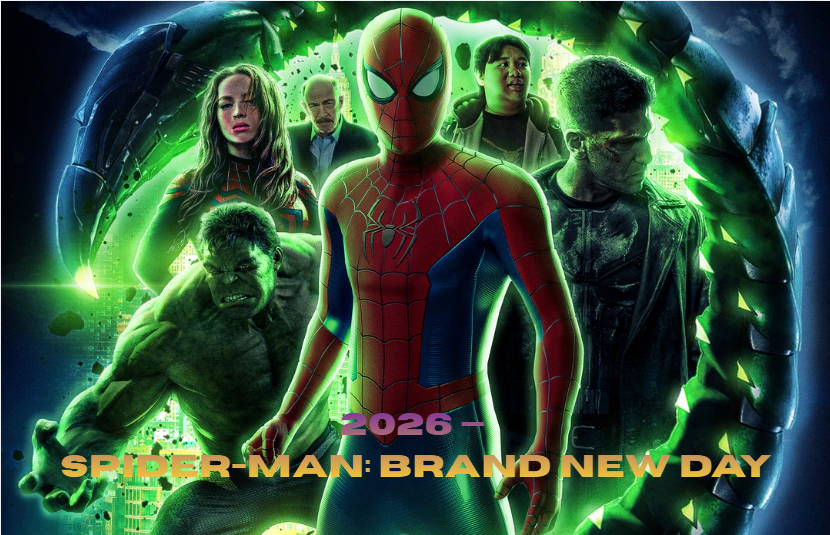
Spider-Man: Brand New Day is a Marvel superhero film directed by Destin Daniel Cretton and starring Tom Holland as Peter Parker. Ruffalo reprises his role as Bruce Banner and the Hulk, joining a story set several years after Spider-Man: No Way Home as Peter operates as Spider-Man without the people closest to him remembering his identity. The film was released on July 31, 2026, making it the latest released entry in the Mark Ruffalo movies by year timeline as of August 2026.
Conclusion
Mark Ruffalo’s film career has developed from small independent and genre roles into one of Hollywood’s most varied modern acting résumés. His early work in films such as You Can Count on Me, Eternal Sunshine of the Spotless Mind, and Zodiac established his reputation as a serious character actor, while The Avengers transformed him into a global blockbuster star. He continued balancing the Marvel franchise with acclaimed dramatic performances in Foxcatcher, Spotlight, Dark Waters, and Poor Things. His later work has also expanded into voice acting, documentary narration, producing, and increasingly diverse genres. From his 1994 feature debut to Spider-Man: Brand New Day in 2026, the Mark Ruffalo movies by year timeline reflects a career defined by range, consistency, and a willingness to move between mainstream entertainment and challenging independent cinema.
